Views: 0 Author: Site Editor Publish Time: 2026-05-16 Origin: Site
Starting a career as a new technology staff member means stepping out of the classroom and into the real world of production. For me, that transition began when I walked into the production workshop — a place far different from textbooks and laboratories, filled with roaring machines, operating hydraulic systems, and busy operators. This is where my technical growth truly started: from the workshop front line, learning every tool, mastering every hydraulic principle, and growing from a naive newcomer to a skilled practitioner.
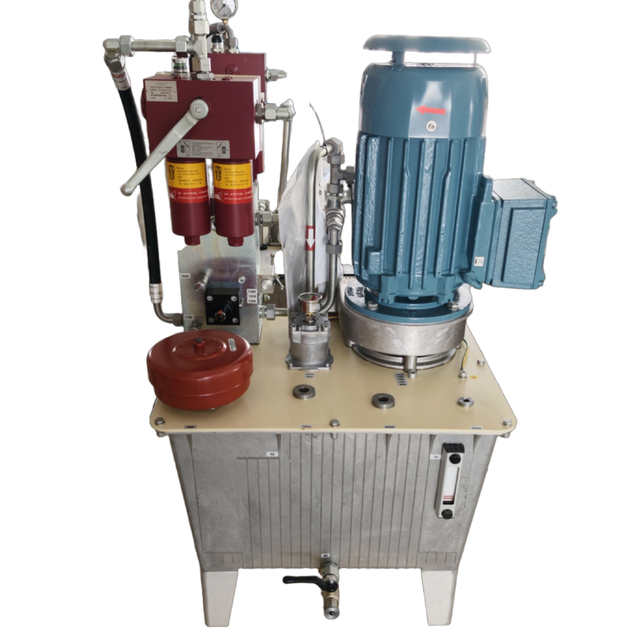
When I first entered the workshop, the complex hydraulic equipment left me feeling lost. The intertwined oil pipes, roaring hydraulic pumps, and valves of all sizes seemed like random parts with no clear purpose. I had no idea how they worked together to power the entire production process.
Fortunately, a seasoned master noticed my confusion and offered simple, wise advice: “Technology isn’t just theory on paper. The heart of a hydraulic system is in every run, every adjustment. Start with the tools, get to know the components, and take it one step at a time.” His words grounded me. I set aside my impatience, focused on the basics, and began my learning journey.
Understanding the tools was my first real step into hydraulic technology. The workshop’s tool rack held a variety of tools — wrenches, screwdrivers, pressure gauges, flow meters, sealing rings, pipe clamps, and more. Each tool had a specific role, and every detail mattered for safety and accuracy.
The master taught me patiently: how to choose the right wrench size, the difference between internal and external hexagons, how to calibrate a pressure gauge, and how to read flow meter data. At first, I mixed up tool names and uses — I’d pick up a wrench not knowing which screw to tighten, or stare at a pressure gauge without understanding what the reading meant.
But I persisted. I wrote down every tool’s name, specification, and purpose in a notebook, reviewed it in my free time, and practiced with the master daily. By repeatedly disassembling and installing components, I learned each tool’s “personality” and mastered the basic skills I needed.
Once I knew the tools, I moved on to systematic hydraulic learning — connecting the textbook theories I’d memorized to the actual equipment in the workshop. The master walked me through the system’s core components: the hydraulic pump’s working principle, the hydraulic cylinder’s telescopic mechanism, and the hydraulic valve’s control logic.
He also taught me practical skills: oil pipe layout standards, how to select and replace hydraulic oil, and how to diagnose common hydraulic faults. For the first time, the textbook phrase “Hydraulic transmission relies on liquid static pressure to transfer energy” made sense. Watching the hydraulic pump start, oil flowing through pipes to drive the cylinder and equipment, I finally understood the real-world value of my theoretical knowledge.
To truly master hydraulic technology, I immersed myself in the workshop every day. I started with daily equipment inspections, carefully observing the system’s operation and recording parameter changes. When there was debugging work, I helped hand tools and take notes, learning the master’s methods and thinking.
After work, I reviewed the day’s lessons, consulted technical manuals to fill gaps in my knowledge, and connected workshop problems to textbook concepts — building my own knowledge system.
A turning point came when a piece of equipment had a hydraulic leak. The master and I inspected every oil pipe interface, seal, and valve until we found the issue: an aging seal. Under his guidance, I replaced the seal myself. Seeing the equipment run normally again gave me a huge sense of accomplishment — and taught me that theory alone isn’t enough; practice is key to true mastery.
My time in the workshop taught me more than just technical skills — it taught me rigor and responsibility. Every component installation, every parameter adjustment, every tool use affects equipment performance and production safety.
The masters’ work ethic inspired me. They treat every piece of equipment like their own, inspecting and maintaining it carefully — not even a loose screw is ignored. This craftsmanship taught me that there’s no shortcut to technical excellence; hard work and dedication are the only way forward.
Today, after months of learning in the workshop, I’ve come a long way. From knowing nothing about hydraulic equipment to identifying tools, understanding basic principles, and assisting with simple debugging and maintenance, every progress is thanks to the masters’ guidance and hands-on practice.
I know that as a technician, staying grounded in the workshop is essential. Only by understanding equipment and production can I turn technical knowledge into real productivity, stand firm in my role, and realize my value.
In the future, I’ll keep an open mind, learn humbly, and keep improving my hydraulic skills. I’ll master more tools, study system operation rules, and strive to become a qualified technician. With learning as my foundation and work as my guide, I’ll grow continuously and contribute to production development.