| Quantity: | |
|---|---|
Customized
MDP Hydraulics
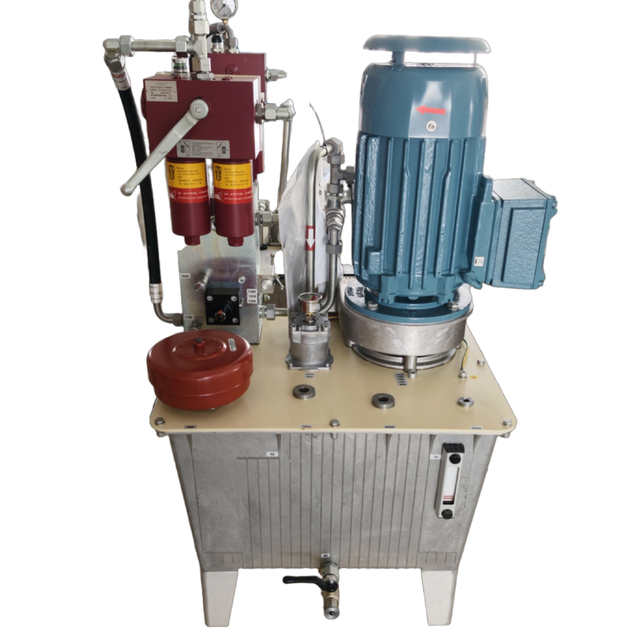
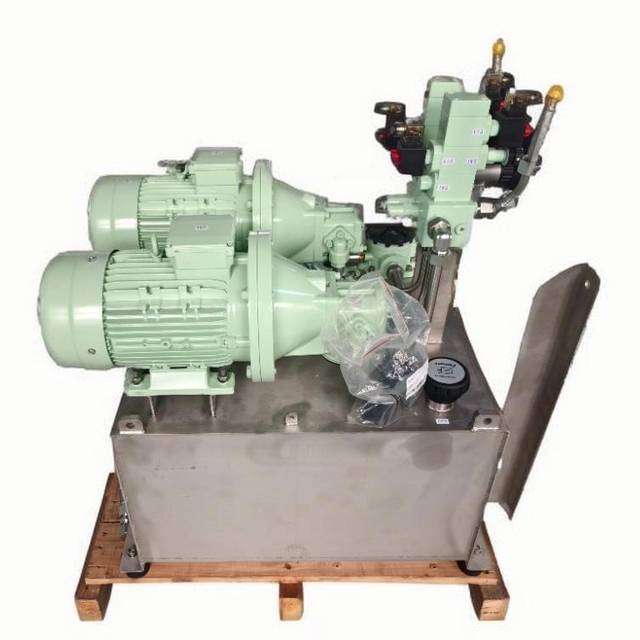
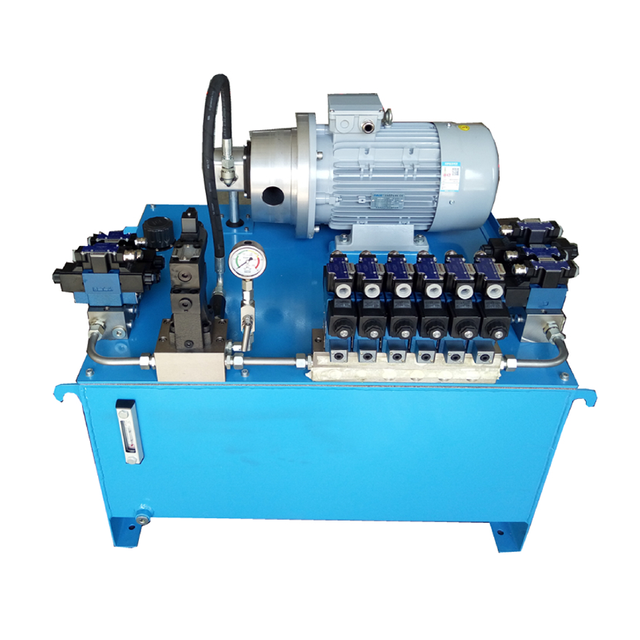
This high-pressure hydraulic power station is a highly integrated and modular core power unit of the hydraulic system, specifically designed for industrial applications that require stable and reliable high-pressure hydraulic power. It organically integrates high-performance motors, high-pressure hydraulic pumps, multi-functional integrated valve blocks and intelligent control systems, replacing the complex pipeline connections of traditional decentralized hydraulic systems, and providing precise and controllable power sources for various hydraulic actuators (such as cylinders and hydraulic motors).
The core of this power station lies in its integrated valve block design, which serves as the "nerve center" of the hydraulic system. It integrates multiple functional valves, such as relief valves, directional control valves, and check valves, through precisely machined internal channels into a single robust valve body. This design not only significantly reduces external leakage points and enhances system reliability but also makes the equipment structure extremely compact, making it particularly suitable for installation environments with limited space.
It adopts an integrated design, integrating the pump, valve, motor, oil tank and control components. Compared with traditional split hydraulic stations, its volume can be reduced by 30% to 50%, and it is flexible and convenient to install.
Valve body material: High-strength aluminum alloy or ductile iron is used, which is resistant to high pressure and corrosion, ensuring long-term stability under harsh working conditions.
Flow channel process: The internal oil passage channels are precisely machined by a five-axis linkage machining center, with a surface roughness of Ra ≤ 0.8 μm. This effectively reduces pressure loss, minimizes turbulence and cavitation, and enhances energy efficiency.
Function integration: According to customer requirements, it can integrate relief valves (system safety pressure limit), directional control valves (control the direction of cylinder movement), check valves (pressure holding and anti-backflow), pressure reducing valves, throttle valves, etc., to achieve complex hydraulic logic control.
Leakage control: Significantly reduces external pipelines and joints, fundamentally lowering the risk of leakage. High-performance sealing technology is used at critical sealing points to ensure long-term sealing at pressures above 200 bar.
Maintenance convenience: Adopting a layered or modular structure design, individual valves can be replaced independently without disassembling the entire valve block or system, significantly reducing maintenance costs and downtime.
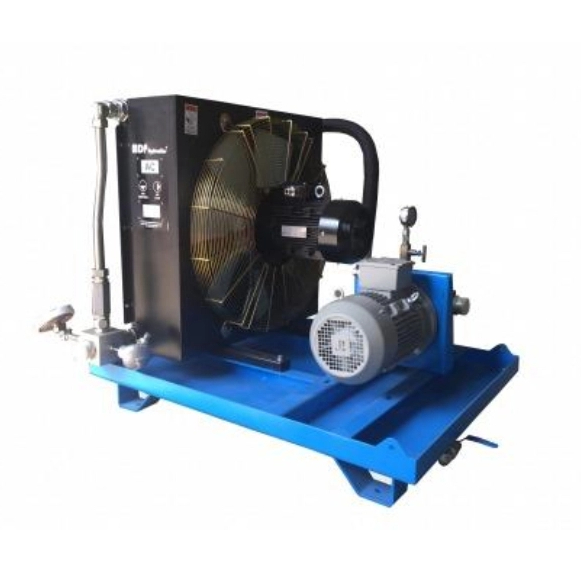
Thermal management: The valve block can be embedded in the cooling circuit, and the oil tank has excellent heat dissipation capacity. Optional air-cooled or water-cooled coolers can be selected to effectively control the oil temperature and ensure the long-term stable operation of the system.
Filter protection: Equipped with a high-precision return oil filter (such as a 25μm filtration accuracy) as standard, and featuring a contamination indicator, it effectively protects pumps, valves and other precision components, extending the system's lifespan.
Flexible control: Supports manual and electric solenoid valve control, and can be integrated with PLC interfaces, pressure sensors, flow meters, etc., reserving interfaces for intelligent monitoring and remote control.
Parameter Category | Specification/Range | Description |
working pressure | reach up to 315 bar (approximately 31.5 MPa) | continuous working pressure is usually between 180 and 250 bar, meeting the requirements of the vast majority of high-pressure applications. |
rated flow rate | 1 - 25 L/min (optional range) | determined by the displacement of the gear pump and the motor speed. It supports multi-speed selection to meet different flow rate requirements |
Drive motor | AC/DC motor | AC: single-phase 220V or three-phase 380V, power 0.12kW - 4kW; DC: 12V/24V/48V, power 0.35kW - 4.5kW, suitable for different on-site power supplies. |
fuel tank capacity ranges | 4L to 100L (optional) | Multiple specifications are available, and the material can be either aluminum alloy (with good heat dissipation) or carbon steel, with a liquid level window provided |
hydraulic oil medium | mineral hydraulic oil (ISO VG 32-68) | compatible with HLP hydraulic oil that meets DIN 51524 standards. It can also be adapted to fire-resistant hydraulic fluid upon request. |
operating temperature range | from -20°C to +80°C | The wide-temperature design adapts to various environments. An optional cooler can be activated when the oil temperature is too high. |
protection grade | IP55 (standard) | dustproof and waterproof, suitable for industrial workshop environments. Higher protection grades can be provided upon request |
main interfaces | standard threads such as G1/4, G3/8, and SAE | The pressure port (P), return oil port (T), and drain port (L) are standardized, facilitating quick connection with the actuator. |
Note: The above are the typical parameter ranges of the series of products. The precise parameters of specific models need to be customized and confirmed based on the actual working conditions and functional requirements of the customers.
Used in pressure-holding and motion circuits for mold opening and closing, workpiece clamping, and spindle locking in CNC machine tools and injection molding machines.
Hydraulic drive units for various working devices (booms, buckets, steering) on equipment such as excavators, cranes, and forklifts.
Provide power for tail lifts of vehicles, lifting platforms, compression mechanisms of sanitation vehicles, and port loading and unloading equipment.
It is used in material testing machines, hose crimping machines, valve test benches and other equipment that require a stable high-pressure source.
Applied to auxiliary equipment for rolling mills, hydraulic supports for mines, crushers and other heavy-duty equipment.
We offer both standardized product series and fully customized solutions. When customers are selecting models, they need to clarify the following key information:
1. System requirements: Required working pressure, flow rate, and action cycle requirements.
2. Installation environment: Available space dimensions, ambient temperature, and power supply type.
3. Control method: Manual, solenoid valve control, or the need for integrated intelligent sensors and communication interfaces.
4. Special requirements: Explosion-proof, low-temperature start-up, low noise, compatibility with specific media, etc.
We have a professional technical team that can provide full-process technical support and services, including scheme design, product manufacturing, installation and commissioning, to ensure that the power station is perfectly matched with your system and operates efficiently and stably.