Views: 0 Author: Site Editor Publish Time: 2026-02-11 Origin: Site
Automotive assembly
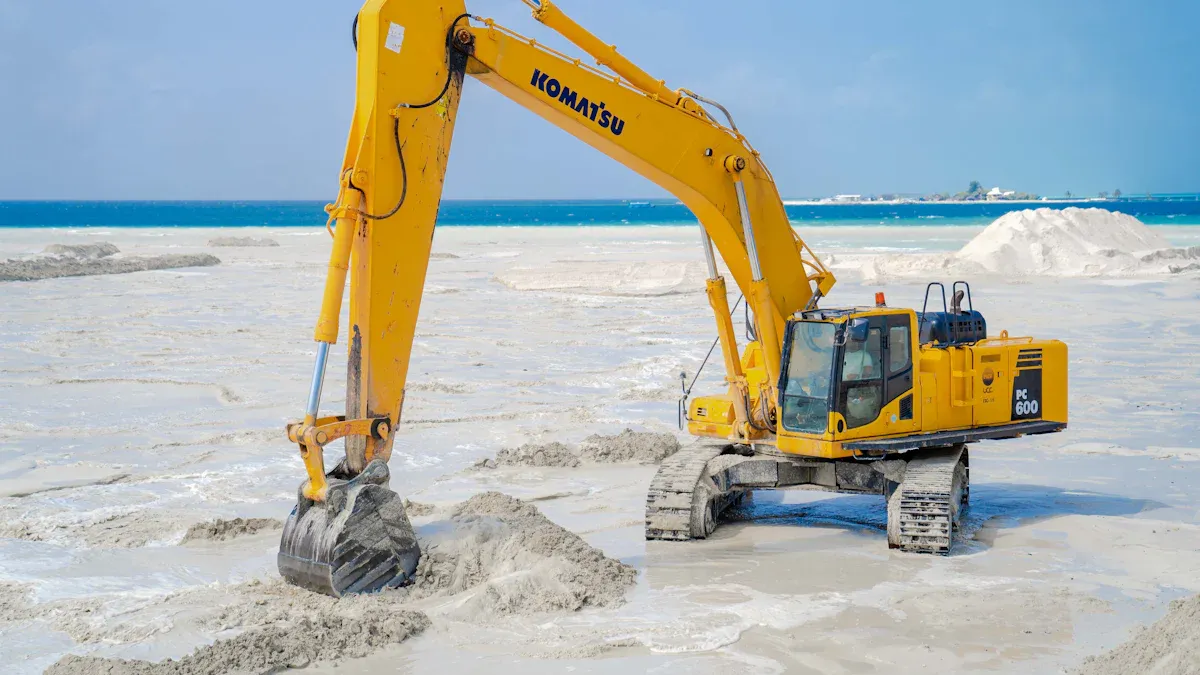
Heavy machinery movement
Metal and plastic forming
Hydraulic power units give strong and steady energy to machines. This makes them very important in car, building, and farming jobs.
The main parts of hydraulic power units are motors, pumps, reservoirs, and valves. Each part has a key job to help the system work well and last long.
It is very important to take care of hydraulic power units. Checking them every day and looking at them each month stops problems and keeps them safe to use.
Hydraulic systems let you control movement and force very well. This helps people do jobs like lifting heavy things or shaping materials with great accuracy.
You can change hydraulic power units to fit special needs. This helps them work better in many different places.
It is important to know the parts in a hydraulic power unit. Every part helps the system work well and stay reliable. The table below shows how each part helps the system:
Component | Contribution to System Performance |
|---|---|
Motor | Moves the pump and changes electrical energy into mechanical power. |
Hydraulic Pump | Makes hydraulic flow and pressure to power the system. |
Reservoir | Holds hydraulic fluid, cools the system, and lets air out. |
Accumulator | Keeps pressurized fluid, balances pressure, and gives emergency power. |
Valves | Direct fluid, control movement, and manage system pressure. |
Actuators | Change hydraulic energy into mechanical force and motion. |
Filters | Clean out dirt, protect parts, and keep the system efficient. |
Gauges and Sensors | Check pressure, temperature, and flow for safety and performance. |
Cooler and Heater | Control fluid temperature so it does not get too hot or cold. |
The motor moves the hydraulic pump. It changes electrical energy into mechanical power. You can pick piston, gear, or orbital motors. Piston motors are good for tough jobs. Gear motors are fast. Orbital motors fit many uses. The right motor makes your unit work better.
The pump is the main part of the unit. It pushes fluid and makes pressure. Pumps come in types like gear, swash plate, and variable displacement. Some pumps are quiet and keep dirt out. Picking the right pump keeps your system steady and reliable.
The reservoir holds hydraulic fluid. It cools the fluid and lets air and dirt settle. Clean fluid helps your system work well. A good reservoir keeps the fluid cool and clean.
Accumulators keep pressurized fluid. They balance pressure and give emergency power if the pump stops. Accumulators help your system respond fast and finish important jobs safely.
Valves control where the fluid goes, its pressure, and flow. Directional control valves send fluid and start or stop actuators. Needle valves make small changes. Electro hydraulic proportional valves give exact motion control. Valves help you manage movement and keep things safe.
Actuators change hydraulic energy into mechanical force. Hydraulic cylinders and motors move machine parts. Actuators work fast and hold their spot without extra energy. You see them in factories, cars, and planes.
Filters clean dirt and other stuff from hydraulic fluid. Clean fluid protects pumps, valves, and actuators. You use headspace, inline, return, and offline filters to keep your system working. Filters must be clean enough to stop damage and failures.
Gauges and sensors check pressure, temperature, and flow. They give you data to keep your unit safe. Pressure gauges show numbers you can see. Sensors send signals for automatic control. Using both makes your system more accurate and safe.
Coolers and heaters keep fluid at the right temperature. Heat exchangers and fans remove extra heat. Insulation and heaters keep fluid warm. Monitoring systems help you control temperature for steady performance.
Tip: Picking the best parts for your hydraulic power unit makes it reliable and efficient. Custom units can fix special problems and save money.
Energy conversion is a big part of every hydraulic power unit. The motor uses electricity and changes it into mechanical power. The pump takes this power and moves hydraulic fluid. This process follows Pascal’s law.
Pascal’s principle means if you push down on one piston, the pressure spreads through the fluid. This makes a bigger force push up on another piston with a larger area. The math for this is (\frac{{F}{1}}{{A}{1}}=\frac{{F}{2}}{{A}{2}}). This shows how a small force can make a bigger force in hydraulic systems.
You use this rule to lift heavy things or move machine parts with less work. The hydraulic power unit helps you control force and movement very well.
Controlling fluid flow and pressure keeps your system safe and working well. The pump pushes hydraulic fluid through the system. Valves send the fluid to different places and let out pressure when needed. The pump does not make pressure by itself. It gives flow, and pressure happens because of resistance in the system.
Power Generation: The pump uses an electric or gas engine to pressurize the hydraulic fluid.
Fluid Storage: The reservoir stores hydraulic fluid and sends it into the system when needed.
Directional Control: Valves send the hydraulic fluid to different actuators for certain jobs.
Pressure Regulation: Relief valves stop the system from going over its pressure limit.
You control the flow to make actuators move at the right speed. Relief valves keep your system safe by letting extra fluid go back to the reservoir if pressure gets too high. This stops damage and keeps your equipment safe.
The relief valve is important for safety. It lets extra fluid go back to the reservoir if pressure gets too high.
The hydraulic pump makes flow. Pressure builds up because of resistance, so flow control is important for actuators to work well.
Actuators change hydraulic energy into movement. You use actuators to move machine parts, lift things, or spin equipment. Hydraulic cylinders push or pull objects. Hydraulic motors spin wheels or gears.
Actuators in hydraulic systems turn hydraulic energy into mechanical energy.
They are important because they make things move, like pushing or pulling a piston in a hydraulic cylinder.
You control actuators with valves and sensors. This lets you change speed, direction, and force. Actuators help you finish jobs quickly and accurately. You see them in factory machines, building vehicles, and airplanes.
Regular maintenance keeps your hydraulic power unit working well. You need to check fluid levels, look for leaks, and watch the temperature. Clean fluid stops parts from wearing out and breaking. You should follow the manufacturer’s rules for pressure and flow.
Maintenance Frequency | Tasks |
|---|---|
Daily | Look over the unit, check temperature, check oil, test how it works |
Monthly | Check filters, clean the unit |
Quarterly | Test oil, check accumulators, test how it works |
Annual | Clean the reservoir, check parts, test everything |
You stop breakdowns by doing these things:
Keep fluid at the right temperature and thickness to stop wear.
Keep hydraulic fluid clean to stop dirt from causing damage.
Follow the manufacturer’s settings for pressure and flow.
Start up the system the right way to avoid early damage.
Change old parts before they break to stop failures.
Learn from problems to make your maintenance better.
You also need to look out for common problems:
Common Causes of Failure | Preventive Measures |
|---|---|
Air and Water Contamination | Do regular maintenance and manage fluid the right way |
Temperature Problems | Install and use parts the right way |
Fluid Levels and Quality | Check fluid levels and quality often |
Human Error | Train workers and update maintenance rules |
You keep your hydraulic power unit working by checking it every day, watching oil temperature, and testing how it works. Checking filters every month and cleaning the reservoir every year helps you save money on repairs. Training and good records make your system last longer.
Tip: You protect your machines and keep them working by following a regular maintenance plan.
Hydraulic power units help run machines in many places. You see them in factories, farms, ships, and airplanes. Each job needs special features. The main goal is to give strong and steady power.
Hydraulic power units are used in manufacturing. They power presses and molding machines. They also run automation systems. These units help shape metal and move parts. They control machines with accuracy.
Hydraulic power units make lifting heavy things easy. You find them in cranes and elevators. They are also in aerial platforms. They help raise and lower objects safely. They make lifting smooth.
Ships and offshore rigs use hydraulic power units. They help with steering and stabilizers. They also handle anchors. Custom designs are needed for these jobs. Hydraulic systems give precise control. They keep vessels safe in tough conditions.
Marine steering systems use hydraulic power units for smooth turns.
Winches and anchor equipment need hydraulic power for strength and reliability.
On farms, hydraulic power units are in tractors and harvesters. They are also in irrigation systems. These units help plow fields and plant crops. They help harvest produce. They work well in dusty and rough places.
Hydraulic power units drive excavators and bulldozers. They also run concrete pumps. In car factories, they power presses and robotic arms. They help build roads and move earth. They help assemble vehicles.
Airplanes and spacecraft use hydraulic power units. They control landing gear and flaps. They also move cargo doors. You get reliable and accurate control in high-pressure situations.
Hydraulic systems operate flight surfaces and landing gear.
You depend on these units for safety and performance.
Hydraulic power units are used in test rigs. They check new designs and test equipment. These units make sure machines work before real jobs.
Note: Hydraulic power units fit many jobs. You can change their size, power, and controls to match your needs.
Here is a table showing industries and machines that use hydraulic power units:
Industry | Machinery Examples |
|---|---|
Construction | Excavators, bulldozers, cranes, concrete pumps |
Agriculture | Tractors, harvesters, ploughs, irrigation systems |
Entertainment | Rollercoasters, water rides, stunt equipment |
Automotive | Presses, robotic arms, braking systems, hydraulic steering |
Energy | Wind turbines, power station valves, offshore drilling rigs |
Aerospace | Landing gear, flaps, cargo doors, spacecraft arms |
Healthcare | Hospital beds, surgical tables, patient lifts |
Defence & Military | Tanks, submarines, aircraft weapon systems |
Manufacturing | Presses, injection molding machines, automation systems |
Waste Management | Collection vehicles, recycling balers, domestic compactors |
Hydraulic power units are versatile and adaptable. You can use them in many places. They give strong and reliable power where you need it.
A hydraulic power unit gives strong force even in small spaces. Hydraulic pumps and motors change energy into power for small machines. Hydraulic cylinders push or pull hard for lifting or pressing. You can put these parts in tight places and still get good results. This design lets you use machines in factories, on building sites, and in vehicles where space is tight.
Hydraulic actuator motors give lots of power for their size.
Oil always covers moving parts, so they last longer.
Putting cylinders in smart spots gives more power.
You can control movement and force very well. Hydraulic valves guide fluid, set pressure, and control flow. Special programs help you move actuators to the right spot. Web guide controllers give steady control in factories. You can change speed and force for careful or tricky jobs.
Component | Functionality |
|---|---|
Control Valve Assembly | Guides fluid, sets pressure, and controls flow for smooth work |
Control Algorithms | Move actuators to exact spots for careful actions |
Web Guide Controller | Gives steady control for factory machines |
Hydraulic power units work well even when things get tough. You can add heaters or coolers to keep fluid just right. Big filters and strong seals stop dirt and leaks. Stainless steel and special coatings fight rust and chemicals. These things help your machines last longer and stay safe.
Custom units work in very hot or cold places.
Strong parts make the unit last a long time.
Better filters mean you do not need to fix things as often.
You can use hydraulic machines in many jobs. They help run big machines on building sites, control factory lines, lift things on farms, and power mining and airplane systems. You can change hydraulic power units to fit different jobs and places.
Industry | Application Description |
|---|---|
Construction | Runs big machines and tools easily |
Manufacturing | Controls factory machines with care |
Agriculture | Lifts and moves things on farms |
Mining | Digs and moves heavy stuff |
Aviation | Runs hydraulic systems in airplanes |
You keep your hydraulic power unit working by doing easy checks. Regular checks find leaks and worn parts early. You watch fluid levels and how clean it is. Cleaning and flushing take out dirt. Changing filters stops blockages. Checking the system keeps controls working right. Good records help you plan repairs and keep track.
Tip: Doing regular checks keeps your machines safe and working well.
You can find a hydraulic power unit in many places like factories, construction sites, and farms. Pumps, valves, and actuators all work together to give strong and steady power. These units help lift, move, or shape things. If you take care of your system, it will stay safe and work well. New technology makes controls smarter and saves more energy. In the future, hydraulic power units will get even stronger and easier to use.
Author's Note: Thanks for reading about hydraulic power units. If you want help picking or taking care of your system, ask an expert for advice.
You use a hydraulic power unit to give energy to machines. It helps you move, lift, or control parts with strong force. You get steady power for many jobs.
You should check your unit every day. Clean filters and inspect fluid monthly. Test parts and clean the reservoir once a year. Regular maintenance keeps your system safe.
You can customize your unit for special jobs. You choose the size, power, and controls. Custom units help you solve unique problems and save money.
You find hydraulic power units in factories, farms, ships, and airplanes. They help run presses, cranes, tractors, and even hospital beds.
Author: MDP Hydraulics Technical Team
Expertise: Over 15 years of experience in the R&D and customization of hydraulic systems, lubrication systems, and jack-up systems.
Authority: Provider of industrial-grade solutions for key global sectors including heavy industry, aerospace, and marine engineering.
Trust: Manufacturing based on ISO standards, utilizing international quality components, committed to building long-term partnerships through reliable quality.