Views: 0 Author: Site Editor Publish Time: 2026-06-27 Origin: Site
Global valve actuator market size reached USD 20.74 billion in 2025, with a stable compound annual growth rate (CAGR) of 5.94% projected for 2026–2036. The overall market value is expected to hit around USD 38.5 billion by 2036.
Driven by industrial intelligent transformation, municipal infrastructure renovation and rapid expansion of new energy industries, market demand will maintain sustained growth. Stock equipment replacement and safety upgrading of traditional pipelines will form basic rigid demand, while hydrogen energy, carbon capture, energy storage and photovoltaics will become the fastest-growing incremental segments, greatly lifting long-term market space for valve actuators.
The market share of different actuator types will undergo obvious reshuffling over the next decade.
Electric actuators: Will become the mainstream product, accounting for 48% of global market share by 2036. Intelligent electric actuators with built-in sensors and IoT communication modules will occupy more than 70% of new installations, favored by unattended factories, municipal pipe networks and new energy projects for their precise regulation, low air consumption and convenient remote signal transmission.
Pneumatic actuators: Will retain approximately 32% market share, mainly applied in chemical, mining and other explosion-prone working conditions. Products will iterate toward lightweight modular structures and low air consumption optimization to reduce factory operating costs.
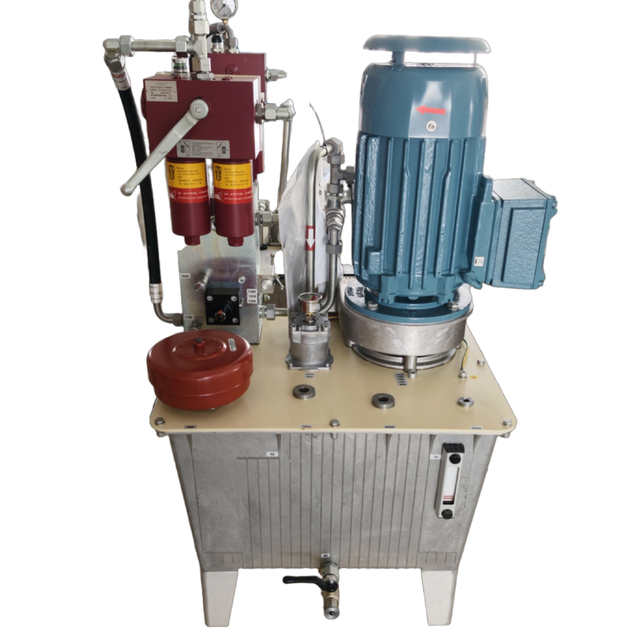
Hydraulic actuators: Will stabilize at about 10% market share, limited to ultra-high-pressure pipeline systems such as heavy oil transportation and large industrial equipment.
All three categories will accelerate intelligent upgrading, with basic position feedback function turning into standard configuration instead of an optional add-on.
Traditional actuators will evolve from simple drive units into integrated sensing-edge computing terminals:
Built-in multi-dimensional sensors to collect torque, vibration, temperature and valve position data in real time, with positioning accuracy improved from ±0.5% to ±0.1% via AI closed-loop algorithms.
Embedded predictive maintenance logic: The system automatically analyzes operation cycles and component wear, issuing early fault warnings to cut unplanned downtime by over 30%.
Universal multi-protocol communication (Modbus, Profinet, wireless LoRa/5G) will become standard; wireless remote control will be widely adopted for unattended outdoor pipelines, eliminating complex wiring costs.
Digital twin linkage: Actuator operation data synchronizes with factory cloud platforms to realize full-lifecycle asset management of valve systems.
Driven by global carbon reduction policies and industrial energy efficiency regulations:
Electric actuators adopt high-efficiency brushless motors and sleep power-saving mode, cutting overall energy consumption by 30%–40% compared with old models.
Pneumatic actuators optimize internal air channel structures to reduce air consumption by 25%, lowering factory compressed air operating costs.
Low-leakage sealing and self-locking structures eliminate continuous energy loss from maintaining valve position; energy efficiency will become a core procurement assessment indicator for end users.
Modular split design: Actuator body, control module, communication unit and drive mechanism adopt interchangeable standardized components, shortening customization delivery cycles and lowering after-sales maintenance costs.
Miniaturization & lightweight: Small-bore valves, new energy equipment and municipal pipelines will widely use compact lightweight actuators with aluminum alloy and composite materials, reducing overall equipment weight by 20%–35%.
Unified global mounting standards: NAMUR and ISO 5211 will fully cover all product lines, enabling one-to-one matching with butterfly valves, ball valves and gate valves without customized conversion brackets.
Ultra-wide temperature range: Standard products cover -40℃ ~ +85℃; special deep cold models adapt to -196℃ liquid hydrogen and LNG working conditions with anti-low-temperature brittle materials.
High-grade protection standardization: IP68 waterproof and dustproof will be baseline for outdoor, water treatment and marine actuators; anti-corrosion coatings and stainless steel internal structures will resist seawater, acid and alkali media.
Hydrogen-compatible anti-hydrogen embrittlement structures will mature to support mass rollout of hydrogen production, storage and refueling station projects.
High safety explosion-proof structures will be widely used in chemical, coal and energy industries, with SIL safety grade configuration becoming a common requirement for hazardous working conditions.
Oil, gas and chemical industries will maintain steady demand, mainly driven by old pipeline renovation and safety upgrade; demand for explosion-proof intelligent actuators will keep growing.
Water & wastewater treatment will remain a rigid market: Smart municipal pipe networks will boost orders of low-torque, IP68 waterproof electric actuators, accounting for nearly 20% of global demand volume.
Thermal power, shipbuilding and metallurgy will focus on energy-saving digital actuator replacement, with annual renewal demand growing at 4%–6%.
Hydrogen industry: Electrolysis hydrogen production, liquid hydrogen storage and hydrogen refueling stations will drive demand for deep cold, anti-hydrogen permeation explosion-proof actuators, with segment CAGR exceeding 12%.
CCUS carbon capture projects: Supercritical CO2-resistant high-pressure actuators will form a brand-new market segment.
Energy storage, photovoltaic and wind power: Outdoor wide-temperature, low-power solar-powered actuators for flow regulation and angle adjustment will see sustained volume growth.
Lithium battery new material factories: Cleanroom corrosion-resistant, micro-precision control actuators will expand rapidly.
Asia-Pacific will remain the world’s largest production and consumption region, taking up more than 42% of global shipment volume, supported by China’s industrial upgrading, Southeast Asian infrastructure construction and vigorous new energy investment. Europe and North America will focus on high-end intelligent and safety-compliant actuators with steady low single-digit growth. Middle East, Latin America and Africa will generate incremental demand relying on water conservancy and petrochemical construction.
Production capacity will further concentrate in Asia-Pacific manufacturing hubs, while upstream raw materials such as aluminum alloy, special sealing rubber and sensor chips will push localized supply chains to shorten delivery cycles and cut logistics costs.
Industry consolidation will accelerate over the next decade. Top international manufacturers will acquire niche intelligent actuator brands to strengthen digital control and system solution capabilities. Chinese domestic brands will continuously lift market share and basically complete import substitution in medium and high-end segments by 2032, with export volume expanding rapidly to Europe, Southeast Asia and the Middle East.
Competition will present an obvious differentiated trend: large manufacturers devote themselves to full-series intelligent overall solutions; small and medium-sized enterprises will focus on segmented tracks including waterproof, ultra-low temperature and hydrogen-specific actuators to avoid vicious homogenized price competition.
Chip supply constraints: Core control sensors and communication chips will remain key cost and delivery bottlenecks for intelligent actuator production.
Strict global environmental & safety regulations: Upgraded energy efficiency, explosion-proof and low-emission standards will raise R&D and certification costs for manufacturers.
Raw material price volatility: Aluminum, stainless steel and special rubber fluctuations will squeeze profit margins of mid-range standard products.
Technical threshold gap: High-end algorithm, anti-hydrogen embrittlement and ultra-low temperature technologies are still monopolized by a small number of overseas brands, requiring continuous domestic R&D investment.
From 2026 to 2036, the global valve actuator market will maintain steady growth with a total size close to USD 38.5 billion. Electric intelligent actuators will dominate the product structure, while pneumatic and hydraulic products retain fixed application scenarios. In terms of technology, the whole industry will advance toward AI predictive diagnosis, low-carbon energy saving, modular lightweight design and extreme environment adaptability, with IP68 high protection and IoT wireless communication becoming standard configurations. Asia-Pacific stays the core production and consumption base, Chinese brands will speed up mid-to-high-end import substitution amid intensified industrial consolidation. Despite multiple challenges including chip shortages, tightening safety and environmental rules and unstable raw material prices, enterprises that deploy intelligent full-lifecycle solutions and customized actuators for special working conditions in advance will secure lasting core competitiveness in the next decade.