loading
| Availability: | |
|---|---|
| Quantity: | |
A4VSO
REXROTH
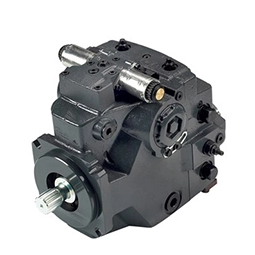
The A4V series axial piston variable pump is a core component for static hydraulic drive in heavy mobile machinery (such as excavators, tractors). This series of pumps adopts a mature diaphragm type variable structure and is used in open or closed circuits. It can adjust the output flow continuously according to the system requirements, achieving precise energy matching and efficient power transmission. With a continuous working pressure of up to 350-400 bar and a wide displacement range (40 to 1000 cc/rev), the A4V series pumps provide outstanding power performance, fuel economy, and precise control for modern construction machinery.
High efficiency and energy conservation, precise control: The flow rate is proportional to the drive speed and displacement. By adjusting the angle of the diaphragm, the flow rate can be adjusted continuously. It precisely meets the requirements of the actuator, reduces throttling loss, and significantly improves the overall energy efficiency.
High pressure and large flow, powerful performance: The rated pressure reaches up to 350 bar, and the peak pressure can reach 400 bar or even higher, ensuring abundant and stable hydraulic power in heavy-load excavation, lifting and other working conditions.
Durable and reliable: The shell is made of high-strength cast iron. The drive shaft bearing system is well-designed and sturdy, capable of withstanding large axial and radial loads. It is specially designed for harsh working conditions such as impacts and vibrations in construction machinery, and has a long service life.
Swift response, precise control: The optimized diaphragm control mechanism offers extremely short response times, ensuring that the equipment operates with great sensitivity and accuracy, thereby enhancing operational efficiency and the handling feel.
Abundant control options: Various control methods are provided, including constant pressure control (DR), constant power control (LR/HW), electro-hydraulic proportional control (EP), etc. These can be flexibly adapted to the control strategies and functional requirements of different manufacturers.
Excellent oil absorption performance and low noise: The specially designed flow channels and low-noise technology ensure excellent self-priming capability even at high speeds or low temperatures, and reduce the noise of the system operation.
Extensive media adaptability: Compatible with mineral-based hydraulic oil and water ethylene glycol (which are flammable) as well as other non-flammable liquids (specify corresponding sealing materials are required), meeting the safety and environmental protection requirements for various application environments.
Series model: A4VSO (open-loop), A4VG (closed-loop)
Displacement range: 40, 71, 125, 180, 250, 355, 500, 750, 1000 mL/revolution
Rated working pressure: 350 bar
Peak pressure: 400 bar (some models can reach 420 - 450 bar)
Speed range: Up to 2400 - 4000 rpm (depending on the displacement)
Control methods: DR (pressure control), FR (flow control), LR/HW (power control), EM (electric control), HS (servo control), etc.
Applicable media: Mineral hydraulic oil, synthetic oil, water ethylene glycol (HF)
Installation method: Flange installation. Installation position is optional.
Drive shaft: Capable of withstanding axial and radial forces, supports through-axis drive, facilitating integration of auxiliary pumps
Excavators: providing power for the main pump, rotation and movement systems.
Tractors and agricultural machinery: Drive units, steering systems, PTO (Power Take Off), and various agricultural implements.
The static hydraulic drive systems for construction machinery such as loaders, bulldozers, and cranes.
Mining machinery: such as underground loaders, drilling machines, etc.
Industrial equipment: metallurgical presses, injection molding machines, ship deck machinery, etc.
We are not only a supplier of high-quality hydraulic components, but also your reliable partner for the power system. We offer original quality A4V series pumps and spare parts, and have a professional technical team. Based on your specific host model, working conditions and performance requirements, we can provide precise selection matching, technical consultation and comprehensive after-sales support services. Choosing us means choosing the core power for your equipment that is durable, efficient and energy-saving.
A1: The A4V series is a platform that includes models suitable for open-loop systems (such as A4VSO) and models suitable for closed-loop systems (such as A4VG). The main hydraulic systems of excavators and tractors (for driving the working devices) typically use open-loop pumps, while the drive systems for tractors often use closed-loop pumps. When selecting, it is necessary to determine based on your specific hydraulic system loop design.
A2: The displacement selection depends on the engine power, the maximum flow and pressure required by the system. The basic principle is: the theoretical output flow of the pump (L/min) ≈ displacement (mL/rev) × engine speed (rpm) ÷ 1000. Ensure that the pump can provide the maximum flow required by the system at the engine's rated speed, and its power consumption does not exceed the available power of the engine. Usually, equipment manufacturers will make precise matching. If you are replacing or modifying, you need to provide engine parameters and hydraulic system requirements so that we can assist in the calculation.
A3: These are three core control methods that determine the output characteristics of the pump:
Constant power control (LR/HW): The output power (pressure × flow rate) of the pump remains constant. When the load pressure increases, the pump automatically reduces the displacement to decrease the flow rate, preventing the engine from overloading. This is the most commonly used control method for equipment such as excavators, and it can fully utilize the engine power.
Constant pressure control (DR): The pump strives to maintain the outlet pressure at the set value. When the system pressure reaches the set value, the pump automatically reduces the displacement to only compensate for leakage, achieving load relief and excellent energy-saving performance. It is commonly used in systems that require a constant pressure source.
Electro-hydraulic Proportional Control (EP): By using external electrical signals (currents) to proportionally control the displacement of the pump, it enables precise remote control of the flow rate, serving as the foundation for intelligent and high-precision operation.
The selection should be based on the functions of the main unit: The main pump of the excavator typically uses constant power control, and is combined with electro-hydraulic proportional control to achieve pilot operation.
A4: It achieves energy savings through two main points:
1. Load Sensing and Power Matching: The constant power control keeps the engine operating within the efficient range, avoiding "stalling" or power waste caused by sudden load changes.
2. Reducing Throttle Loss: As a variable pump, it regulates the flow by changing the displacement instead of relying on a throttle valve to waste excess flow, thereby significantly reducing energy loss during the neutral and low-pressure waiting periods.
A5:
Centering: Ensure the coaxiality between the pump shaft and the engine flywheel or transfer case shaft. Use flexible couplings and center them precisely to avoid damage to the bearings due to abnormal radial forces.
Oil suction conditions: Ensure that the oil suction pipeline is thick, short and straight. The oil suction vacuum level should be within the allowable range (typically <-0.3 bar), and the oil tank level must be sufficient. The oil suction filter needs to be maintained regularly.
Shell oil leakage: The oil leakage pipe of the shell must be connected separately and unobstructedly below the liquid level of the oil tank, with a very low back pressure (usually < 0.2 bar), and is used for cooling and flushing the friction surfaces inside the pump.
Oil cleanliness: Before the first startup, the system must be flushed to ensure that the oil cleanliness reaches NAS 9 grade or better. This is crucial for ensuring the sensitivity of the variable mechanism and the long lifespan of the pump.
A6: Some common causes are:
1. Cavitation: Blockage in the suction pipeline, dirty filter, low oil temperature or high oil viscosity leading to insufficient oil intake. The sound resembles popping popcorn. Check the oil intake conditions.
2. Oil contamination: Solid particles causing wear on the piston or valve plate, resulting in continuous high-frequency noise. Check the oil filter and conduct oil analysis.
3. Mechanical connection issues: Damaged coupling or improper alignment causing vibration and abnormal noise.
A7: Troubleshooting steps:
1. Check the external control: Confirm whether the pilot control pressure (for hydraulic control pumps) or the electrical control signal (for electric control pumps) is correct and reaches the set value.
2. Check the variable mechanism: Check if the control piston is stuck and if the control valve core (such as DR valve, LR valve) is functioning properly.
3. Check the pump body: Measure the volumetric efficiency of the pump through testing. If the efficiency is too low, it indicates severe internal wear (such as piston/cylinder body, slipper/slipper disc, flow distribution plate wear), and professional maintenance is required.
4. Check the system: Rule out other possibilities such as the set pressure of the overflow valve being too low or excessive leakage of the actuating elements.
A8: The key point is "maintaining cleanliness and appropriate working conditions":
• Regular monitoring: Check the oil level, oil temperature, noise and vibration.
• Strict oil replacement: In accordance with OEM requirements, use hydraulic oil of the recommended viscosity grade and quality, and replace it regularly.
• Regularly replace the filters: Replace the oil inlet, oil return, and high-pressure filter cartridges at regular intervals.
• Oil analysis: Conduct regular oil analysis to monitor the degree of contamination, viscosity, and the trend of worn metal particles, enabling predictive maintenance.
A9: Yes, but the type of medium must be clearly specified when placing the order. The standard A4V pump is usually equipped with nitrile rubber (NBR) seals for mineral oil. For media such as water ethylene glycol (HFC) or synthetic esters, special models with compatible seals like fluorine rubber (FKM) must be selected; otherwise, the seals will fail quickly.