

loading
| Availability: | |
|---|---|
| Quantity: | |
90 series
SAUER
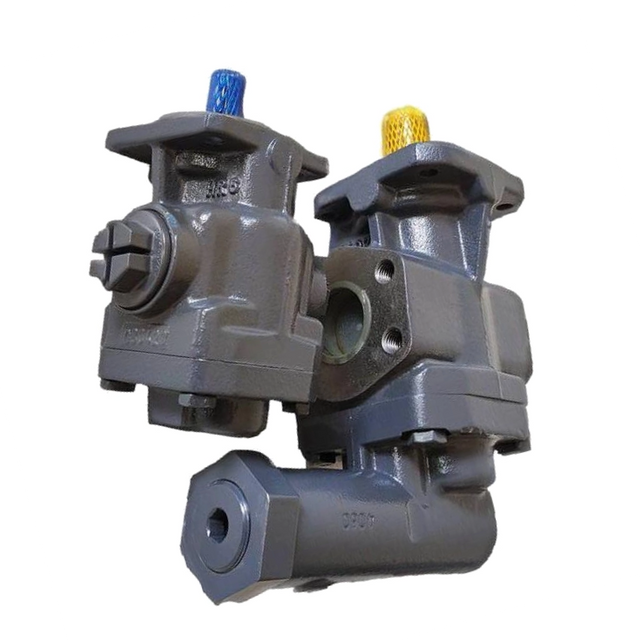
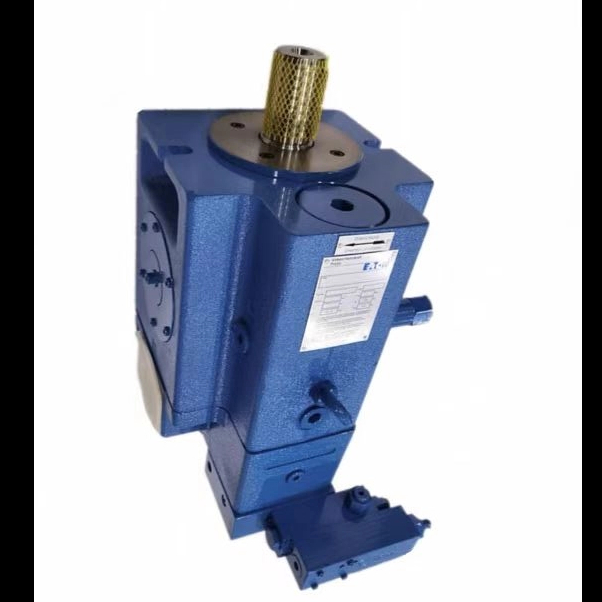
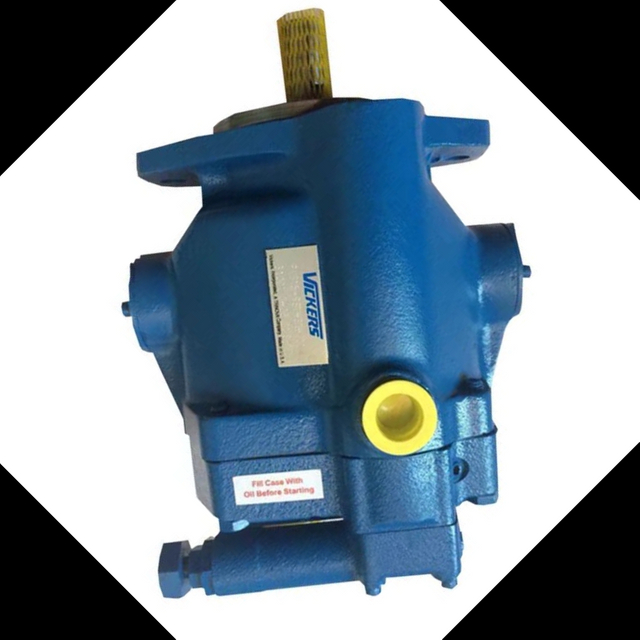
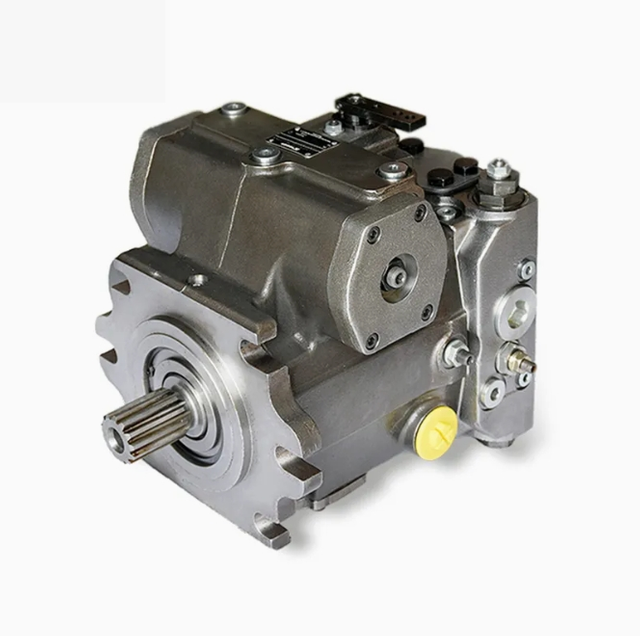
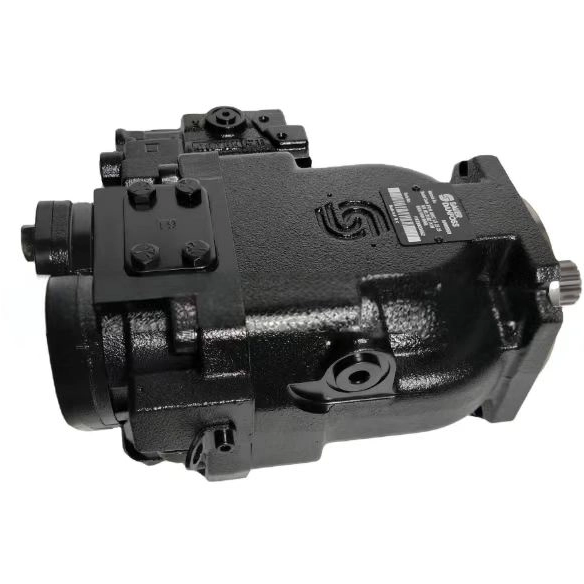
The axial sliding shoe type axial variable hydraulic piston pump is the core component of industrial hydraulic power systems and belongs to high-end volumetric pumps. It adopts the principle of combining axial pistons with adjustable vanes, enabling continuous and stepless regulation of the output flow. Its key feature lies in the fact that the piston assembly forms a low-friction and high-capacity friction pair with the vane through a "sliding shoe" structure, significantly improving efficiency and lifespan under high-pressure and high-speed conditions. This pump is specifically designed for industrial equipment that requires high power density, high response speed, intelligent energy saving, and reliable continuous operation. It is widely used in high-pressure hydraulic systems of injection molding machines, presses, machine tools, ship deck machinery, construction machinery, and metallurgical equipment, and is an ideal power source for achieving efficient, precise, and energy-saving control of the system.
By changing the angle of the swash plate, the output flow can be continuously and proportionally adjusted from zero to the maximum displacement, achieving true "demand-based oil supply". When the system is maintaining pressure or in standby mode, the pump can operate at a state close to zero displacement, significantly reducing the power consumption under no-load conditions, with remarkable energy-saving effects, especially suitable for periodic operations or situations with large load variations.
At the end of each piston, a precisely manufactured "sliding shoe" contacts the swash plate. The bottom surface of the sliding shoe is equipped with a static pressure support oil film, achieving nearly frictionless fluid lubrication under high pressure, greatly reducing friction losses and temperature rise, which is the key for the pump to withstand high continuous pressure (often above 35 MPa) and high rotational speed, ensuring an extremely long service life and high reliability.
Manual servo control: The angle of the swash plate can be mechanically adjusted by an external lever, with a simple and reliable structure.
Hydraulic pilot control: Utilizing pilot pressure oil to drive the variable mechanism, enabling remote or automatic control.
Hydraulic-electric proportional control: Receives standard current signals (such as 4-20mA or 0-10V), precisely and rapidly controls the flow rate, facilitating integration with PLC to achieve intelligent and automated flow regulation.
Integrated intelligent functions: It can incorporate control functions such as pressure cut-off (constant pressure variable), power limitation (constant power variable), and load sensitivity, automatically adapting to system requirements and protecting the pump and motor from overloading.
By using high-strength materials and optimizing the structure, the rated working pressure ranges from 21 MPa to 42 MPa or even higher, and the displacement range is wide (such as from several tens of milliliters per revolution to several hundreds of milliliters per revolution). The axial parallel piston layout makes the structure very compact, and it can output greater power per unit volume and weight.
The precise flow distribution plate design (such as using damping grooves or static pressure balance technology) and the optimized piston motion curve effectively reduce the flow pulsation and pressure shock of the oil, making the pump operate smoothly and with a noise level much lower than that of ordinary gear pumps, improving the working environment.
The key friction pairs (flow distribution pair, sliding shoe - inclined disc pair) undergo special surface treatment, with strong wear resistance. The modular design is adopted, with the variable mechanism, housing, rear cover, etc. being relatively independent, facilitating fault diagnosis, on-site maintenance and component replacement.
• Core structure: Composed mainly of the transmission shaft, cylinder (rotor), plunger-slipper assembly, inclined disc (variable mechanism), valve plate, housing and control valve group.
The transmission shaft drives the cylinder to rotate, and the pistons evenly distributed around the circumference of the cylinder rotate along with the cylinder. Due to the angle between the inclined disc plane and the axis of the transmission shaft, the pistons perform reciprocating linear motion within the cylinder bore while rotating. When the piston changes from the minimum inclination angle of the inclined disc to the maximum inclination angle, the volume increases, and oil is sucked into the oil suction window of the flow distribution plate; conversely, the volume decreases, and the oil is pushed out through the oil discharge window.
By external control force (manual, hydraulic or electrical signal), the inclination angle of the inclined disc can be changed. The greater the inclination angle, the longer the piston stroke, and the larger the volume (displacement) of the oil discharged per revolution, and the greater the output flow; when the inclination angle is zero, the displacement is zero, and theoretically there is no output flow.
The sliding shoe at the end of the piston closely slides against the inclined disc plane. High-pressure oil passes through the small holes in the piston and the sliding shoe to enter the oil chamber at the bottom of the sliding shoe, forming a static oil pad, which lifts the sliding shoe and realizes fluid lubrication, significantly reducing friction and wear.
Maximum working pressure and flow rate: Based on the load and speed requirements of the actuator (cylinder, motor), calculate the maximum working pressure and flow rate required by the system.
Control mode: Choose between manual, hydraulic or electro-pneumatic control based on the degree of automation.
Variable function: Select additional functions such as pressure cut-off and constant power according to energy-saving and protection requirements.
Displacement: Calculate based on the required maximum flow rate and the motor's rated speed: Displacement (cm³/rev) ≈ [Maximum flow rate (L/min) × 1000] / Motor rated speed (rpm). Choose a standard displacement that is similar or slightly larger.
Pressure Rating: The rated pressure of the pump should be higher than the maximum working pressure of the system and should also allow for an appropriate margin.
Drive power: Calculate the required motor power: Power (kW) ≈ [Pressure (MPa) × Flow rate (L/min)] / (60 × η), where η is the estimated total efficiency (typically 0.8 - 0.85). Select a motor with power matching.
Connection method: Ensure that the pump shaft extension matches the motor shaft extension, and use an appropriate coupling to guarantee the alignment accuracy.
Medium and oil temperature: Ensure that the pump material is compatible with the system medium and that the operating temperature is within the permitted range.
Installation space and cooling: Ensure there is sufficient space for installation and maintenance, and consider the cooling capacity of the system.
Plastic machinery: The main hydraulic power source for injection molding machines and extrusion machines, enabling precise flow control for rapid mold opening and closing, injection, and pressure retention.
Metal forming: Pressure and speed control of hydraulic presses, bending machines, and punching machines.
Machine tool industry: Hydraulic stations for CNC machines and machining centers, drive tool cabinets, tool changing mechanisms, fixtures, etc.
Construction machinery: As the main pump or pilot pump of the hydraulic system for mobile machinery (such as excavators and cranes).
Ship engineering: steering gear, anchor winch, winch, hatch opening and closing system.
Metallurgical equipment: Continuous casting machine, press-down system of rolling mill, auxiliary hydraulic system.
Test equipment: Loading systems for material testing machines and fatigue testing machines.
Installation, Use and Maintenance
Ensure that the installation base is firmly and levelly placed, and that the pump and the drive shaft are precisely aligned (flexible couplings are recommended).
The oil suction pipeline should be short and straight, with a sufficient pipe diameter to ensure smooth oil suction and absolutely prevent suction failure. The vacuum degree at the oil suction port should not exceed the allowable value (usually -0.03 MPa).
Before the initial startup, it is necessary to fill the pump housing with clean oil through the drain port or the injection port.
When starting, the motor should be jogged several times first to ensure the correct direction and absence of abnormal sounds. Then, it should be operated without load for a few minutes.
Slowly increase the pressure to the working pressure and check for any leaks at all connections.
For the electro-hydraulic proportional pump, the control circuit must be correctly connected, and the parameters should be set and debugged in accordance with the controller manual.
Daily inspection: Monitor oil temperature, noise, vibration and leakage conditions. Regularly check the cleanliness of the oil (it is recommended to reach ISO 4406 18/16/13 or better).
Regularly replace the oil and filter elements: Follow the specified replacement cycles for the oil and filters precisely.
Fault diagnosis: Common faults such as insufficient output flow, unstable pressure, excessive noise, etc., are mostly related to oil contamination, suction failure, stuck variable mechanism or internal wear. A comprehensive system investigation is required.
Professional maintenance: The internal structure of the pump is highly sophisticated. Non-professionals are strictly prohibited from disassembling it without authorization. In case of severe malfunction, it should be returned to a professional repair center or handled by professional technicians.

| design | Swashplate type axial piston variable pump |
| sense of rotation | Clockwise, Counterclockwise |
| Oil port | Main pressure oil port: ISO split-type flange oil port |
| Other oil ports: SAE straight thread O-ring sealed oil ports | |
| Recommended installation location | The pump can be installed at any position. However, it is recommended that the control valve be located at the top or side of the pump, and the top position is preferred. The input shaft can be installed vertically. If the input shaft is upward, a shell pressure of 1 bar must be maintained during operation. In any operating condition, the pump shell must be filled with hydraulic oil; including after a long shutdown. Before operating the machine, ensure that there is no air in the pump housing and the shell drain pipeline. When installing multiple connected pump units, it is recommended to use the pump with the highest power as the front pump. |
| Auxiliary installation of pressure within the flange cavity | When the built-in oil replenishment pump is used, it is the suction port pressure. Please refer to the working parameters. When the external oil replenishment pump is used, it is the pressure of the housing. Please confirm the sealing capacity of the shaft seal of the connected pump. |
A1: This is a high-pressure hydraulic pump that regulates the output flow continuously by changing the angle of the swash plate. The core lies in the "sliding shoe" at the end of the piston forming a fluid-lubricated friction pair with the swash plate, achieving low wear and high efficiency under high pressure. The key advantages are efficient energy saving (demand-based oil supply), high pressure and large flow capacity, long service life and high reliability, as well as flexible control (supporting multiple control methods).
A2: The main difference is whether the output flow can be adjusted. In a constant-flow pump, the volume of oil discharged per revolution is fixed, and the flow rate can only be regulated by throttling the valve or bypassing the overflow. This results in significant energy loss and heat generation. A variable pump, however, adjusts its discharge volume by itself to match the system requirements. This eliminates the need for throttling and overflow, thus avoiding energy losses at the source and being particularly suitable for applications with large variations in load. The energy-saving effect is very significant, and it can also reduce the temperature rise of the system.
A3: The sliding shoe is a crucial connecting component between the plunger and the swashplate. Its bottom is formed by a thin "static pressure oil film" through pressure oil, allowing the sliding shoe to "float" on the swashplate and slide. This design transforms sliding friction into nearly zero-wear fluid friction, significantly reducing frictional power consumption and temperature rise. It is the fundamental reason why the pump can withstand continuous high pressure (such as above 35 MPa) and high rotational speed, and has an extremely long service life.
2. Design Features and Control Methods
A4: The main control methods include:
• Manual/mechanical servo control: Adjusted directly through levers, simple and reliable, low cost, suitable for manual adjustment scenarios.
Hydraulic pilot control: By using the pressure oil of the system itself to drive the variable mechanism, it is possible to achieve remote or联动 with other hydraulic signals automatic control.
• Electro-hydraulic proportional control: By inputting current signals (such as 4-20mA), the displacement can be precisely and rapidly controlled. This is the preferred method for achieving automated and intelligent control, and it is convenient for integration with PLC.
The choice depends on the degree of system automation, the requirements for control accuracy, and the budget.
A5: These are two common built-in intelligent variable functions:
• Pressure cut-off: When the system pressure reaches the set value, the pump automatically reduces its displacement and only outputs a small amount of oil to maintain this pressure, thereby significantly reducing the power consumption and heat generation during the holding pressure stage.
• Power Limitation: The pump will automatically adjust the product of the displacement and pressure (i.e., power) to ensure it does not exceed the preset maximum power value, thereby protecting the drive motor from overloading.
These functions can significantly enhance the energy efficiency and security of the system.
A6: Thanks to the precise design of the flow distributor (such as the use of pre-boost damping grooves) and the optimized piston motion curve, the flow and pressure pulsations of this type of pump are much lower than those of gear pumps and vane pumps. Therefore, it operates more smoothly and has significantly lower noise levels. Favorable operating conditions (such as clean oil, correct oil suction height) can further ensure low-noise operation.
3. Selection, Installation and Application
A7: The selection mainly depends on three core parameters:
1. The maximum required flow rate: Calculate the maximum flow rate (L/min) required by the system based on the speed and size of the actuator.
2. The maximum working pressure of the system: Determine the highest pressure (MPa) that the actuator needs to push the load.
3. The rotational speed of the drive motor: Usually 1500 or 1800 rpm.
Calculation formula: The theoretical displacement of the pump (cm³/rev) ≈ [Maximum flow rate (L/min) × 1000] / Motor rated speed (rpm). Choose a standard displacement model that is similar or slightly larger based on the calculation result, and ensure that the pump's rated pressure is higher than the system's maximum pressure.
A8: Yes, many models are designed with a drive shaft interface, allowing for direct series connection of a gear pump at the rear end (non-drive end) as an auxiliary pump (such as a pilot pump or lubrication pump), sharing one main motor, which saves space and cost. When selecting the model, it is necessary to confirm whether this model supports drive shaft drive and the allowable drive shaft power.
A9: It is widely compatible with mineral-based hydraulic oils that meet ISO standards (such as VG32, VG46, VG68), as well as various synthetic fluids and biodegradable fluids. The key is to ensure compatibility between the fluid and the pump's internal sealing materials (such as nitrile rubber NBR, fluorine rubber FKM). Special note is required when using high-water-based or flame-retardant fluids.
A10: The two most important points are:
1. Precise alignment of shafts: The pump shaft and the motor shaft must be precisely aligned. It is recommended to use an elastic coupling and strictly control the installation tolerances. Otherwise, it will cause abnormal vibration, noise, and early damage to the shaft seal.
2. Good oil suction conditions: The oil suction pipeline should be short, straight, and have a sufficiently large diameter. It is necessary to ensure that there is sufficient positive pressure at the pump suction port (to avoid suction failure), and the vacuum degree at the suction port should generally not exceed -0.03 MPa (approximately -0.3 bar). Before the first start-up, be sure to fill the pump casing with clean oil.
4. Maintenance and Troubleshooting
Q11: What should be noted during daily maintenance?
A11:
• Cleanliness of the oil is the lifeline: High precision filters (recommended 3-10μm) must be used to maintain the cleanliness of the oil to at least ISO 4406 18/16/13 grade. Contamination is the main cause of pump wear and failure.
• Monitor oil temperature: Keep the system oil temperature within the recommended range (typically 30-60°C). Excessive oil temperature will accelerate the aging of the oil and the failure of the seals.
• Regular inspection: Pay attention to listening for running noise, observing vibrations and checking for leaks.
Q12: If the pump experiences insufficient flow or fails to generate sufficient pressure, what could be the possible causes?
A12: There are several possible reasons:
• Issues on the suction side: The suction filter is clogged, there is air leakage in the pipeline, or the oil temperature is too low and the viscosity is too high, which causes the pump to suck air.
• Pump-related issues: The variable mechanism gets stuck at the minimum displacement position, the control pressure is insufficient, and internal wear within the pump (such as wear of the flow distributor or the plunger sliding shoe pair) leads to excessive internal leakage.
• System issue: The set value of the overflow valve is too low or faulty, or there is severe leakage within the actuator or valve block.
We need to start from the oil absorption conditions and gradually conduct the investigation.
Q13: The noise during operation has significantly increased. What could be the possible causes?
A13: Abnormal noise is usually associated with the following situations:
1. Suction void: This is the most common cause. Check the suction oil filter, pipeline seals, and oil level.
2. Cavitation: The suction oil pressure is too low, and air bubbles are released in the oil and burst in the high-pressure area, causing a popping sound.
3. Mechanical issues: Damaged bearings, improper alignment of the coupling, loose installation bolts.
4. Oil contamination: Contaminants cause abnormal wear or jamming of the friction surfaces.
Q14: If the variable mechanism responds slowly or does not operate, how to troubleshoot?
A14:
• For electro-hydraulic proportional control: First, check if the electrical signal reaches the electromagnet normally and if the coil resistance is normal. Then, check if the control oil circuit is unobstructed and if the pilot filter is clogged.
• Regarding hydraulic control: Check whether the control pressure oil is supplied normally and whether the control valve core is stuck.
• For all types: Check whether the variable piston or the inclined disc swing mechanism is stuck due to oil contamination.
Q15: What is the expected service life of the pump?
A15: Under the conditions of correct selection, installation and maintenance (especially maintaining extremely clean oil), the designed service life of this type of high-pressure plunger pump can typically reach several thousand or even tens of thousands of hours. The actual service life largely depends on the working conditions (pressure, speed, oil temperature) and the maintenance level. Regular oil analysis is an effective method for predicting the pump's health status.