loading
| Availability: | |
|---|---|
| Quantity: | |
EATON
PVB
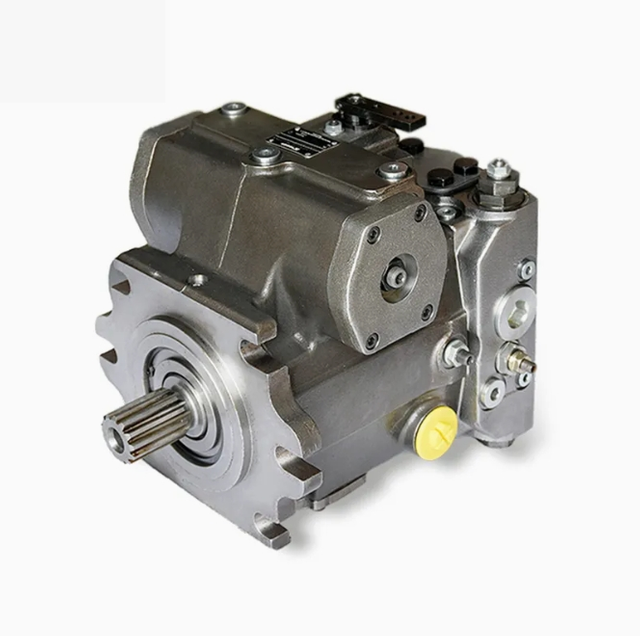
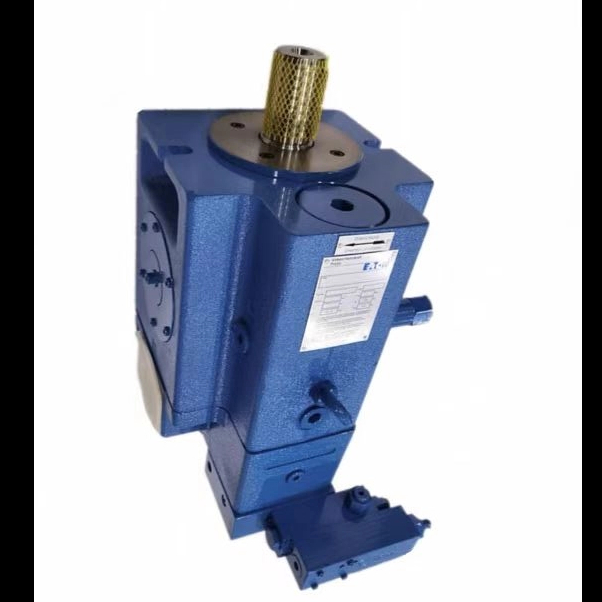
The PVB series of straight shaft axial piston variable pumps is an economical and universal open circuit hydraulic power component under the Eaton Vickers brand. It adopts a classic swashplate (straight shaft) axial piston design, achieving stepless adjustment of displacement by changing the swashplate angle, thereby precisely matching the system's requirements for flow and pressure. This series of pumps is characterized by its compact structure, easy maintenance, high cost-effectiveness, and wide compatibility with various media. It is specifically designed for medium and high-pressure hydraulic systems that require reliability, efficiency, and cost control. It is widely used in agricultural machinery, small construction machinery, industrial production lines, and various hydraulic stations, making it an ideal choice for the hydraulic power source of medium and small-sized equipment.
The PVB pump is a type of variable axial piston pump with a swash plate. Its core working principle is as follows: The drive shaft rotates the cylinder block, and the pistons evenly distributed along the circumference of the cylinder block rotate together with it. As the ball heads of the pistons are tightly attached to the inclined plane of the swash plate through the slipper, the pistons perform axial reciprocating motion within the cylinder block holes while rotating around the cylinder block.
When the pistons extend out of the cylinder block, the sealed volume at the bottom of the pistons increases, creating a local vacuum, and the oil is drawn in through the oil suction window of the fixed valve plate.
Oil compression process: When the plunger is pushed back into the cylinder by the swash plate, the sealed volume decreases, the oil is compressed, and it is discharged to the system through the oil discharge window of the valve plate.
By changing the tilt angle of the swash plate through an external control mechanism (such as a pressure compensator, proportional solenoid, etc.), the reciprocating stroke length of the plunger can be altered, thereby continuously and infinitely adjusting the pump's output displacement (flow rate). When the swash plate's tilt angle is zero, the output flow rate is zero.
Its core structure includes a swash plate, a plunger-slipper assembly, a cylinder block, a valve plate, a return mechanism and a variable control mechanism. The PVB series adopts a hydraulically statically balanced valve plate and an optimized slipper design, effectively reducing friction and wear, and enhancing efficiency and service life.
It offers multiple variable control methods such as pressure compensation (DR), load sensing (LS), electro-proportional control (EP), and manual control (HD). The pump can automatically adjust the output flow according to the actual system requirements, avoiding overflow loss and significantly reducing energy consumption and system heat generation.
Made of high-strength materials and with an optimized design, the continuous working pressure can reach up to 210 bar, and the peak pressure can reach 280 bar, meeting the demands of most medium and high-pressure systems. The displacement range is wide (from approximately 10 cm³/rev to nearly 200 cm³/rev), providing flexible flow options.
The straight shaft design is simple in structure and small in size, making it easy to install in equipment with limited space. The modular design simplifies daily maintenance, fault diagnosis, and spare part replacement.
The design is compatible with various hydraulic oils, including mineral oil, synthetic oil, and fire-resistant hydraulic oils such as water-glycol and water-in-oil emulsions (with the selection of corresponding sealing configurations), offering broad applicability.
High volumetric efficiency and long service life:
The precise plunger pair fit and static pressure balanced distribution technology ensure high volumetric efficiency (typically over 94%) even under high working pressure. The key friction pairs have good wear resistance and a long design life.
Through optimized flow channel design, the use of an odd number of plungers (typically 7 or 9), and precise dynamic balance treatment, the flow pulsation and operating noise are effectively reduced.
The following is an overview of the key parameters of some common models in the PVB series:
| Parameter items | PVB5 | PVB10 | PVB20 | PVB29 | PVB45 | PVB90 |
| Displacement (cm³/rev) | 10.55 | 21.10 | 42.80 | 61.60 | 94.50 | 197.50 |
| Continuous working pressure (bar) | 210 | 210 | 210 | 210 | 210 | 210 |
| Peak pressure (bar) | 280 | 280 | 280 | 280 | 280 | 280 |
| Rated speed (rpm) | 1800 | 1800 | 1800 | 1800 | 1800 | 1800 |
| Maximum speed (rpm) | 3600 | 3600 | 2400~2800 | 2400~2800 | 2200 | 1800 |
| Maximum theoretical flow rate (L/min @1800rpm) | ~19.0 | ~38.0 | ~77.0 | ~111.0 | ~170.0 | ~355.0 |
| Control mode examples | pressure compensation, load sensing, electro-proportional, manual | |||||
| Typical weight (kg | ~8 | ~15 | ~26 | ~26 | ~96 | ~104 |
Note: The above are typical values. For specific parameters, please refer to the official technical manual of the selected model. Examples of control mode code meanings: FRS indicates flange installation, right oil port, splined shaft; 31 represents pressure compensation control; CVP represents electro-proportional control, etc.
With its reliable performance, flexible variable capacity and high cost-effectiveness, the PVB series pumps are suitable for a wide range of industrial and mobile machinery applications:
injection molding machines, die casting machines, machine tools (processing centers, grinders), rubber machinery, shoe-making machinery, hydraulic presses.
small excavators, loaders, forklifts, hydraulic systems for tractors, harvesters.
General hydraulic station:
Serves as the power source for various test benches, production lines, and auxiliary equipment in metallurgy.
deck machinery, steering gear, hatch cover pump station.
Correct selection is the key to ensuring the efficient and stable operation of the system:
Clearly define the maximum working pressure, maximum flow rate (L/min), and common working pressure/flow rate points required by the hydraulic system.
Based on the required flow rate and the speed of the driving motor, use the formula Flow rate (L/min) ≈ Displacement (cm³/rev) × Speed (rpm) ÷ 1000 × Volumetric efficiency to calculate the required displacement.
Pressure compensation (DR): Suitable for applications that require a constant maximum pressure and have pressure-holding or safety unloading requirements.
Load Sensing (LS): Suitable for systems with multiple actuators, where the pump's output flow automatically matches the load demand to achieve energy savings.
Electro-proportional control (EP): Suitable for automated systems that require remote or programmed precise control of flow/pressure.
Suitable for simple systems with fixed working conditions and manual adjustment.
Determine the installation method (flange or foot mount), shaft extension form (square key or spline), and oil port size and position (side or rear) based on the equipment layout.
Confirm the type of hydraulic oil to be used. If water glycol or other difficult-to-burn liquids are required, specify special configurations with compatible seals such as fluororubber (FKM).
Oil and filtration: Clean anti-wear hydraulic oil must be used, with a recommended viscosity range of 15-50 cSt (at 40℃). The cleanliness of the system oil should not be lower than NAS 1638 grade 7-9. A high-precision filter (10μm is recommended) must be installed at the oil suction port.
Installation requirements: Ensure that the pump shaft and the drive shaft are strictly concentric (it is recommended to use an elastic coupling), and the maximum allowable eccentricity is usually no more than 0.1mm. The installation base must have sufficient rigidity to prevent the transmission of vibration.
Startup and operation: Before the first startup, the pump housing should be filled with clean hydraulic oil. It is recommended to start the pump in a low-load or unloaded state to expel air from the pipeline, and then gradually increase the load to the working pressure.
The oil drain connection: The oil drain port (L port) of the housing must be connected directly and unobstructedly back to the oil tank. The highest point of the pipeline should be higher than the pump housing. The back pressure of the oil drain should generally not exceed 0.2 bar to prevent damage to the shaft seal.
Maintenance and servicing: Regularly check the oil level, oil temperature and oil cleanliness, and replace the filter element on time. Listen for any abnormal operating noise and check for leaks at all connection points. After a long period of inactivity, when restarting, perform thorough flushing and air venting.
The PVB axial piston variable pump with a straight shaft achieves an outstanding balance between performance, reliability and cost. Through its mature swashplate variable technology, it offers users a flexible, efficient and energy-saving hydraulic power solution. With a wide range of models, diverse control options and strong medium compatibility, it can easily adapt to the diverse needs from traditional industries to modern mobile machinery. For users who pursue system efficiency, reliable operation and optimized total cost of ownership, the PVB series is a reliable choice that has been proven in the market.
Basic model designation | Geometric dispalcementcm3/r (in3/r) | Maximum shaft speed (r/min) | Maximum outlet pressure, bar (psi) | ||||
| Anti-wear hydraulic oil | Water-in- oil emulsion (40%/60%) | Water- glycol | Anti-wear hydraulic oil | Water glycol | emulsion (40%/60%) Water-in- oil | ||
| PFB5 | 10,55 (0.64) | 3600 | 1800 | 1800 | 210 (3000) | 175 (2500) | 175 (2500) |
| PFB10 | 21,10 (1.29) | 3200 | 210 (3000) | ||||
| PFB20 | 42,80 (2.61) | 2400 | 175(2500) | ||||
| PVB5 | 10,55 (0.64) | 1800 | 1800 | 1800 | 210 (3000) | 140 (2000) | 140 (2000) |
| PVB6 | 13,81 (0.84) | 140 (2000) | 100 (1500) | 100 (1500) | |||
| PVB10 | 21,10 (1.29) | 210 (3000) | 140 (2000) | 140 (2000) | |||
| PVB15 | 33,00 (2.01) | 140 (2000) | 100 (1500) | 100 (1500) | |||
| PVB20 | 42,80 (2.61) | 210 (3000) | 140 (2000) | 140 (2000) | |||
| PVB29 | 61,60 (3.76) | 140 (2000) | 100 (1500) | 100 (1500) | |||
| PVB45 | 94,50 (5.76) | 210 (3000) | 140 (2000) | 140 (2000) | |||
| PVB90 | 197,50 (12.0) | 1800 | 1200 | 1200 | 210 (3000) | 140 (2000) | 140 (2000) |

A1: The PVB pump is a direct-axis (sliding vane) axial piston variable pump produced by Eaton Vickers. The key differences lie in its working principle, variable method, and performance characteristics:
The constant-flow pump has a fixed output flow, and the excess flow needs to be discharged through an overflow valve, resulting in energy waste and heat generation. The PVB, as a variable pump, can automatically adjust the output flow according to the system requirements (from zero to maximum), achieving on-demand oil supply and significant energy savings.
Both are axial piston variable pumps. The PVB adopts a straight-axis inclined-disc structure, with the piston parallel to the drive shaft. The variable is achieved by changing the inclination angle of the disc. The cylinder axis of the inclined-axis pump forms an angle with the drive shaft. Generally, the straight-axis type (such as PVB) has a more compact structure, lower cost, and a higher speed range; the inclined-axis type may have a slight advantage in structural strength under certain high-pressure and large-displacement conditions, but it usually has a larger volume and weight.
A2: The PVB pump achieves variable regulation by changing the inclination angle of the diaphragm, thereby altering the reciprocating stroke of the piston and achieving stepless adjustment of the displacement (flow rate). It offers a variety of mature control methods to meet the requirements of different systems:
Once the output pressure of the pump reaches the set value, it automatically reduces the displacement to maintain a constant pressure, providing only the minimum flow required to compensate for leakage, suitable for situations where pressure maintenance or safe deceleration is needed.
The output flow of the pump automatically adjusts to meet the requirements of the actuator, providing only the pressure and flow necessary for the load, making it an ideal choice for achieving efficient and energy-saving operation in multi-actuator systems.
This method uses external electrical signals (such as 0-10V or 4-20mA) to proportionally control the displacement or pressure of the pump, facilitating its integration into automated control systems and enabling precise remote or programmed control.
The flow rate can be mechanically adjusted through a manual knob, suitable for simple systems with fixed working conditions and infrequent adjustments.
A3: Correct selection requires the following core parameters:
1. System pressure requirements: The maximum working pressure (Bar) required for the equipment to operate normally and the peak pressure that may occur.
2. Flow requirements: The maximum flow rate (L/min) required by the actuator and the flow variation curve.
3. Driving source parameters: The rated speed (rpm) and available power of the driving motor or engine.
4. Control method: Based on the energy-saving and automation requirements of the system, choose pressure compensation, load sensitive, electro-hydraulic proportional, or manual control.
5. Installation and interface: Confirm the installation method on the equipment (flange or stand), shaft extension form (flat key or spline specification), and oil port size and direction.
6. Hydraulic medium: Clearly specify whether it is mineral oil, synthetic oil, or non-flammable liquids such as water ethylene glycol.
A4: Correct installation is the foundation for ensuring the pump's lifespan:
• Ensure alignment: The pump shaft and the drive shaft must be strictly concentric. It is strongly recommended to use an elastic coupling, and the maximum allowable misalignment is usually no more than 0.1mm.
• Oil drain pipe connection: The oil drain port on the housing (usually labeled as "L") must be directly and smoothly connected back to the fuel tank using a separate pipe, and the highest point of the pipeline must be higher than the pump housing. The back pressure of the oil drain must not exceed 0.2 bar, which is crucial for preventing damage to the shaft seal.
• Oil suction conditions: Ensure that the oil suction pipeline is unobstructed and the seal is good. The vacuum degree at the oil suction port should not exceed the allowable value of the pump (typically about -0.3 bar) to prevent cavitation.
• First startup: Before starting, make sure to fill the pump's housing with clean hydraulic oil. Then, perform a manual start of the motor in a no-load or unloaded state to expel any air.
Q5: What could be the reasons for excessive noise during pump operation?
1. Cavitation: Blockage of the suction pipeline, dirty filter, or leakage of the suction pipe in the oil suction system can cause air to be mixed into the oil, resulting in sharp screeching or popping sounds. Check the sealing performance of the suction side and the filter.
2. Suction void: Low oil level in the oil tank or too fast suction speed can lead to insufficient oil suction by the pump, causing a dull roaring sound.
3. Mechanical causes: Misalignment of the coupling, loose installation bolts, or wear and damage of internal components such as bearings and pistons in the pump can produce regular knocking or friction sounds.
4. Oil quality issues: High viscosity of the oil or low oil temperature can make it difficult to suction the oil.
A6: To identify the cause of performance decline, a systematic approach is necessary:
1. Check the driving source: Ensure that the motor/engine speed and direction are correct.
2. Check the system pressure setting: Confirm that the set pressure of the relief valve or pressure compensator is correct and not faulty.
3. Check the control mechanism: For variable pumps, verify the normal operation of the pressure compensator, load-sensitive valve, or proportional solenoid, and ensure the control oil circuit is unobstructed.
4. Check the pump itself:
Internal wear: After long-term use, wear between the flow distributor and the cylinder body, and between the piston and the cylinder bore will increase internal leakage and reduce volumetric efficiency. It is necessary to measure the actual output flow of the pump at the rated speed and pressure.
Variable mechanism jamming: The swashplate or variable piston may become stuck due to contamination and fail to reach the maximum displacement position.
A7: Oil leakage at the shaft seal is a common fault. The handling steps are as follows:
1. First, check the oil drain pipe: 90% of the shaft seal oil leakage is caused by a blocked oil drain pipe or excessive back pressure. Immediately check and ensure that the oil drain pipe is independent, unobstructed, and without back pressure.
2. Check the oil seal: If the oil drain pipe is normal, rotating the shaft seal (oil seal) may have been worn or aged, and replacement is necessary. When replacing, pay attention to the direction of the oil seal lip and use specialized tools to avoid damage.
3. Check the bearings and shaft: If the bearings are worn, resulting in excessive radial runout of the shaft, it will accelerate the wear of the oil seal. When replacing the oil seal, check the bearing clearance and the surface condition of the shaft.
A8: Yes, but it must be explicitly requested during the order. The sealing materials of standard PVB pumps (such as nitrile rubber NBR) are designed for mineral oil and are incompatible with media like water glycol and phosphate esters, which can cause corrosion and expansion failure of the sealing components. When using flammable liquids, special configuration models equipped with compatible sealing components such as fluororubber (FKM) must be selected.
A9: Good maintenance can significantly extend the service life of the pump:
• Monitor the oil condition: Regularly check the cleanliness (recommended NAS 7-9 grade), viscosity, moisture and acid value of the hydraulic oil, and replace the oil and filters on time (the suction filter is recommended with a precision of 10μm).
• Monitor the operating status: Pay attention to listening for any abnormal running sounds, check if the pump body temperature has risen abnormally (it should not exceed 80℃), and observe for any leaks at all connections.
• Regular tightening: During the initial operation and regular maintenance, check and tighten the installation bolts and pipe connections.
• Long-term idling: When the equipment is left idle for an extended period, it should be started and operated briefly on a regular basis to establish an oil film on all friction surfaces and prevent rusting.