loading
| Availability: | |
|---|---|
| Quantity: | |
PVXS
EATON
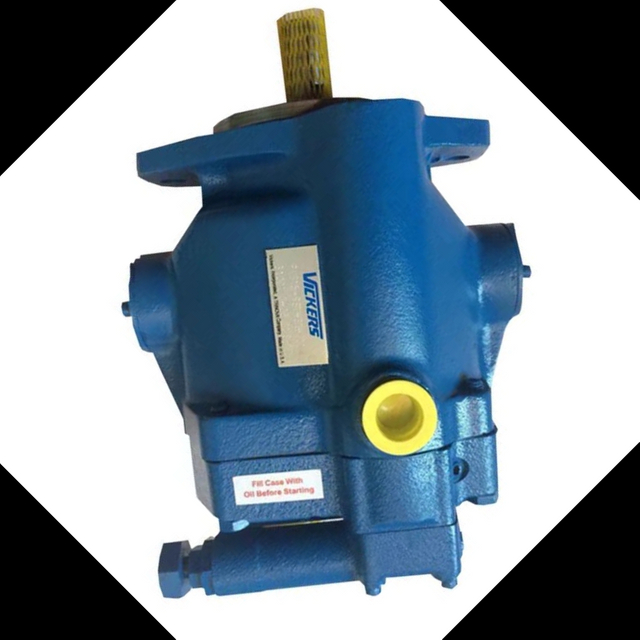
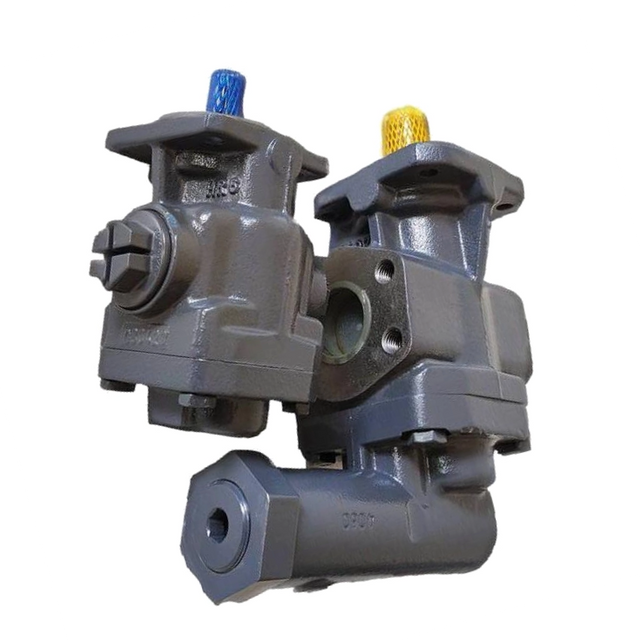
The PVXS series open-loop industrial variable piston pump is a direct-axis (rotor disc type) axial variable piston pump that represents high performance and extreme reliability. It is specifically designed for heavy-duty, continuous, and highly impact-prone harsh industrial environments and is widely used in metallurgy, mining, energy, ships, heavy construction machinery, and high-end testing equipment. This series of pumps adopts an optimized open-loop design. Its core advantages lie in its extremely high pressure rating, outstanding durability, compact modular structure, and wide adaptability. Through precise stepless variable control, it can perfectly match hydraulic power with system load,
and is the core power component for achieving high power, high efficiency, and long service life hydraulic drive.
The PVXS pump operates based on the classic straight shaft inclined disc - axial piston principle. The drive shaft rotates the cylinder body, and the evenly distributed pistons in the cylinder body maintain contact with the inclined disc plane through the sliding shoes. As the cylinder body rotates, the pistons, under the constraint of the inclined disc, move reciprocally within the cylinder hole and complete the oil suction and pressure oil processes through the fixed flow distributor. Its "variable" function is achieved by changing the inclined disc angle through external control signals (hydraulic, electrical), thereby continuously adjusting the output displacement.
Its excellence stems from the following core structural reinforcements and designs:
Utilizes reinforced alloy steel shells, thickened drive shafts, and heavy-duty roller bearings capable of withstanding extremely large axial and radial loads. Key friction pairs (such as piston/cylinder bore pairs, slipper/slipper plate pairs, and distribution pairs) employ advanced materials and surface treatment processes to ensure stability and lifespan under ultra-high pressure.
The flow distributor and the end face of the cylinder block adopt a static pressure balancing design, which significantly reduces the wear and friction loss on the contact surfaces, thereby improving the volumetric efficiency and lifespan under high pressure.
By optimizing the number of plungers, the flow channel design, and adopting special pressure pulsation attenuation technology, the flow and pressure pulsation have been significantly reduced, achieving a more stable and quiet operation.
Adopting a compact modular design, variable control components (such as pressure compensators, load-sensing valves, and electro-hydraulic proportional valves) can be integrated onto the pump body. A shaft-driven (Tandem Drive) option is provided, allowing multiple pumps (such as the PVXS main pump + gear-assisted pump) to be connected in series on the same drive shaft to form a compact multi-loop power unit.
The PVXS pump is an ideal choice for the following fields that have extremely demanding requirements for power, reliability and lifespan:
continuous casting machines, hot/cold rolling machines, hydraulic shears, pressure straightening machines.
Large hydraulic excavators, mining trucks, tunnel boring machines, crushers.
Deck machinery for offshore drilling platforms, heavy cranes for wind power installation vessels, ship steering gears and side thrusters.
Large road rollers, cranes, shield machines, pile driving machinery.
Large hydraulic presses, material testing machines, fatigue test benches, simulation vibration benches.
For extreme conditions, thorough calculations and matching are necessary:
1. Precise calculation of the load spectrum: Determine the maximum working pressure, flow demand curve, peak impact pressure, and load inertia of the system.
2. Matching of pressure and displacement: Ensure that the rated pressure and displacement of the pump cover the load requirements and leave an appropriate margin. When calculating the driving power, the total efficiency of the pump should be taken into account.
3. Selection of control strategy:
PC: Suitable for systems that require a constant maximum pressure limit.
LS: A system designed for multiple actuators and aiming for maximum energy efficiency.
HP: Protects the prime mover (engine/motor) from overloading and maximizes its power utilization.
EP: Used in automated systems that require remote, precise, and programmable control.
4. Confirm Installation and Drive: Select the installation method based on the equipment layout. If multiple pumps are required, assess the feasibility of using a common shaft drive and the bearing load. Ensure that the power and speed of the drive source are compatible.
5. Define Medium and Environment: Clearly define the type of hydraulic oil, environmental temperature, contamination level, and protection requirements (such as waterproofing, explosion-proofing).
Only the specified grade of high-quality hydraulic oil should be used. The cleanliness requirement of the system is extremely high, and it is recommended to reach ISO 4406 15/13/10 or higher. High-precision filters (recommended 3-10 μm βₓ ≥ 200) should be installed in the suction and pressure pipelines.
The alignment between the drive shaft and the pump shaft is extremely critical. High-precision flexible couplings must be used, and the installation base must have sufficient rigidity. Incorrect alignment is the main cause of early failure of bearings and shaft seals.
The shell oil discharge pipe (port L) must be independently, unobstructed and without back pressure connected back to the oil tank. This is the lifeline for protecting the shaft seal and preventing internal pressure build-up.
Before the first startup, make sure to fill the pump with oil. Run it under low pressure (less than 50 bar) without load for a period of time to perform break-in and exhaust, and then gradually increase the pressure to the working pressure.
Continuous monitoring: The pump's outlet pressure, shell temperature, noise and vibration are monitored through sensors. Abnormal changes are often precursors of faults.
Regular inspection: Conduct regular inspections of the oil, filter element pressure difference, fastening bolts, and all sealing points.
Professional maintenance: Any disassembly, repair or fault diagnosis should be carried out by trained professionals using specialized tools.
The PVXS series open-loop industrial variable piston pumps are engineering masterpieces designed to push the boundaries. They are not merely hydraulic components; they are strategic investments that ensure key industrial equipment achieves the highest availability, longest service life, and lowest overall operating costs under the harshest conditions. With their unparalleled durability, outstanding energy efficiency, and flexible configuration capabilities, they provide a solid and reliable power foundation for users to tackle complex challenges such as high pressure, heavy loads, and continuous production. Choosing PVXS is choosing to inject top-level power reliability and operational economy into your core equipment.
Proven Robustness and Long Life: The pump incorporates a heavy-duty design with an enlarged shaft and bearings to minimize internal deflection and wear under high loads, contributing to an extended service life and reduced downtime.
High Power Density and Efficiency: Capable of continuous operation at high pressures, it delivers significant power in a relatively compact and lightweight housing. Its efficient design, including pressure-balanced rotating groups, helps maximize power transfer and can achieve high volumetric efficiency.
Responsive and Flexible Control: The variable displacement mechanism, often paired with pressure-compensating (DF) controls, allows the pump to automatically adjust its output flow to match system demand. This "on-demand" functionality enhances overall system energy efficiency.
Low Noise Operation: Engineered with features aimed at reducing operational noise, making it suitable for applications where a quieter working environment is important.
System Integration Friendly: Its "building block" design philosophy and availability of integrated controls, filters, and relief valves offer great flexibility for configuring systems to meet specific requirements.
It adopts a swashplate design, which ensures high reliability and a long service life. The rotating and pressure - loaded components are pressure - balanced, and it is equipped with strengthened shafts and bearings.
The pump has an integrated control pump, filter, and relief valve. Its "combination block" design enables a wide range of applications.
Control Modes
There are various control modes, such as DF (pressure compensator control), DQ (mooring control), LR (power control with pressure limiter), ES (electric motor displacement control), HG (hand - wheel displacement control), FE (screw adjustment control), DP (displacement proportional to pressure signal), and SP (displacement proportional to electric signal).
Advantages
It features an open - circuit hydraulic drive, which is stable and has a long service life. It can be externally controlled and offers multiple control methods. It has a high power - to - weight ratio, low noise, is easy to maintain, has high cost - effectiveness, low energy consumption, and an adjustable installation. It can also be connected with gear pumps or piston pumps.
The displacement control of Vickers PVXS plunger pump
ES - Electric Motor Displacement Control
HG - Handwheel Displacement Control (Special Function)
FE - Screw Adjustment Control (Special Function)
DF – Pressure compensator control
DQ - Mooring Control
LR - Power Control with Pressure Limiter
SP, SM – Proportional to the electric power output signal
DP - Displacement proportional to the pressure signal
| Vickerspump PVXS | 66 | 90 | 130 | 180 | 250 | ||
| Pipe connection SAE/Flange | B | psi | 1 1/2″ = 3000 | 2″ = 3000 | 2 1/2″ = 3000 | 2 1/2″ = 3000 | 3 1/2″ = 500 |
| A | 1″ = 6000 | 1″ = 6000 | 1″ = 6000 | 1 1/4″ = 6000 | 1 1/4″ = 6000 | ||
| Direction of rotation | Clockwise when viewing shaft end of pump | ||||||
| Counterclockwise available on request | |||||||
| Speed range | nmin | min-1 | 150 | ||||
| nmax | 1800 | ||||||
| Maximum geometric n= 1500 min-1 displacement n= 1800 min-1 | Vg | cm3 | 66 | 90 | 130 | 180 | 250 |
| Maximum geom. n= 1500 min-1 pump flow n= 1800 min-1 | Qg | L/min | 99 | 135 | 195 | 270 | 375 |
| 118 | 162 | 234 | 324 | 450 | |||
| Mass of inertia | J | kg m2 | 0.016 | 0.016 | 0.045 | 0.045 | 0.146 |
| Weight | m | kg | 55 | 75 | 106 | 115 | 212 |


A1: The PVXS series offers various displacement specifications to meet different flow requirements. Common models include PVXS66, PVXS90, PVXS130, PVXS180 and PVXS250, with their displacement ranges covering approximately 66 cm³/rev to 250 cm³/rev. At a rotational speed of 1500 rpm, the corresponding maximum geometric flow rates are approximately 26, 36, 52, 71 and 99 L/min; at 1800 rpm, the flow rates are approximately 32, 43, 62, 86 and 119 L/min.
A2: The PVXS pump supports multiple variable control methods. The choice depends on your system requirements:
• Pressure Compensation (PC): Suitable for scenarios where a constant maximum working pressure is required, and the system has pressure retention or safety deceleration needs, such as presses and clamping devices.
• Load Sensing (LS): Suitable for multi-pump systems. The pump's output flow automatically adjusts to match the load requirements, achieving maximum energy efficiency. It is commonly used in construction machinery and injection molding machines.
• Constant Power (HP): This feature protects the prime mover (motor or engine) from overloading, enabling it to operate within the optimal power curve. It is suitable for devices with limited power capacity.
• Electro-hydraulic Proportional (EP): This system allows for continuous adjustment of the pump's displacement or pressure using external electrical signals (such as 0-10V), and is suitable for automated systems that require remote, precise, and programmable control.
A3: Yes, but it must be specified clearly during the order. The standard sealing materials (such as nitrile rubber NBR) are not suitable for flame-retardant fluids. When using water glycol (HFC) or phosphate ester (HFDR), a special configuration model equipped with fluorine rubber (FKM) seals must be selected. Please note that when using substitute oil (such as HFC), the expected lifespan and working pressure of the pump may be affected. Refer to the specific recommendations of the manufacturer.
A4: Correct installation is the foundation for ensuring the pump's lifespan. Special attention should be paid to the following points:
1. Precise alignment: The pump shaft and the motor shaft must be strictly concentric. It is recommended to use a flexible coupling, and the maximum misalignment should typically be less than 0.1 mm. Improper alignment is the main cause of early damage to the bearings and seals.
2. Oil drain pipe connection: The drain port (L port) of the housing must be directly and smoothly connected to the oil tank using an independent oil pipe, and the highest point of the pipeline should be higher than the pump housing. It is strictly prohibited to install a check valve or throttle valve on the oil drain pipe, and the back pressure of oil drainage should not exceed the specified value (usually very low), to prevent damage to the seal and accumulation of internal pressure.
3. Ensure suction conditions: The suction pipeline should be short and straight, with an adequate pipe diameter. The vacuum at the suction port should not exceed the allowable value (to prevent cavitation), and the oil level in the oil tank should be high enough.
4. First start-up: Before starting, it is essential to fill the pump housing with clean hydraulic oil. It is recommended to jog the motor in the unloaded state to remove air from the system.
A5: The cleanliness of the oil is the key to ensuring the long lifespan of the PVXS pump:
• Oil cleanliness: It is recommended to use high-quality anti-wear hydraulic oil with a contamination level not inferior to ISO 4406 18/15/13. For systems using non-flammable fluids, higher cleanliness requirements are necessary.
• Filtration: A high-precision filter must be installed at the oil suction port. It is recommended that the filtration accuracy be no less than 10μm, and the flow capacity should be more than twice the maximum flow rate of the pump.
• Viscosity range: The recommended viscosity range for continuous operation is 10 to 75 cSt. The maximum allowable viscosity during startup can reach up to 1000 cSt.
A6: Abnormal noise and vibration are usually caused by the following reasons:
1. Cavitation or suction failure: This is the most common cause. It manifests as sharp cracking sounds. Check if the oil suction filter is clogged, if there is air leakage in the oil suction pipeline, if the oil level in the oil tank is too low, and if the viscosity of the oil is too high (especially during cold start).
2. Air intake: A large amount of foam is generated in the oil tank, causing the actuator to "crawl". Check the sealing of all oil suction pipelines.
3. Poor mechanical alignment: If the pump and the motor shaft are not concentric, there will be periodic dull knocking sounds and severe vibrations. The coupling alignment must be re-adjusted.
4. Wear of internal components: Wear and damage of bearings, plungers or slipper will produce regular friction or impact sounds.
A7: To identify the cause of performance degradation, a systematic approach is necessary:
1. Check system settings: First, confirm that the set pressure of the system relief valve or safety valve is correct and functioning properly.
2. Check suction conditions: As in Q6, eliminate problems such as poor suction or air entrainment.
3. Check variable mechanism: For variable pumps, check if the pressure compensator, load-sensitive valve, or proportional solenoid is stuck or damaged, and if the control oil path is unobstructed.
4. Check internal wear of the pump: After long-term use, wear between the flow distributor and the cylinder body, and between the piston and the cylinder bore can lead to increased internal leakage and reduced volumetric efficiency. This is manifested as acceptable pressure at cold engine start, but significant pressure drop when the oil temperature rises.
5. Check the driving source: Confirm that the motor speed and direction are correct.
A8: Excessive temperature of the pump body (above 80°C) is a sign of a serious problem:
1. Excessive internal leakage: This is the main cause. Wear and tear leads to the leakage of high-pressure oil, converting pressure energy into heat energy. If the temperature of the oil drain pipe is abnormally high, it can be basically determined that there is internal wear.
2. Insufficiently high or low oil viscosity: An inappropriate viscosity will increase friction or reduce lubrication effectiveness.
3. Persistent excessively high system pressure: The pump operates for a long time under conditions close to or exceeding the rated pressure.
4. Insufficient cooling: Faulty cooler or insufficient cooling water flow.
5. Mechanical friction: Such as damage to the bearing causing dry friction, which will generate local high temperature.
A9: This is a fault of the variable mechanism:
• Cause: The zero position setting of the variable controller is offset, loose, or damaged; the mechanical components of the variable mechanism (such as the feedback rod, pin shaft) are worn out; the control piston is stuck.
• Handling: Professional personnel are required to recalibrate, re-tighten or replace the damaged control components. Sometimes, the variable mechanism needs to be disassembled and cleaned to remove the contaminants that cause sticking.
A10: Flow and pressure fluctuations are often related to the stability of variable control:
• Main cause: Foreign objects enter the variable control mechanism, causing scratches on the control piston, resulting in unstable movement; the damping holes in the control oil circuit are blocked; the control amplifier (for electro-hydraulic proportional pumps) is insufficient in energy or damaged.
• Handling: It is necessary to inspect and clean the variable control valve and the oil circuit, replace the damaged precision components, or repair the control circuit.
A11: Preventive maintenance can significantly extend the lifespan of the pump:
• Monitor the oil condition: Regularly test the cleanliness, viscosity, moisture content and acid value of the hydraulic oil, and replace the oil and filters at the scheduled time.
• Monitor operating status: Pay attention to listening for the running sound, check the pump body temperature, and observe for any abnormal vibrations or leaks.
• Regularly inspect fasteners: During the initial operation and regular maintenance, check and tighten the installation bolts and pipe connections.
• Record operation data: Establish baselines for pressure, flow, temperature and noise to facilitate the early detection of abnormal trends.
A12: The key factors influencing the lifespan of the pump include:
1. Oil cleanliness: This is the most important factor. Polluted oil acts as "grinding material" for the internal wear of the pump.
2. Oil type: When using alternative oils such as water ethylene glycol (HFC), the expected lifespan of the pump may only be 25%-50% of that when using petroleum-based hydraulic oil.
3. Operating conditions: Long-term continuous operation under high pressure, high load, and high temperature will accelerate fatigue and wear.
4. Installation and maintenance: Incorrect alignment, excessive back pressure during oil drainage, and suction failure can directly lead to early failures.
5. Correct shell flushing: For certain conditions (such as pressure below 20 bar and flow rate less than 10% of the maximum flow rate), or when using special oils, additional shell flushing flow (usually greater than 1% of the maximum flow rate) may be required to help cool and remove contaminants.