loading
| Availability: | |
|---|---|
| Quantity: | |
KF
KRACHT
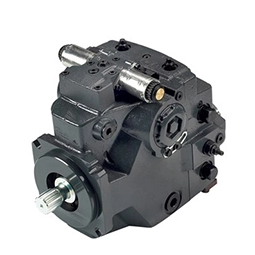
The KF series hydraulic wind-driven low-temperature gear pump is a high-performance volumetric pump specially designed by the German KRACHT company for wind power generation and harsh industrial environments. It perfectly combines efficient wind energy drive compatibility and outstanding low-temperature start-up and operation capabilities, aiming to provide reliable, energy-saving, and durable fluid delivery solutions for wind turbine gearboxes lubrication systems, industrial hydraulic power units, and outdoor mobile equipment. This pump adopts a modular design, is compact in structure, and can stably start and operate efficiently even at extreme environmental temperatures of -30℃ or lower, solving the core problems of lubrication and hydraulic power supply for equipment in cold regions and during winter. It is a key power component in the fields of new energy and heavy industry.
This product is an external meshing gear pump, and its core lies in a pair of precisely meshing involute helical gears.
The drive shaft (usually directly or through a coupling connected to the auxiliary output shaft of the wind turbine or the motor) drives the driving gear to rotate, thereby meshing the driven gear. In the suction chamber, when the gears are disengaged from meshing, the volume increases, creating a vacuum, and drawing in the oil; in the pressure chamber, when the gears enter meshing, the volume decreases, squeezing out the oil, resulting in a continuous and stable flow output.
Strengthening of gears and bearings: The gears are made of high-strength alloy carburized steels such as 20MnCr5 or 20CrMnTi, which undergo carburizing and quenching treatment. The surface hardness reaches HRC 58-62, providing extremely high wear resistance and impact resistance. The bearings use heavy-duty roller bearings or special composite sliding bearings to ensure long service life under heavy loads and vibrations.
Low-temperature sealing system: Standardly equipped with fluororubber (FKM) seals, which maintain elasticity and sealing performance over a wide temperature range (-30°C to +120°C and even higher), effectively preventing low-temperature brittleness and leakage. Some models offer the option of selecting specialized seals that are more resistant to extremely low temperatures.
Optimization of the casing and flow channels: The pump body is cast from high-strength cast iron (such as HT250) or ductile iron (GJS), providing excellent impact resistance. The suction and discharge oil flow channels have been specially designed, combined with helical gears, which can significantly reduce flow pulsation (up to ≤ 3%) and operating noise (as low as 68 dB).
Modular interface: Installed using flange (in accordance with DIN ISO 3019 or SAE standards), with an ISO R775 short column shaft extension, facilitating a direct and secure connection to wind turbines or industrial drive sources.
Optimized for low-temperature environments, featuring low-friction-coefficient coatings (such as DLC diamond-like carbon coatings) and special gap designs, ensuring a start-up success rate of nearly 100% in extremely cold conditions ranging from -30°C to -40°C, and maintaining over 85%-90% of the rated flow rate, effectively resolving equipment failures caused by lubricant freezing.
Optimized gear profile and automatic compensation for axial clearance (such as floating side plates) design ensures a volumetric efficiency of ≥ 95% and a total efficiency of ≥ 85%. High efficiency implies lower energy loss, making it particularly suitable for matching with intermittent and energy-efficiency-oriented drive sources like wind turbines, maximizing the utilization of green energy.
The design adopts a split modular approach, allowing the pump body, front and rear covers, gear sets, and other core components to be replaced independently. Users can quickly switch to different displacement modules or sealing forms according to the working conditions, significantly reducing maintenance costs and downtime.
The robust materials and precise manufacturing techniques ensure an extremely long service life. Under the rated conditions, the design life can exceed 10,000 hours.
Compact structure, high power density, saves installation space. Its sturdy design can withstand vibrations, impacts and pollution in industrial environments. It is not only suitable for wind power, but also widely used in hydraulic and lubrication systems of engineering machinery, ships, metallurgy, chemical industries, etc.
Some high-end models incorporate temperature, pressure, and vibration sensors. Through the industrial Internet of Things platform, they can achieve remote data monitoring, predictive maintenance, and energy efficiency optimization, providing early warnings of faults and reducing unplanned downtime.
The main lubrication and circulation system of the wind turbine gearbox, the hydraulic power source of the pitch control system, and the lubrication of the yaw drive. These are its most core application areas.
As the core pump of small to medium flow and medium-low pressure hydraulic power units, it is used in injection molding machines, die-casting machines, machine tools, test benches, etc.
A centralized forced lubrication system for large mechanical equipment (such as rolling mills, compressors, and marine engines).
Transporting lubricating fluids such as lubricating oil, fuel oil, hydraulic oil, and emulsions with medium to high viscosity.
1. Determine flow rate and pressure: Based on the required working pressure and flow rate of the system, combined with the recommended speed, calculate the required displacement (Q = Displacement × Speed × Efficiency).
2. Identify the medium and temperature: Confirm the type, viscosity, corrosiveness, and minimum working temperature of the transported medium, in order to select the appropriate pump body material and sealing material (such as NBR or FKM).
3. Confirm the driving method: Clearly specify whether it is motor-driven, engine-driven, or directly driven by the output shaft of a wind turbine, ensuring interface compatibility.
4. Consider environmental factors: For outdoor, low-temperature, and dusty environments, it is necessary to confirm the protection level of the pump and the need for a low-temperature startup kit (such as electric heating).
1. Correct Installation: Ensure that the installation base of the pump is rigid enough. The drive shaft and the pump shaft must be precisely aligned (it is recommended to use a flexible coupling) to eliminate additional stress.
2. Pipeline Connection: The suction pipeline should be short and straight, with an adequate diameter to ensure smooth oil intake and prevent cavitation. Safety valves (overflow valves) must be installed in the system to prevent overpressure.
3. Initial Startup: Before starting, the pump must be filled with clean medium and the exhaust valve should be operated briefly in the unloaded state to expel air. Do not allow the pump to run dry.
4. Drainage Pipe (Key): The drain port of the housing (if any) must be directly connected to the oil tank without back pressure through an independent pipeline. This pipeline must not be throttled or blocked.
1. Oil management: Maintain ultra-high cleanliness of the hydraulic oil (recommend NAS 1638 ≤ 8 grade), and replace the oil and filters regularly.
2. Condition monitoring: Pay attention to listening for smooth operation sounds, and check for any abnormal vibrations, overheating or leaks.
3. Regular maintenance: Check the fastening and sealing conditions of components regularly according to the operating time. For modular designs, corresponding modules can be replaced after wear, making maintenance simple.
The KF hydraulic pneumatic-driven low-temperature gear pump is not merely a fluid transportation component; it is a crucial bridge connecting the utilization of renewable energy with the reliable operation of industrial equipment. Its outstanding low-temperature performance ensures the equipment's startup and protection capabilities in harsh climates; its efficient energy-saving feature aligns with the green concept of the wind power industry; and its modular, sturdy and durable design meets the demanding requirements of the industrial sector for low maintenance costs and high availability. Choosing KF pumps means selecting the power core that can withstand the tests of time and extreme environments for your wind power project or industrial equipment, and it is a wise choice for achieving cost optimization and reliable operation throughout the equipment's life cycle.
| size | geom. displacement | Working pressure | Maximum pressure | Speed range | Permissible load (n = 1500 1/min) | Sound level dB (A) | Weight | ||||
| nmin | nmax | p =5 bar | p =15 ba | p =25 bar | without valve | with valve | |||||
| 2.4 | 2.55 | 25 | 40 | 200 | 3600 | 700 | ≤ 65 | ≤ 66 | ≤ 67 | 4.2 | 5 |
| 4 | 4.03 | ||||||||||
| 5 | 5.05 | ||||||||||
| 6 | 6.38 | ||||||||||
| 8 | 8.05 | ||||||||||
| 10 | 10.11 | ||||||||||
| 12 | 12.58 | ||||||||||
| 16 | 16.09 | 4.8 | 5.6 | ||||||||
| 20 | 20.1 | ||||||||||
| 25 | 25.1 | ||||||||||
| 32 | 32.12 | 7.7 | 9.5 | ||||||||
| 40 | 40.21 | 1500 | ≤ 67 | ≤ 68 | ≤ 69 | ||||||
| 50 | 50.2 | ||||||||||
| 63 | 63.18 | 9.4 | 11.2 | ||||||||
| 80 | 80.5 | 3000 | |||||||||
| 100 | 101.5 | ≤ 67 | ≤ 68 | ≤ 69 | 16 | 18.7 | |||||
| 112 | 113.5 | ||||||||||
| 125 | 139.5 | ≤ 65 | ≤ 65 | ≤ 65 | 22.2 | 24.9 | |||||
| 150 | 155.6 | ||||||||||
| 180 | 186.6 | 24.8 | 27.5 | ||||||||
| 200 | 206.2 | 2500 | |||||||||
| 250 | 245.1 | 2000 | 2500 | ≤ 75 | ≤ 75 | ≤ 75 | 44.2 | 47.6 | |||
| 315 | 312.9 | ||||||||||
| 400 | 399.5 | 35 | ≤ 77 | ≤ 77 | ≤ 77 | 54.7 | 58.2 | ||||
| 500 | 496.5 | ||||||||||
| 630 | 622.5 | 30 | ≤ 78 | ≤ 78 | ≤ 80 | 60.8 | 64.2 | ||||
A1: The core advantage lies in its optimization for applications driven by renewable energy sources such as wind power, and it has excellent adaptability to extremely cold environments. "Wind-driven" means that its design (such as efficiency curve, interface, vibration resistance) can better match the auxiliary output shaft of wind turbine generators or similar intermittent and energy-efficiency-oriented driving sources. The "low temperature" feature ensures reliable startup and efficient operation even at extreme temperatures of -30℃ or lower, solving the core problem of equipment operation in cold regions during winter.
A2: The selection process requires precise calculation based on system requirements:
1. Determine the flow demand (Q): Calculate the required flow (L/min) based on the demands of the lubricated components or actuators.
2. Determine the working pressure (P): Confirm the pressure (bar) required by the system piping resistance.
3. Calculate the displacement (V): Estimate using the formula V (cm³/rev) ≈ (Q × 1000) / (n × η_v), where n is the pump's driving speed (rpm) and η_v is the volumetric efficiency (can be taken as 0.95).
4. Match the driving source: Confirm whether the power, speed and interface of your driving method (motor, engine or wind turbine generator output shaft) match the pump.
5. Confirm the medium and temperature: Clearly specify the type of the transported medium, viscosity, especially the minimum working temperature, to select the correct sealing material (such as standard FKM or special low-temperature sealing).
A3: The KF series offers a wide range of displacement options, typically from 0.5 to 3150 cm³/rev. The rated working pressure is usually 16-25 bar (continuous), and the peak pressure can reach 30-40 bar (short-term). The recommended operating speed range is 500-3000 rpm, and the economic speed is usually between 1500-2500 rpm. Specific parameters should be referred to in the technical samples of the corresponding models (such as KF50, KF80).
A4: This pump is suitable for lubricating mineral oils, synthetic hydraulic oils, lubricating oils, water ethylene glycol (HFC) fire-resistant liquids, etc. The viscosity range of the medium is wide, and the optimal working viscosity is between 30 and 300 cSt. The cleanliness of the oil is extremely high, which is the key to ensuring the long service life of the pump. It is recommended that the cleanliness of the system oil reach NAS 1638 grade 8 or ISO 4406 grades 17/15/12 or above, and a high-precision filter should be installed in the suction path.
A5: Correct installation is the foundation for ensuring performance and lifespan:
1. Precise alignment: The pump shaft and the drive shaft must be strictly aligned. It is recommended to use flexible couplings (such as梅花 couplings, drum-shaped tooth couplings) to compensate for minor deviations, and rigid connections are strictly prohibited. Poor alignment is the main cause of shaft seal leakage, bearing damage, and abnormal vibration.
2. Oil suction conditions: The oil suction pipeline should be as short, straight, and have a sufficiently large diameter as possible to ensure smooth oil suction and prevent cavitation. The suction height should generally not exceed 500mm.
3. Oil discharge pipeline (critical): If the pump has a shell oil discharge port (L port), it must be connected directly to the oil tank with an independent, sufficiently thick oil pipe without any back pressure. This pipeline must not have any valves or filters, and the highest point must be higher than the pump housing to ensure that the internal leaked oil can freely flow back to the oil tank and protect the shaft seal.
4. Firm installation: Ensure that the installation base has sufficient rigidity to absorb the pulsations of the pump and the vibrations of the drive source.
1. Filling with oil: Before starting, the pump housing must be filled with clean working medium through the drain port or exhaust port. It is strictly prohibited to run the motor dry.
2. Pointing to release air: In the unloaded state of the system (with the overflow valve fully open), point the drive motor several times, each time for 1-2 seconds, with intervals of a few seconds, to remove the air from the pump and the pipeline.
3. Cold start: In extremely low-temperature environments, if the oil viscosity is too high, it is recommended:
Use synthetic oil with good cold start performance.
If conditions permit, the fuel tank can be preheated (for example, by using an electric heater).
Run at low speed and without load for a period of time in the unloaded state. Then, allow the oil temperature to rise naturally before applying the load.
4. Gradual loading: Slowly adjust the system pressure to the working value and observe whether the operation is stable.
A7: Abnormal noise is usually an indication of a potential fault:
• Cavitation sound (sharp hissing or popping sound): The most likely cause is poor oil suction. Check if the oil suction filter is clogged, if the oil suction pipe is leaking, if the oil level is too low or if the low oil temperature leads to high viscosity.
• Mechanical impact or friction sounds: This could be due to damaged bearings, worn gears, or severely improper alignment during installation, causing internal parts to interfere with each other. The machine must be shut down for inspection.
Continuous buzzing sound: This may be caused by excessive work pressure exceeding the pump's rated value, or by excessively high viscosity of the medium.
1. Check the driving source: Ensure that the motor speed and direction are correct.
2. Check the suction side: Confirm that the suction filter is unobstructed, the pipeline has no air leakage, and the viscosity of the oil is appropriate.
3. Check the pump itself:
Wear and tear: After long-term use, the gap between the end face of the gears, the top of the teeth, and the pump body increases, resulting in increased internal leakage. This is manifested as the flow rate being acceptable at cold start, but significantly decreases when the oil temperature rises.
Sealing damage: Damage to the shaft seal or O-ring causes air to be sucked in or oil to leak out.
4. System Check: If the set value of the safety valve (overflow valve) is too low or the valve core gets stuck in the open position, it will prevent the pressure from being established.
• Oil leakage at the shaft end: The most common cause is a damaged shaft seal (oil seal). This could be due to excessive shaft vibration (caused by worn bearings), excessive back pressure on oil drainage, or aging of the oil seal. The oil seal needs to be replaced, and the bearing clearance should be checked to ensure that the oil drainage pipeline is completely unobstructed.
• Leakage at the joint: Check whether the connecting bolts are evenly tightened in the prescribed diagonal sequence and with the specified torque values. The O-ring may fail due to aging, improper installation, or defects in the sealing groove.
1. Severe internal wear: Frictional components such as gears and side plates wear out, resulting in increased mechanical frictional heat generation and an increase in internal leakage. High-pressure oil throttles within the pump casing and generates heat.
2. Excessive working pressure: Operating continuously under conditions exceeding the rated pressure.
3. Poor oil drainage: The oil drain pipe of the casing is blocked or the back pressure is high, preventing the heat from being removed.
4. Oil quality issues: Inappropriate oil viscosity, deterioration of the oil, or poor cleanliness.
IV. Maintenance and Lifespan
A11: Preventive maintenance can significantly extend the lifespan of the pump:
• Regularly inspect the oil: Take samples at regular intervals to test the cleanliness, viscosity, moisture content and acid value of the oil. Replace the oil that does not meet the standards in a timely manner.
• Replace the filter elements regularly: Follow the pressure difference indication or the time cycle to replace the filter elements of the oil intake and return filters.
• Monitoring and Observation: During normal operation, pay attention to listening for any abnormal sounds from the pump, and check for any signs of abnormal vibration, overheating, or leakage points.
• Regular tightening: Check and re-tighten the installation bolts and pipe joints to prevent loosening due to vibration.
1. Oil cleanliness: This is the primary factor. Contaminants will accelerate the wear of all friction pairs like abrasive agents.
2. Installation alignment accuracy: Poor alignment will generate additional radial forces, leading to premature failure of bearings and seals.
3. Operating conditions: Operating continuously at the upper limit of rated pressure, peak pressure, or extreme high/low temperatures will accelerate fatigue and aging.
4. Correct startup and operation: Avoid dry running, cavitation, and overpressure operation.
5. Back pressure of oil drainage: Blockage of the oil drainage pipe is a common human error that causes rapid damage to the seal.
A13: For core repairs (such as replacing gears, bearings, and side plates), it is strongly recommended to have them done by trained professionals or returned to the authorized maintenance center. The KF pump is manufactured with precision and is equipped with customizable components. Disassembly and assembly require specialized tools and expertise, especially for adjusting the axial clearance of the gear and installing the bearing with proper preload, which all have strict process requirements. Incorrect repairs may result in the inability to restore performance or cause secondary damage. Daily maintenance tasks such as replacing the shaft seal or cleaning the exterior can be performed by experienced technicians after carefully reading the manual.