loading
| Availability: | |
|---|---|
| Quantity: | |
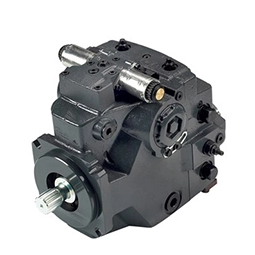
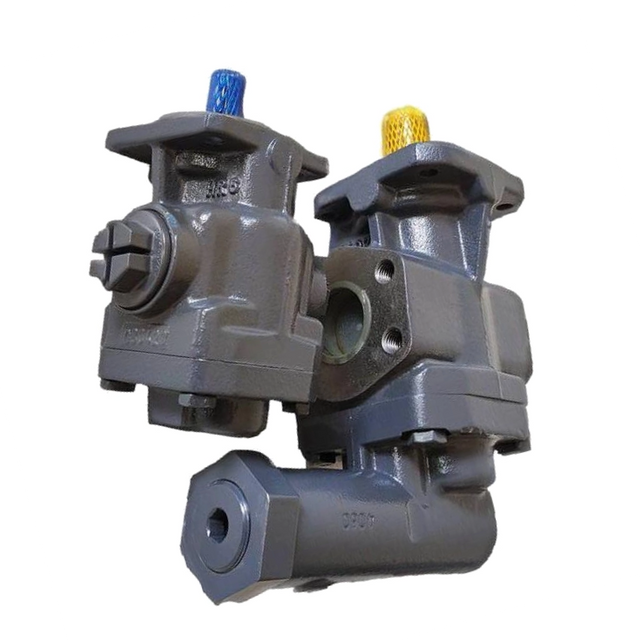
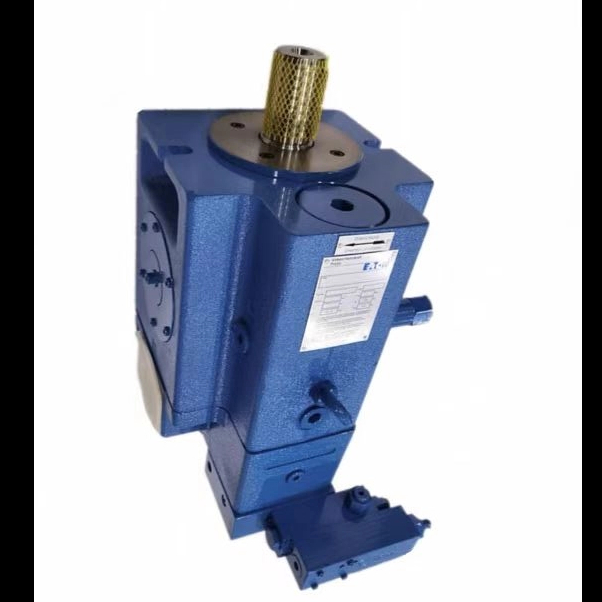
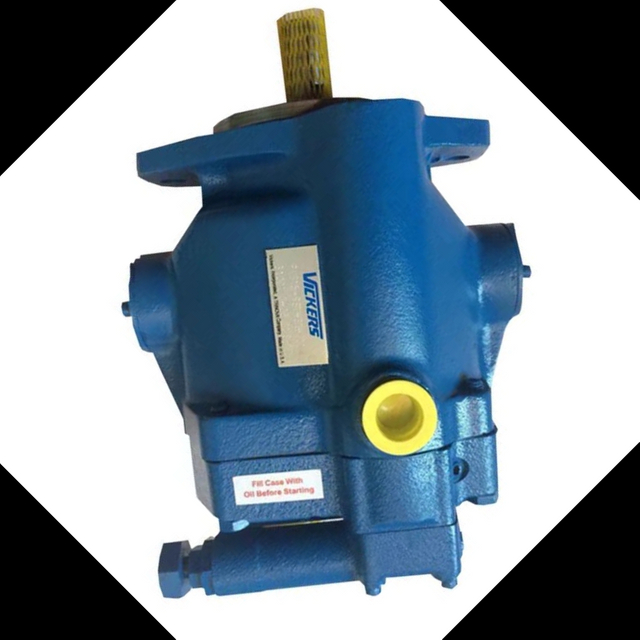
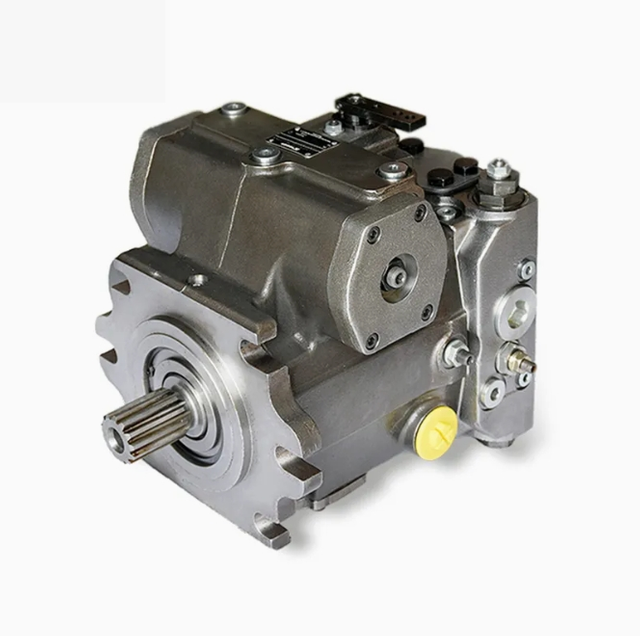
A7VSO
REXROTH
The A7V series is a type of inclined-axis axial piston variable pump, specifically designed for static hydraulic transmission systems in open circuits. Its key feature is the use of an inclined-axis drive structure, which achieves stepless adjustment of the displacement by changing the swing angle of the cylinder body. This pump, with its high pressure, large flow capacity, high reliability, and outstanding variable control performance, has become the ideal choice for hydraulic power systems in demanding conditions such as heavy construction machinery, mining equipment, and ship deck machinery. The flow rate is directly proportional to the driving speed and displacement. At a constant speed, it can achieve continuous and smooth changes in output flow.
This pump is a type of inclined-axis axial piston pump. Its working principle is based on the reciprocating motion of the piston within the cylinder, but the driving method is different from that of the inclined-disc type:
• Power transmission: The drive shaft is connected to the cylinder through a universal joint or a linkage mechanism, causing the cylinder, which forms a certain angle (i.e., swing angle) with the main shaft, to rotate.
• Volume change: When the cylinder body rotates, due to the angle between the axis of the cylinder body and the axis of the driving shaft, the evenly distributed pistons inside the cylinder move back and forth along their own axis within the piston holes while also orbiting around the cylinder body.
• Oil suction and discharge: When the plunger extends outward, the working chamber volume increases, and oil is sucked in through the suction window of the valve plate; when the plunger retracts inward, the working chamber volume decreases, and the oil is compressed and discharged through the discharge window of the valve plate, forming high-pressure oil.
• Variable Principle: The swing angle of the cylinder body can be changed through external or internal control mechanisms (such as the variable piston). The larger the swing angle, the longer the plunger stroke, and the greater the pump's displacement (the output flow per revolution). When the swing angle is reduced to zero, the displacement is also zero, thus achieving stepless regulation of the flow.
The cylinder body and the drive shaft are at a certain angle, connected by a sturdy connecting rod or ball hinge. This structure enables the drive shaft to withstand large radial loads, especially suitable for applications where it is directly driven by belts, gears or sprockets, without the need for additional supporting bearings.
Adopting a spherical flow pair design, it can automatically align during operation, effectively compensating for installation errors and wear, ensuring that the flow surface always fits well, thereby achieving high volumetric efficiency and long service life.
Key friction pairs (such as pistons/cylinder holes, sliding shoes/ball hinges) are optimized in design and paired with special materials (such as steel-copper), and in high-pressure areas, they adopt static pressure balance or residual pressure retention design, which not only ensures sealing but also minimizes wear and friction losses to the greatest extent.
Many models support through shaft drive, allowing the installation of another variable pump or a gear pump of the same series in series on the same drive shaft as an auxiliary pump, forming a compact dual or multi-unit pump set, providing power for complex multi-loop systems.
The structural design is compact and has high power density, which helps to save equipment installation space.
| Parameter category | Description and typical range |
| Displacement specifications (Vgmax) | series-based and common specifications include: 20, 28, 40, 55, 58, 80, 107, 117, 160, 250, 355, 500 (units: milliliters/revolution). |
| Rated working pressure (PN): | 35 MPa (350 bar) |
| peak pressure (Pmax) | 40 MPa (400 bar) |
| maximum rotational speed (nmax) | depends on the engine displacement specification, ranging from 1200 rpm (for large displacement) to 4100 rpm (for small displacement) |
| Pressure requirements for the oil suction port | The absolute pressure should be at least no less than 0.08 MPa and no more than 0.2 MPa. It is recommended to maintain an absolute pressure of approximately 0.1 MPa to ensure normal oil suction. |
| working oil viscosity range | 10 to 1000 mm²/s (for short periods), and the optimal working viscosity range is 16 to 36 mm²/s. |
| Operating oil temperature range: | -25°C to +80°C (oil temperature) |
| Back pressure of the oil discharge port: | The maximum allowable back pressure is usually no more than 0.2 MPa (2 bar) |
| Rotation direction | Usually it is standard clockwise (viewed from the shaft end). Counter-clockwise rotation should be specially noted during order placement. |
This series of pumps offers multiple variable control options to meet the requirements of different systems:
• Constant Power Control (LV): The output power (pressure × flow rate) of the pump remains constant. When the system pressure increases, the pump automatically reduces the displacement to decrease the flow rate, preventing the prime mover from overloading and making full use of the engine power.
Constant pressure control (DR): The pump automatically adjusts its displacement to maintain the system pressure at a preset constant level. When the system's demand for flow is less than the pump's output, the pump automatically reduces its displacement to only compensate for leakage, thereby achieving energy savings.
• Electronic Control Proportional Variable (EP): By inputting electrical signals from an external proportional electromagnet, it enables continuous and proportional control of the pump's displacement, facilitating integration into automated electronic control systems.
• Hydraulic Control Variable (HD): The pump's displacement is adjusted by the pressure signal from an external hydraulic control oil.
• Manual variable (MA): The pump's displacement can be set and changed by manually operating the control mechanism (such as a handwheel).
The inclined shaft structure is inherently resistant to radial forces, ensuring long bearing life and making it particularly suitable for harsh working conditions.
The spherical valve distribution automatically aligns, with static pressure balancing technology, resulting in high volumetric efficiency and overall efficiency. Multiple variable control methods enable "on-demand oil supply", significantly reducing energy consumption and heat generation.
High pressure and large flow: With a rated pressure of up to 35-40 MPa and a wide range of displacement, it meets the demand for high-power hydraulic power from heavy equipment.
The variable mechanism responds rapidly and controls smoothly, enabling precise regulation of flow and pressure.
• Low-noise operation: The optimized flow channel design and low-speed spherical flow distribution effectively reduce fluid noise and mechanical noise.
• High reliability: The robust design, high-quality materials and precise manufacturing techniques ensure a long service life under continuous heavy loads.
• Flexible application: With the ability to drive along the shaft and a wide range of control options, it can flexibly adapt to various complex hydraulic system architectures.
• Construction machinery: Working devices and traveling drive systems of excavators, loaders, cranes, bulldozers, and concrete pump trucks.
• Mining machinery: Rock drilling trucks, mining dump trucks, crushers, and hydraulic systems for conveying equipment.
• Ship and Marine Engineering: Steering gear, anchor winch, winch, hatch opening and closing device, marine platform lifting system.
• Metallurgical equipment: Hydraulic power units for rolling mills, forging machines, and continuous casting machines.
• Other heavy industrial equipment: injection molding machines, press machines, testing machines, etc.
Determine system requirements: Specify the maximum working pressure, the required flow range (calculate the displacement and rotational speed), and the control method (constant pressure, constant power, etc.).
Select the displacement specification: Based on the required flow rate and the rotational speed of the prime mover, calculate and select the matching displacement specification.
Select control type: Based on the system control logic (such as load sensitivity, pressure cut-off, power limitation), choose the appropriate variable control method.
Confirm installation interface: Verify the pump's installation flange, shaft extension type (such as spline or flat key), and oil port connection method (such as SAE flange or thread), ensuring it matches the main unit.
Centering requirement: The pump should be connected to the motor or engine via an elastic coupling, and strict centering must be ensured to prevent vibration and additional loads.
Oil suction conditions: The pump has a certain self-suction capability, but to ensure optimal performance, it is recommended that the oil suction height does not exceed 0.5 meters. For high-flow pumps (such as those with a flow rate of > 160 L/min), it is strongly recommended to use reverse siphoning for self-suction.
First startup: Before starting, the pump housing must be filled with clean working oil through the oil inlet.
Oil drain pipe: The oil drain pipe should be connected back to the oil tank independently and unobstructedly, with a sufficient pipe diameter to ensure that the pressure inside the casing does not exceed the allowable back pressure value (typically ≤ 0.05 MPa).
• Oil cleanliness: This is crucial for ensuring the lifespan of the pump. The cleanliness of the system oil should be at least at NAS 1638 Grade 8 or ISO 4406 Grade 20/18/15 level. High-quality oil filters must be used and they should be replaced regularly.
• Lubricating oil and oil temperature: It is recommended to use high-quality anti-wear hydraulic oil with a viscosity index above 90 (such as VG32 or VG46). The normal operating oil temperature should be maintained between 10°C and 65°C.
• Regular maintenance: According to the recommendations of the equipment manufacturer, conduct regular inspections (such as every 1,000-3,000 working hours or every six months) to check the oil quality, replace the hydraulic oil and filter elements.
• Fault Diagnosis: Common issues include abnormal noise, insufficient flow, and pressure fluctuations. During the troubleshooting process, it is necessary to first check the oil suction conditions (filters, pipelines), the cleanliness of the oil, and whether the signals of the variable control mechanism are normal.
A1: The A7V series is a type of inclined-axis axial piston variable pump, specifically designed for open hydraulic circuits. Its key feature is the use of an inclined-axis drive structure and a spherical distribution plate. The inclined-axis design enables the drive shaft to withstand large radial loads, making it ideal for heavy-duty applications driven directly by belts, gears, etc. The spherical distribution plate automatically aligns during operation, reducing the circumferential speed of the friction pair, thus achieving high volumetric efficiency, low noise, and long service life.
A2: This pump achieves stepless variable adjustment by changing the cylinder body's swing angle. The angle between the cylinder body's axis and the drive shaft's axis (the swing angle) determines the stroke of the piston. The larger the swing angle, the greater the amount of oil discharged per revolution (displacement) and the greater the output flow; as the swing angle decreases, the displacement and flow also decrease; when the swing angle is zero, the output flow is close to zero. This swing angle change is automatically or manually adjusted by the variable control mechanism (such as constant power, constant pressure control methods) according to the system requirements.
A3: This pump offers multiple control methods to meet the requirements of different systems:
• Constant power control (LV): The output power (pressure × flow rate) of the pump remains constant. When the system pressure increases, the pump automatically reduces the flow rate to prevent the prime mover (such as an engine) from overloading. This is suitable for construction machinery where there is a large variation in load and where the prime mover's power needs to be fully utilized.
• Constant pressure control (DR): The pump automatically adjusts the displacement to maintain the system pressure at a preset constant value. When the system does not require flow, the pump only outputs a small flow to compensate for leakage, achieving significant energy savings and is suitable for systems such as pressure retention and clamping.
• Electronic Control Proportional Variable (EL/EP): By using external electrical signals (such as 4-20mA), it can continuously and proportionally control the pump's displacement, facilitating integration into automated electronic control systems and enabling precise flow and pressure control.
• Hydraulic Control Variable (HD): The pump's displacement is adjusted by the pressure signal from an external hydraulic control oil.
• Manual Variable (MA): The pump's displacement can be set and changed by manually operating the mechanism (such as a handwheel), and it is commonly used in test benches or situations where the flow rate needs to be manually specified.
A4: The displacement selection mainly depends on the maximum flow required by the system and the driving speed of the prime mover. The basic calculation formula is: Required flow (L/min) = Pump displacement (ml/r) × Speed (rpm) ÷ 1000. You need to calculate the required displacement based on the maximum working flow of the system and the commonly used speed, and choose the closest specification model. When selecting, be sure to refer to the performance curve provided by the manufacturer to ensure that the pump can provide sufficient flow and maintain an acceptable efficiency under the required working pressure and speed.
• Rated pressure and peak pressure: Ensure that the rated working pressure of the pump (typically 35 MPa) and the peak pressure (typically 40 MPa) are higher than the maximum working pressure of the system.
• Maximum allowable speed: Pumps of different displacement specifications have their own maximum speed limit. The driving speed must not exceed this value.
• Control mode: Select the corresponding variable control type based on the system control logic (such as for constant power protection, constant voltage control, or proportional electrical control).
• Rotation direction: The standard direction is usually clockwise rotation when viewed from the shaft end. If reverse rotation is required, it must be clearly specified during the order placement.
• Installation and connection method: Verify the installation flange, shaft extension form (key specification), and oil port connection method (such as SAE flange, thread), ensuring it matches the main unit.
A6: This pump has a certain self-priming capability. However, to ensure performance and lifespan, the following conditions must be met:
• Suction height: The vertical distance from the pump's suction port to the oil tank liquid surface is recommended not to exceed 0.5 meters. For high-flow pumps (such as those with a displacement greater than 160 ml/r), it is strongly recommended to use reverse priming (i.e., installing the pump below the oil tank liquid level).
• Oil suction pressure: The absolute pressure at the oil suction port should not be lower than 0.08 MPa, nor higher than 0.2 MPa. It is recommended to maintain at approximately 0.1 MPa.
• Pipeline and Filtration: The oil suction pipeline should be as short, straight, and have a sufficiently large diameter as possible to minimize the suction resistance. A coarse filter (e.g. 100μm) must be installed at the suction port, and the entire suction pipeline must be strictly sealed to prevent air from entering.
A7: Alignment, cleaning, and oiling are the three key points.
1. Precise alignment: The pump shaft and the motor (or engine) shaft must be connected using an elastic coupling, and the radial and axial runout errors must be controlled within 0.05mm. Poor alignment is the main cause of early bearing damage and abnormal vibration and noise.
2. Extreme cleanliness: All hydraulic pipes and joints must be thoroughly cleaned before connection. The cleanliness of the system oil should be at least NAS 1638 8 grade or ISO 4406 20/18/15 grade.
3. Initial oiling: Before the first start-up, the pump body's oiling port or drain port must be used to fill the pump housing with clean hydraulic oil to ensure that the internal friction pairs (such as bearings, flow distribution plates) are fully lubricated. Otherwise, it may lead to dry friction and immediate damage.
A8: The oil drain pipe must be connected directly and unobstructedly back to the oil tank, with the return port submerged below the oil tank liquid level. It is strictly prohibited to combine the oil drain pipe with the main oil return pipe of the system. At the same time, the back pressure of the oil drain pipeline must not exceed 0.05 MPa. Excessive back pressure may cause shaft seal leakage or even damage to internal components.
1. No-load operation: After confirming that the pump has been filled with oil and the direction is correct, start the pump at a low speed (such as 500-800 rpm) in no-load mode and run it for 5-10 minutes. Check for any abnormal noise, vibration or leakage.
2. Exhausting: Slowly operate the actuator of the system (such as the oil cylinder) for multiple full reciprocating movements to remove air from the pipeline.
3. Low-pressure running-in: Gradually increase the system pressure to 25%, 50%, and 75% of the rated pressure, and run each for a period of time (such as 30 minutes).
4. Load operation and parameter setting: Finally, load to the rated working pressure, run the system and check all its functions. According to the selected control method (such as DR constant pressure), set the required pressure or power value at this time.
Q10: What are the requirements for the working oil? A10:
• Oil type: It is recommended to use high-quality anti-wear hydraulic oil with a viscosity index above 90 (such as VG32 or VG46).
• Oil cleanliness: This is the most crucial factor for ensuring the lifespan of the pump. High precision filters must be used and regular inspections and replacements should be carried out to maintain the cleanliness of the oil.
• Working oil temperature: The optimal working oil temperature range is 30°C to 60°C, and the allowable range is generally -20°C to +80°C. Excessive oil temperature will accelerate the aging of the oil and reduce the efficiency of the pump.
• Daily inspection: Check the oil level, oil temperature, for any abnormal noises or vibrations, and for leaks at all connection points every shift.
• Regular replacement: Depending on the severity of the working environment, it is generally recommended to replace the hydraulic oil and filter element every 1,000 to 3,000 hours or every six months. Regularly test the oil to monitor changes in its viscosity, moisture content, and contamination level.
• Regular inspection: Check the condition of the seals every 500 hours; at 2000 hours or as per the operating conditions, it is recommended that professionals conduct performance tests on the pump and measure the wear gap of the critical friction surfaces.
A12: Common causes and troubleshooting directions:
1. Air suction failure or air intake issue: Check if the oil suction pipeline is blocked or leaking, if the oil level in the oil tank is too low, and if the oil suction filter is clogged.
2. Cavitation: Caused by excessive suction resistance or high oil temperature. Check if the suction conditions meet the requirements.
3. Poor installation alignment: Recheck and correct the coaxiality between the pump and the drive shaft.
4. Wear of bearings or internal components: Long-term use or contamination of the oil may cause wear of the bearings, plungers, or flow distribution plates. They need to be disassembled for inspection.
A13: Possible causes include:
1. Insufficient oil suction: Same as Q12. Check the oil suction pipeline and filter.
2. Fault of the variable mechanism: The variable control piston gets stuck, the control oil path is blocked, or the pilot valve malfunctions, resulting in the swing angle not reaching the maximum.
3. Excessive internal leakage: The flow distribution plate and the cylinder, or the piston and the cylinder bore, have excessive wear, causing a large gap and a decrease in volumetric efficiency. It is necessary to test the pump's volumetric efficiency.
4. High oil temperature or improper oil viscosity: This leads to increased internal leakage or a decrease in the pump's self-priming ability.
A14: Besides the issue with the pump itself, other components of the system also need to be checked:
1. Severe internal leakage of the pump: Refer to Q13.
2. Incorrect or unstable setting of the variable mechanism: For example, the pressure setting value of the constant pressure pump is too low, or the variable mechanism responds slowly or oscillates.
3. Fault of the relief valve: The set pressure of the main system relief valve is too low or the valve core is stuck in the open position.
4. There is severe external leakage in the system.
A15: Common causes of shaft seal leakage:
1. Excessive back pressure of the oil discharge: This is the most common reason. It is necessary to ensure that the oil discharge pipe leads to the oil tank independently and is unobstructed, and the back pressure should not exceed the allowable value (usually 0.05 MPa).
2. Aging or damage of the shaft seal: The sealing element ages over time or is damaged during installation.
3. Damage to the shaft surface: There are scratches or wear at the contact point of the pump shaft with the sealing lip.
The solution is to first check and reduce the back pressure of the oil discharge. If this is ineffective, the shaft seal should be replaced after the system is depressurized. When replacing, be sure to protect the shaft surface.