loading
| Availability: | |
|---|---|
| Quantity: | |
A11V
REXROTH
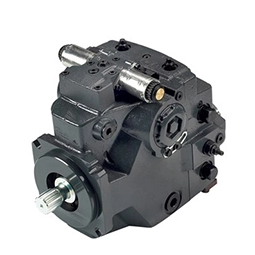
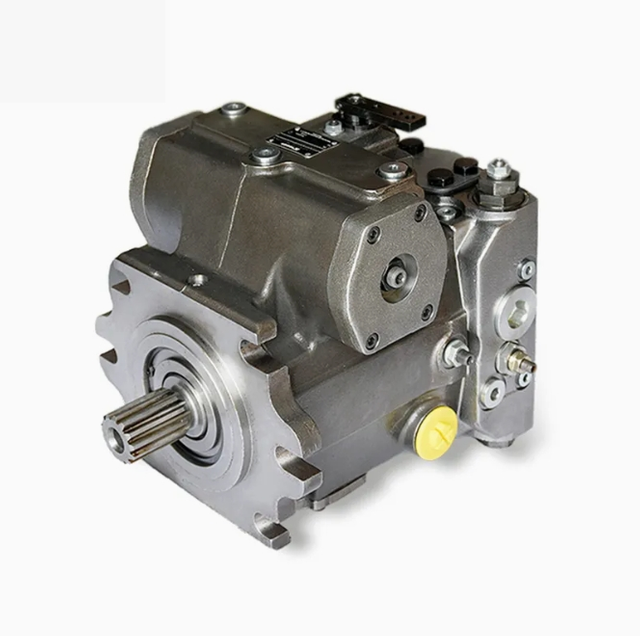
The A11V series is a high-performance vane-type axial piston variable pump specifically designed for open circuit hydraulic systems. This series of pumps boasts core advantages such as high pressure, large flow capacity, multiple control options, and 100% shaft-driven capability. It is widely used in industrial and mobile equipment fields that have extremely high requirements for power, efficiency, and reliability. It achieves continuous variation in displacement through the continuous adjustment of the vane angle, precisely matching system demands and achieving significant energy-saving effects and excellent control performance.
The core component of the pump is the rotating cylinder and the reciprocating piston assembly within it. By altering the inclination angle of the variable plate, the stroke length of the piston can be continuously adjusted, enabling the output flow to be adjusted continuously from zero to the maximum value while maintaining a constant driving speed.
This design features rapid response and high control accuracy, serving as the foundation for efficient energy control.
Axial drive design: The pump shaft is 100% axial, allowing for the parallel installation of another axial piston pump or gear pump of the same specification on the same drive shaft, enabling multi-pump integration, saving space and simplifying the power transmission structure.
Optional built-in refueling pump (vane pump): For high displacement (such as 190, 260 cc/r) or high-speed applications, an optional built-in centrifugal refueling pump can be equipped. This auxiliary pump provides pressure boost to the suction port of the main pump, significantly improving the suction performance at high speeds, reducing the risk of cavitation, and enhancing the stability and reliability of the system.
The three major friction pairs: piston/cylinder bore, slipper/slipper plate, and valve plate/cylinder body - these three crucial friction components are processed with high precision and undergo special surface treatment processes, ensuring low leakage under high pressure and long service life.
| Parameter Category | Specification Description |
| Nominal displacement series: | 40, 60, 75, 95, 130, 145, 190, 260 (unit: cm³/revolution) |
| Rated working pressure: | 350 bar (35 MPa) |
| Peak pressure: | 400 bar (40 MPa) |
| Drive speed range: | Depending on the engine displacement, it is usually between 1800 and 3000 rpm (the higher the displacement, the lower the maximum speed) |
| Volume efficiency | ≥ 94% (at rated condition) |
| Rotation direction: | Choose clockwise or counterclockwise (usually it defaults to clockwise) |
| Shaft extension form: | Splined shaft (in accordance with DIN 5480 or ANSI standards) or flat key straight shaft |
| Installation method: | Flange installation |
This series of pumps offers a variety of advanced variable control methods to meet the control logic and energy-saving requirements of different systems:
Principle: Once the output pressure of the pump reaches the set value, it automatically reduces the displacement, and only outputs a very small flow that is necessary to maintain the set pressure. This achieves constant pressure output. This is the most basic and commonly used energy-saving control method.
Feature: Simple structure, fast response, suitable for holding pressure and clamping applications.
Principle: By sensing the working pressure of the system, the pump's displacement is automatically adjusted to ensure that the output power of the pump (pressure × flow rate) does not exceed the maximum power that the engine or motor can provide, thus preventing the prime mover from overloading.
LRC (Cross Sensing Control): Applied to multi-pump parallel systems, ensuring that the total power of all pumps remains constant.
LR3 (High Pressure Priority Control): In the overall power control, the power setting value is determined by the highest pressure of the load within the system.
LG (Leading Pressure Related Control): Utilizes an external leading pressure signal to override and adjust the power control setpoint.
Feature: Maximizes the power of the prime mover, making it an ideal choice for mobile machinery and systems with limited power.
Principle: The pump's displacement is proportionally controlled by an external hydraulic pilot pressure signal (either positive or negative characteristic).
Feature: Achieve stepless flow control either remotely or in conjunction with other hydraulic signals.
Principle: By receiving electrical signals (such as 0-10V or 4-20mA) from the proportional electromagnet, the pump's displacement is proportionally controlled.
Feature: Easy to integrate with PLC and controllers, enabling precise digital and automated control with the highest level of flexibility.
Principle: The pump's displacement automatically adjusts to meet the demand flow of the actuating elements in the system, providing only the required pressure and flow, eliminating throttling losses, and being one of the most efficient control methods.
Feature: Excellent energy-saving performance, especially suitable for systems with multiple actuating mechanisms performing combined actions.
Note: The above control methods can be used in combination, for example, "pressure-cut power control (LR...DR)", to achieve more complex control logic and protection functions.
• High efficiency and energy saving: Multiple variable control methods enable the pump's output to closely match the load requirements, significantly reducing unnecessary power consumption and heat generation, resulting in remarkable energy savings.
High pressure and high performance: The rated pressure of 350 bar and the peak pressure of 400 bar meet the requirements of heavy-duty industrial applications.
• High power density: Compact design, providing powerful power output within a limited volume and weight.
• Outstanding reliability: The robust design, high-quality materials and precise friction pairs ensure long service life and low failure rate even under harsh working conditions.
• Excellent oil absorption performance: The large-displacement models can be equipped with an internal oil replenishment pump, ensuring stable operation at high speeds and strong resistance to cavitation.
• High degree of integration flexibility: The 100% coaxial drive design enables multiple pumps to be connected in series, saving installation space and simplifying the system layout.
• Extensive adaptability: A wide range of control options and displacement specifications enable flexible adaptation for various applications, including injection molding machines, machine tools, construction machinery, and mining equipment.
• Industrial equipment: Large injection molding machines, die-casting machines, hydraulic machines, machine tools, metallurgical equipment (rolling mills, continuous casting machines).
• Engineering and Mining Machinery: Excavators, loaders, cranes, pile driving machinery, tunneling machines, mining equipment.
• Vessels and port machinery: Deck machinery (rudder gear, winch), port cranes.
• Others: Cleaning vehicles, oil drilling and extraction equipment, test benches, etc.
Determine the displacement: Calculate based on the maximum flow required by the system and the rotational speed of the prime mover.
Select control mode: Determine it based on the system control logic (constant pressure, constant power, load sensitivity, etc.) and energy-saving requirements.
Confirm whether an oil pump needs to be added: For engines with a displacement of 130 cc/r or higher, especially when operating at high speeds or in poor oil suction conditions, it is recommended to choose the model with an inbuilt oil pump (A11VLO).
Confirm the axial extension and rotation direction: Determine based on the connection method of the prime mover.
Alignment: The alignment error between the pump shaft and the motor/engine shaft must be strictly controlled (typically ≤ 0.05mm), and flexible couplings should be used.
Oil suction conditions: Ensure that the oil suction pipeline is unobstructed, short and straight, and that the diameter of the oil suction filter is sufficient. Under self-suction conditions, the oil suction vacuum degree should not exceed the allowable value (such as -0.3 bar). For models with a supplementary oil pump, the oil suction conditions of the supplementary oil pump also need to be guaranteed.
Oil cleanliness: This is of utmost importance. The cleanliness of the system oil should be at least ISO 4401 standard level 20/18/15 or higher. It is recommended to install high-performance filters at the oil suction and pressure lines.
Oil drain pipe: The oil drain pipe of the housing should be directly and smoothly connected back to the oil tank, and the back pressure should not exceed the specified value (usually 0.2 - 0.3 bar).
• Daily monitoring: Regularly check the noise, vibration, temperature rise of the pump, as well as the stability of system pressure and flow.
• Oil management: Replace the hydraulic oil and filters strictly according to the prescribed schedule to maintain clean and appropriate viscosity of the oil.
• Common Faults:
Insufficient output flow or inability to establish pressure: Possible causes include poor oil suction, contamination of the oil leading to wear of the flow distributor or variable mechanism, and stuck control valves, etc.
Abnormal noise or vibration: This may be caused by cavitation, suction loss, bearing damage or misalignment.
Overheating: It may be caused by excessive internal leakage, improper oil viscosity, failure of the cooling system, or prolonged operation under high pressure and low flow conditions.
Professional Maintenance: This pump is equipped with precision components. In case of internal failure, it is recommended that trained professionals use specialized tools for disassembly and repair.
A1: The A11V series is a high-performance disc-type axial piston variable pump, used in open circuits of industrial hydraulic systems. Its core principle is to adjust the reciprocating stroke of the piston through changing the inclination angle of the internal disc, thereby achieving continuous and precise control of the output flow from zero to the maximum value. This design enables it to supply oil according to the actual requirements of the system, achieving efficient and energy-saving operation.
A2: The key difference lies in whether the flow output can be adjusted. The flow of a constant-flow pump is fixed, and any excess flow needs to be discharged through an overflow valve, resulting in energy waste and increased oil temperature. A variable pump, on the other hand, adjusts its displacement itself to match the load requirements, avoiding throttling and overflow losses at the source, achieving significant energy-saving effects (especially in holding pressure, standby, or situations with large load variations), and reducing the cooling burden of the system.
A3: "Axial-flow drive" means that the transmission shaft of this pump is designed as a 100% full axial shaft. This implies that another pump of the same or different specifications (such as another variable pump or gear pump) can be directly connected in series on the non-driven side (the rear end) of this pump, sharing the same prime mover (electric motor or engine). The greatest advantage is significant space savings, simplification of the power transmission structure, and facilitation of implementing multi-loop hydraulic systems.
A4: The displacement selection depends on the maximum flow required by the system and the rotational speed of the prime mover. The basic calculation formula is: Required displacement (cm³/rev) ≈ [System maximum demand flow (L/min) × 1000] / Prime mover rated speed (rpm). The calculated result should be rounded up to the nearest standard displacement (such as 40, 60, 95, 130, 190, 260, etc.). At the same time, ensure that the prime mover power is sufficient.
A5: The choice depends on your system control objectives and energy-saving requirements:
• DR (Pressure Control / Constant Pressure Variable): Suitable for scenarios where a constant maximum pressure is required, and the system has pressure retention or safety unloading needs, such as clamping, presses.
• LR/LR3/LG (Power Control/Constant Power Variable): This is used to protect the prime mover (electric motor/diesel engine) from overloading, ensuring it always operates within the optimal power curve. It is the preferred choice for mobile machinery and power-limited systems.
• EP (Electrical Proportional Control): By receiving electrical signals (such as 0-10V), it can precisely control the displacement. It is easy to integrate into PLC or automation control systems, enabling remote and programmed control.
• LS (Load Sensing Control): The pump's output automatically adjusts to meet the requirements of the actuator, achieving extremely high energy efficiency. It is particularly suitable for systems with multiple actuating mechanisms and high energy-saving demands.
A6: For large-displacement pumps or in working conditions with high rotational speed and poor oil suction (long pipelines, high resistance of filter elements), it is strongly recommended to choose the model with a built-in centrifugal oil replenishment pump. It can provide certain pressure boost to the main pump suction port, significantly improving the oil suction performance, effectively preventing cavitation, and enhancing the reliability and lifespan of the pump. In standard oil suction conditions with good performance, it is not necessary to choose this model.
A7: The rated continuous working pressure of this series of pumps is 350 bar (35 MPa), and it can withstand higher peak pressure (400 bar/40 MPa). When selecting, it is necessary to ensure that this pressure rating fully covers the highest working pressure and possible shock pressure of your system.
A8: The three most important points are:
1. Precise alignment: The pump shaft and the prime mover shaft must be strictly aligned. It is recommended to use high-quality flexible couplings, and the maximum misalignment should typically be controlled within 0.05mm. Poor alignment is the main cause of early damage to bearings and seals.
2. Ensure the oil suction conditions: The suction pipeline should be short, straight, and have sufficient diameter. Ensure that the vacuum at the pump suction port does not exceed the allowable value (usually -0.3 bar). For models with a supplementary oil pump, it is also necessary to ensure that the supplementary oil pump can suction oil smoothly.
3. Correctly connect the oil drain pipe: The drain port of the housing must be directly and smoothly connected to the oil tank with an independent pipe, and the highest point of the pipe should be higher than the pump housing. The drain back pressure must be extremely low (usually <0.3 bar) to prevent damage to the seal.
A9: High-quality anti-wear hydraulic oil must be used. The cleanliness of the oil is of utmost importance. It is recommended that the cleanliness of the system oil remain at ISO 4406 20/18/15 or a higher grade for a long time. A high precision filter must be installed in the oil suction path. The viscosity range of the oil must comply with the requirements of the pump (the optimal working viscosity is usually between 16-36 mm²/s).
1. Oil filling: Fill the pump housing with clean hydraulic oil through the oil drain port or exhaust valve.
2. Pointing exhaust: Disconnect the connection between the prime mover and the pump (or ensure the system is completely unloaded), and point the prime mover several times to confirm that the direction is consistent with the marked direction of the pump.
3. Low-pressure circulation: Connect the pump, operate it at low pressure (such as 10-20% of the rated pressure) and without load for 10-15 minutes to fill the system with oil and remove air.
4. Gradual loading: Gradually increase the load to the normal working pressure.
A11: The core of daily maintenance is monitoring and maintenance:
• Monitoring status: Pay attention to listening for stable running noise, and check for any abnormal vibration, overheating, or external leakage.
• Maintain clean oil: Regularly test the oil quality and replace the filter element and deteriorated oil in a timely manner.
• Check fasteners: Regularly inspect the tightening status of the installation bolts and pipe joints.
A12: Follow the system sequence for troubleshooting:
1. Oil suction side: Check the oil level in the oil tank, whether the suction filter is clogged, and whether the suction pipe is leaking.
2. Pump control mechanism: Check if the pressure cut-off valve, power control valve, etc., are set correctly or stuck. For electric pumps, check if the electrical signals are normal.
3. Pump body: After long-term use, the internal friction pairs (flow distributor/cylinder body, piston/cylinder hole) wear out, causing an increase in internal leakage. This is manifested as acceptable pressure at cold engine start, but significant performance decline after hot engine operation.
4. System side: Check if the system relief valve is set too low or if the valve core is stuck in the open position.
A13: Different noises indicate different problems:
• Sharp screeching/bursting sound (air erosion): A typical sign of insufficient oil intake. Immediately check the oil intake filter, pipeline seals, and oil viscosity (is the oil temperature too low)?
• Regular knocking sounds: These could be caused by damage to the internal bearings, or by severe misalignment of the machinery.
Continuous buzzing sound: This may be caused by excessive work pressure or the presence of a large amount of air in the oil.
A14: Excessive temperature is a sign of a serious problem. Possible causes are:
1. Excessive internal leakage: Wear causes high-pressure oil to leak out, converting energy into heat. At this time, the temperature of the oil drain pipe will be abnormally high.
2. Poor working conditions: Working for a long time at a pressure close to the rated pressure, or the displacement remaining in an extremely small state (the "high pressure low flow" condition).
3. Oil quality issues: The oil has too high or too low viscosity, or has deteriorated.
4. Insufficient cooling: The efficiency of the system cooler has declined or the selected type is too small.
A15: It is strongly advised against users disassembling the core components of the pump (such as the cylinder body, the flow distributor, the variable mechanism, etc.). Axial piston pumps are precision components, and their assembly requires special tools, a clean environment, and professional knowledge. Especially, the clearance of the friction pairs and the pre-tightening of the bearings all have strict standards. Incorrect disassembly and assembly will result in immediate damage or inability to restore performance. Peripheral seals can be replaced daily, but core repairs must be carried out by technicians who have received professional training or by returning to the authorized maintenance center.