Views: 0 Author: Site Editor Publish Time: 2025-12-03 Origin: Site
Hydraulic systems play a vital role in modern machinery, enabling precise, high-force motion across a wide range of industries. From construction and agriculture to automotive and aerospace, a hydraulic system allows small input forces to be amplified into significant mechanical power, making complex tasks easier and more efficient. Understanding the different types of hydraulic systems—Open-Loop, Closed-Loop, and Regenerative—is essential for engineers, operators, and businesses looking to optimize performance, energy efficiency, and reliability in their equipment. This guide explores each system in detail, highlighting their advantages, disadvantages, and ideal applications.
Hydraulic systems are based on fluid mechanics principles, using pressurized liquid to transmit power from one point to another. Unlike mechanical or electrical systems, hydraulics can multiply small forces into much larger outputs, making them ideal for heavy-duty applications.
How hydraulic systems work
Hydraulic systems rely on incompressible fluids, usually oil, to transmit energy. Pressure applied at one point creates force at another, according to Pascal’s Law. The system typically includes a pump to generate fluid flow, actuators to perform work, and valves to control flow and pressure.
Why hydraulic systems are important
They provide smooth, controllable, and high-force motion. Hydraulics are crucial in industries like construction, automotive, aerospace, and agriculture, where large loads need to be moved with precision and efficiency.
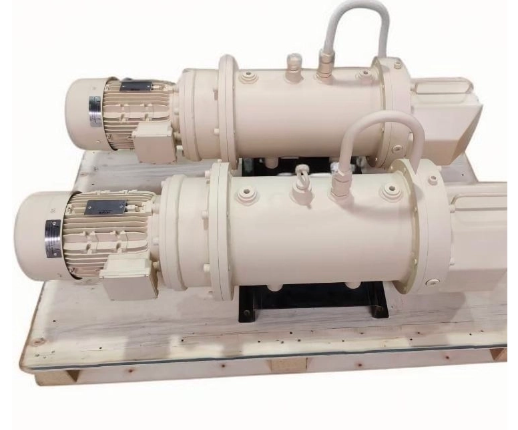
Open-loop hydraulic systems are the most basic and widely used configuration in both industrial and mobile applications. In an open-loop system, the hydraulic fluid flows from the pump directly to an actuator (such as a cylinder or motor) to perform work, and then returns to the reservoir or tank without being redirected back to the pump. These systems are straightforward, cost-effective, and reliable for tasks that do not require precise feedback or continuous adjustment.
Simple design: Fewer components mean less complexity and easier installation.
Lower initial cost: Less equipment and simpler control mechanisms reduce setup expenses.
Ease of maintenance: With fewer moving parts and no complex feedback controls, servicing is simpler.
Reliable for constant-flow applications: Performs well in scenarios where pressure and flow do not need frequent adjustments.
No real-time feedback: Cannot adjust flow or pressure automatically based on varying load conditions.
Lower energy efficiency: Fluid is not recycled, so some energy may be wasted as heat.
Limited precision: Not ideal for applications requiring high accuracy in movement or force control.
Performance affected by load changes: Variable external loads can influence the system’s effectiveness.
Construction machinery: Loaders, skid steers, and basic excavators often use open-loop systems for lifting and moving heavy materials.
Hydraulic lifts: Automotive repair lifts, elevators, and workshop jacks rely on open-loop hydraulics for smooth, straightforward lifting.
Industrial presses and handling equipment: Used in factories for basic pressing, stamping, and material handling where high precision is not critical.
Fluid transfer systems: Gear pump-driven open-loop systems are often applied in industries handling oils, chemicals, or other viscous liquids.
Open-loop systems are especially favored when simplicity, low cost, and reliability are more important than precise control or energy optimization.
| Category | Key Points |
|---|---|
| Advantages | Simple design with fewer components; Lower initial cost; Easy maintenance; Reliable for constant-flow applications |
| Disadvantages | No real-time feedback; Lower energy efficiency; Limited precision; Performance affected by load changes |
| Applications | Construction machinery (loaders, skid steers, excavators); Hydraulic lifts (automotive lifts, elevators); Industrial presses and handling equipment; Fluid transfer systems (oil, chemicals, viscous liquids) |
Closed-loop hydraulic systems are designed for applications requiring high precision, responsiveness, and energy efficiency. In a closed-loop configuration, hydraulic fluid is continuously recycled back to the pump after performing work. These systems incorporate sensors, electronic control units, and proportional valves to monitor and adjust flow and pressure in real time.
High precision: Feedback systems allow precise control of force, speed, and position, making them ideal for robotics or CNC machinery.
Energy-efficient: Recycling fluid reduces waste and minimizes energy loss.
Variable speed and load handling: Can automatically adjust to changing operational demands.
Enhanced performance under heavy loads: Maintains consistent output even with fluctuating pressures.
Complex design: Incorporates sensors, control valves, and feedback systems, increasing system complexity.
Higher maintenance requirements: More components require regular inspection and calibration.
Higher initial cost: Electronics, sensors, and advanced pumps increase upfront investment.
Potential sensitivity to contamination: Precision components are more vulnerable to debris or fluid impurities.
CNC machines and robotic arms: Used where highly accurate motion control is critical, such as automated manufacturing lines.
Hydraulic drives in industrial automation: Closed-loop systems allow machinery to maintain consistent performance and repeatability.
High-performance construction and agricultural equipment: Excavators, tractors, and harvesters that need adjustable speed and torque benefit from closed-loop designs.
Mobile heavy machinery: Vehicles like cranes and forklifts use closed-loop systems for precise control in lifting or positioning tasks.
Closed-loop hydraulic systems are ideal for environments where efficiency, precision, and reliability under varying loads are paramount. Their ability to self-correct and maintain performance gives them a clear advantage in advanced machinery applications.
| Category | Key Points |
|---|---|
| Advantages | High precision; Energy-efficient; Variable speed and load handling; Enhanced performance under heavy loads |
| Disadvantages | Complex design; Higher maintenance requirements; Higher initial cost; Sensitive to contamination |
| Applications | CNC machines and robotic arms; Hydraulic drives in industrial automation; High-performance construction and agricultural equipment; Mobile heavy machinery (cranes, forklifts) |

Regenerative hydraulic systems are an energy-efficient solution designed to recover kinetic energy during operation. These systems use accumulators or storage chambers to capture excess energy generated during deceleration or lowering phases and release it during acceleration or lifting. This reduces the demand on external power sources and enhances overall efficiency.
Energy recovery and savings: Reuses energy that would otherwise be lost as heat, lowering operating costs.
Improved efficiency for repetitive operations: Ideal for machinery with cyclical motions like cranes, presses, or excavators.
Reduced pump load: Smoother operation prolongs pump life and reduces wear on components.
Environmental benefits: Lower energy consumption translates to reduced carbon footprint in industrial operations.
Increased system complexity: Requires additional components such as accumulators, valves, and advanced control systems.
Higher upfront cost: Investment in energy recovery components and system integration is greater than standard designs.
Maintenance requirements: Accumulators and high-pressure components require careful monitoring and periodic servicing.
Potential safety considerations: Accumulators store pressurized energy, which must be managed carefully to avoid hazards.
Excavators and cranes: Capture energy while lowering loads and reuse it for lifting, improving overall efficiency.
Industrial presses with repetitive cycles: Energy from downward strokes can be reused for upward movements.
Automated material-handling systems: Conveyors, robotic lifts, and packaging machines benefit from regenerative energy recovery.
Energy-conscious industrial environments: Factories aiming to reduce electricity consumption can integrate regenerative hydraulics for cost savings.
Regenerative systems are increasingly popular in modern machinery where energy efficiency and sustainability are prioritized. They combine the mechanical advantages of hydraulics with smart energy management strategies.
| Category | Key Points |
|---|---|
| Advantages | Energy recovery and savings; Improved efficiency for repetitive operations; Reduced pump load; Environmental benefits |
| Disadvantages | Increased system complexity; Higher upfront cost; Maintenance requirements; Safety considerations due to pressurized accumulators |
| Applications | Excavators and cranes; Industrial presses with repetitive cycles; Automated material-handling systems; Energy-conscious industrial environments |
Selecting the right hydraulic system depends on several factors:
Required precision and control
Energy efficiency and operating cost
Type of application: construction, automotive, industrial, aerospace, or agriculture
Maintenance capacity and system complexity
| Feature | Open-Loop | Closed-Loop | Regenerative |
|---|---|---|---|
| Complexity | Low | Medium | High |
| Precision | Low | High | Medium |
| Energy Efficiency | Low | Medium | High |
| Typical Use | Basic machinery | CNC, robotics | Cranes, presses |
A: The three main types are Open-Loop Hydraulic Systems, Closed-Loop Hydraulic Systems, and Regenerative Hydraulic Systems. Each type has unique characteristics, advantages, and applications.
A: In an open-loop system, hydraulic fluid flows from the pump to an actuator (cylinder or motor) to perform work and then returns directly to the tank without feedback. It is simple and cost-effective but less precise.
A: Closed-loop systems provide high precision, energy efficiency, and the ability to adjust flow and pressure dynamically. They are ideal for CNC machines, robotics, and heavy machinery requiring precise control.
A: Closed-loop hydraulic systems are preferred for industrial automation due to their precise control, variable speed handling, and ability to maintain consistent performance.
A: Consider required precision, energy efficiency, type of application, maintenance capacity, and system complexity when selecting the right hydraulic system.
Choosing the right hydraulic system can significantly impact the efficiency, performance, and longevity of your machinery. Open-Loop systems offer simplicity and cost-effectiveness, Closed-Loop systems provide precision and adaptability, and Regenerative systems deliver energy savings and sustainability. Whether you are operating industrial equipment, construction machinery, or automated systems, selecting the correct hydraulic system ensures optimal operation and reduced downtime.
For businesses seeking high-quality hydraulic solutions, Qingdao MDP Hydraulics Technology Co., Ltd. offers expert engineering, reliable products, and comprehensive support to help you implement the perfect hydraulic system for your needs. Contact them today to explore advanced hydraulic solutions that enhance performance and efficiency in your operations.