Views: 0 Author: Site Editor Publish Time: 2026-04-24 Origin: Site
Confused about the choice between hydraulic and pneumatic systems? This article thoroughly analyzes the fundamental differences, working principles, advantages and disadvantages, and typical applications of hydraulic and pneumatic systems, and reveals the reasons for common confusion. It will help you make informed decisions for your project.
In the fields of industrial automation and mechanical power, "hydraulics" and "pneumatics" are often compared and even confused with each other. This confusion may lead to incorrect equipment selection, low efficiency and cost overruns. They both seem to use pipes, valves and actuators, but what are the differences in essence? Why is there such a widespread confusion?
This article will serve as your ultimate guide, meticulously dissecting every difference between the two from their physical principles to their practical applications, and delving deeply into the root causes of confusion. Whether it's the hydraulic system that requires immense force, or the pneumatic solution that aims for speed and cleanliness, understanding their core differences is of utmost importance.
The hydraulic system is a device that uses a sealed liquid as the working medium to transmit power and motion. Its core principle is based on Pascal's law: the pressure applied to an incompressible fluid can be transmitted unchanged in all directions. The system uses an almost incompressible liquid (usually mineral-based hydraulic oil, water glycol, or synthetic fluid) as the "blood" for power transmission.
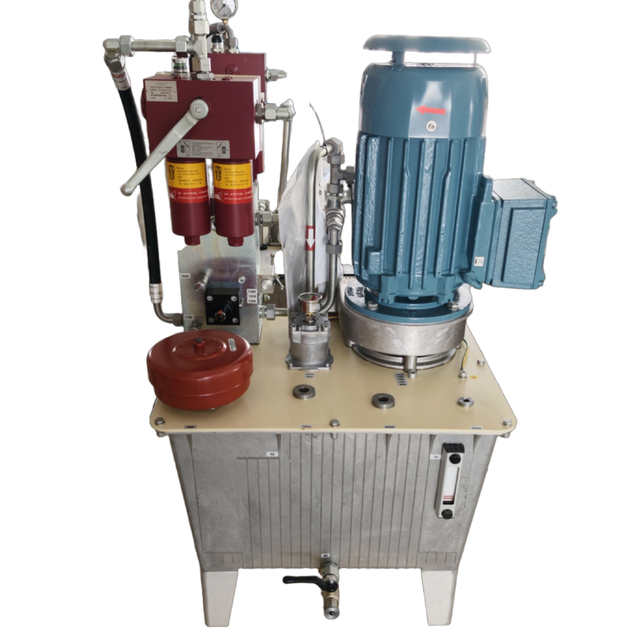
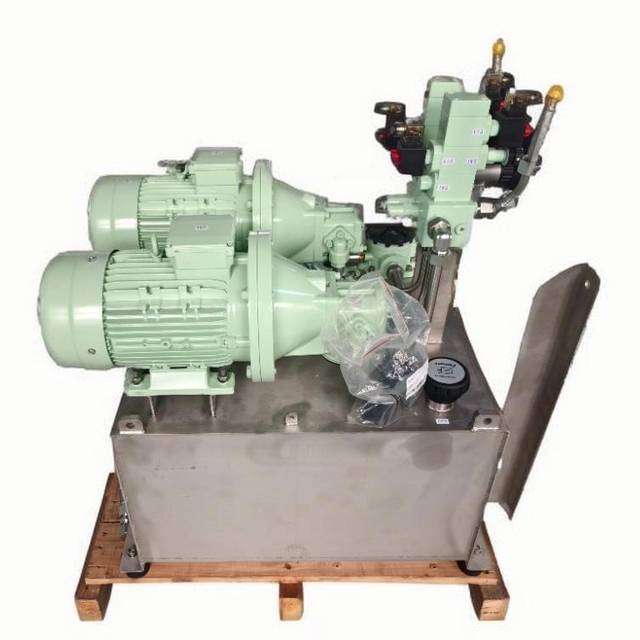
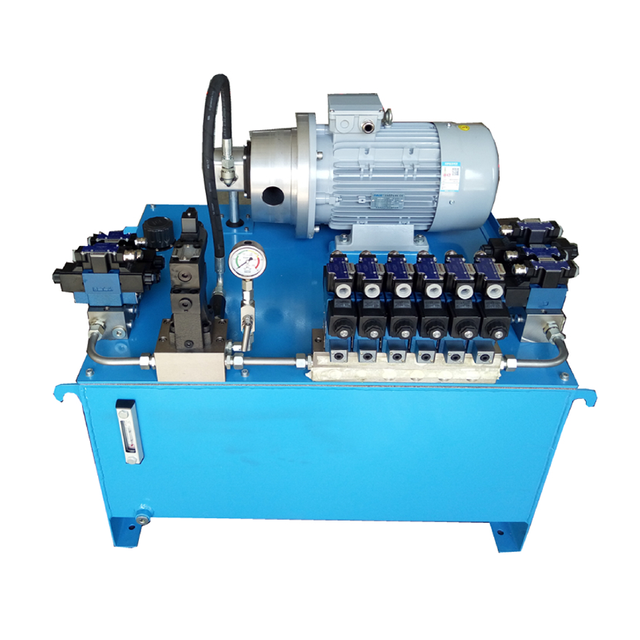
The basic working process is as follows: The motor drives the hydraulic pump, converting mechanical energy into hydraulic energy and generating high-pressure fluid; The high-pressure oil is precisely regulated by the control valves (direction, pressure, flow valves) and is then delivered to the actuators (such as hydraulic cylinders or hydraulic motors); The actuators convert the hydraulic energy back into powerful linear or rotational mechanical power, thereby driving the load.
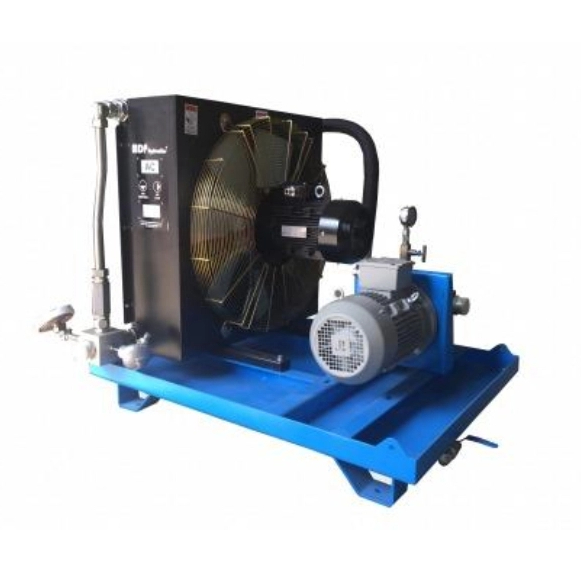
A complete hydraulic system consists of the following core components:
Hydraulic pump: The heart of the system, providing flow and pressure to the entire system.
Hydraulic oil and oil tank: The medium that transmits power, and also serves the functions of lubrication, cooling and rust prevention. The oil tank is used for storing oil, dissipating heat and separating impurities.
Control Valve: The brain of the system, used to control the pressure, direction and flow of the liquid, thereby precisely manipulating the operation of the actuator.
Actuator: The hands and feet of the system, converting hydraulic energy into mechanical energy. Hydraulic cylinders provide linear motion, while hydraulic motors provide rotational motion.
Auxiliary components: These include filters (to keep the oil clean), coolers (to control the oil temperature), accumulators (to store energy and buffer shocks), etc., which ensure the stable operation of the system.
Extremely high power density: The hydraulic system can generate tremendous force or torque in a very small space. For instance, the forging presses of tens of thousands of tons and the bucket forces of excavators are all made possible thanks to hydraulic technology.
Precise control and smooth operation: Thanks to the incompressibility of the liquid, the hydraulic system can achieve extremely precise micro-motion control and stepless speed regulation, with smooth movement and no "sliding" phenomenon.
Self-lubrication and long service life: The hydraulic oil lubricates all moving parts by itself, reducing the need for additional lubrication. With proper maintenance, the system has a very long service life.
Excellent overload protection and position retention: Overload protection can be easily achieved through the safety valve. When the system stops, due to the incompressibility of the liquid, the actuator can maintain the load position for a long time and reliably, without the need for additional braking.
High initial investment cost: The manufacturing precision and material strength requirements for high-pressure components (pumps, valves, cylinders) are very high, resulting in a relatively high cost.
Leakage risk: Failure of the joints or seals may result in the leakage of hydraulic oil, causing environmental pollution, reduced efficiency and potential safety hazards.
Maintenance requirements are strict: The system is highly sensitive to the cleanliness and temperature of the oil. Regular filtration, cooling, and oil replacement are necessary, making the maintenance process complex.
Fire hazard: Traditional mineral oil-based hydraulic oil is flammable and poses a fire risk in high-temperature or leakage scenarios (although there are fire-resistant hydraulic fluids available).
Efficiency is affected by temperature: The viscosity of the oil changes with temperature, which in turn affects the system's efficiency and response speed.
The pneumatic system is a system that uses compressed gas (usually air) as the working medium to transmit power and control signals. Its core lies in the expansion characteristic of compressible gas. After being compressed and pressurized by the compressor, the air is stored in the air tank, and then undergoes drying and filtration processes. Through the control of pneumatic valves, it drives the cylinder or pneumatic motor to perform work.
Air compressor: The unique core component of the pneumatic system, converting electrical energy into the potential energy of compressed air. This is one of the most significant differences from the hydraulic system.
Air treatment unit: It includes a dryer (for removing moisture), a filter (for removing impurities), and a lubricator (for providing atomized lubrication to pneumatic components), ensuring the quality of the air source.
Pneumatic valve: Controls the on-off, direction and flow rate of compressed air.
Actuator: The main components are cylinders (for providing linear motion) and pneumatic motors (for providing rotational motion).
Extremely high movement speed: The low air viscosity and small flow resistance enable the cylinder to achieve a very high reciprocating motion speed, making it particularly suitable for high-speed automated applications.
Clean, safe and economical: The working medium is inexhaustible air, which is pollution-free and has no fire risk. It is highly suitable for industries such as food, medicine, and electronics that have strict requirements for cleanliness. The system is simple and the initial investment cost is low.
The system is simple and reliable: The components are highly standardized, making installation and maintenance easy. The air itself has elasticity, and the system has a strong adaptability to overloads.
Strong environmental adaptability: The compressed air has a self-cooling effect during exhaust, and the system is less likely to overheat. It can operate in harsh environments such as dusty and humid conditions (filtering needs to be strengthened).
Low output force: Due to the generally lower working pressure (typically less than 10 bar), its output force is significantly lower than that of a hydraulic system of the same volume.
The control accuracy is relatively low: The compressibility of air leads to "elasticity" in the movement, making it difficult to achieve the precise position control and smooth low-speed movement like that of a hydraulic system.
The operating energy consumption may be relatively high: The efficiency of the air compressor is usually not very high, and there are leaks and pressure losses during the air compression process. The energy cost for long-term operation needs to be carefully evaluated.
Condensate needs to be dealt with: After being compressed, air will generate condensate. This must be removed through a dryer; otherwise, it will corrode components and clog valves.
Noise issue: The compressor and exhaust process generate considerable noise, and in most cases, a muffler needs to be installed.
Comparison dimensions | Hydraulic System | Pneumatic System |
Working medium | Liquid (hydraulic oil, water-based liquid) | Gas (compressed air) |
Medium characteristics | Nearly incompressible | Highly compressible |
Typical working pressure | Very high (70 - 700 bar or higher) | Lower (usually 4 - 10 bar) |
Output power/torque | extremely high, suitable for heavy loads | Medium to small, suitable for light to medium loads |
Motion control | Slow speed, but extremely smooth and precise | Fast speed, but with lower accuracy and elasticity |
System efficiency | higher (energy transfer is direct) | lower (there is energy loss during the compression process) |
Initial cost | higher (due to the expensive high-pressure components) | lower (with cheaper and standardized components) |
Long-term maintenance priorities | Prevent leakage, control oil temperature, maintain cleanliness | Air drying, lubrication, condensate drainage. |
Safety | Potential leakage, pollution, fire risks | safe, without pollution and fire risks |
Typical application scenarios | Construction machinery (excavators), injection molding machines, machine tools, metallurgical equipment, aircraft control systems. Packaging machinery, assembly robots, pneumatic tools, material handling, door control systems. | |
The confusion between hydraulic and pneumatic systems is not groundless. It mainly stems from the following aspects:
1. Surface similarity: Both belong to the "fluid power" category and both convey media through pipelines, using valves, cylinders, and connectors that look similar in appearance. This physical resemblance serves as the intuitive starting point for confusion.
2. Generalization of terms: The term "fluid power" often encompasses both hydraulic and pneumatic systems, blurring their physical essence boundaries and misleading beginners into thinking they are different branches of the same technology.
3. Popularization of hybrid systems: In modern automated equipment, electro-hydraulic servo systems and electrical proportional systems are increasingly common. These systems combine the precision of electronic control with the power output of hydraulic/pneumatic systems, making the system boundaries more ambiguous and deepening the misconception that "the two can be interchanged."
4. Partial overlap of application scenarios: On an automated production line, one might see equipment used for precise pressing (hydraulic) and rapid grasping and placement (pneumatic) at the same time. Without delving into their internal mechanisms, it is easy to assume they are just "with different force magnitudes."
5. Clarification of fundamental misunderstandings:
Misunderstanding 1: "High pressure means hydraulic." - Correction: The core difference lies in whether the medium is compressible, not the absolute value of pressure. Some pneumatic systems can also reach high pressures, but their force output characteristics are still determined by the compressibility of the gas.
Misunderstanding 2: "Pneumatic technology is more advanced and will completely replace hydraulic technology." - Correction: They are complementary rather than substitutive. Hydraulic technology cannot be replaced in heavy-load and precision applications; pneumatic technology has obvious advantages in light-load, high-speed, and clean environments.
Misunderstanding 3: "The choice depends solely on the required force." - Correction: Force is a key factor, but factors such as motion accuracy, speed, environmental requirements, and total cost of ownership are equally important and must all be taken into consideration comprehensively.
In response to the project requirements, please consider the following questions one by one. The answers will naturally guide you to make a choice:
If you need to lift heavy objects weighing several tons, perform metal shaping or bend large structural components (with power requirements exceeding several tons), the hydraulic system is the only option.
If used to push, clamp, or pick up small to medium-sized workpieces (with force requirements less than several tons), an pneumatic system may be more cost-effective.
If the application requires positioning accuracy down to millimeter or even micrometer levels, smooth stepless speed regulation, or strict force control (such as in machine tool feed or simulation platforms), then please choose the hydraulic system.
If the application aims for the shortest cycle time and point-to-point rapid movement, while having low requirements for the accuracy of intermediate processes (such as sorting, ejection, and door opening/closing), an pneumatic system is the ideal choice.
If the environment requires absolute cleanliness, no pollution and explosion-proof conditions (such as in food processing plants, cleanrooms, and chemical factories), an pneumatic system is a safe choice.
If the equipment operates in an outdoor, high-temperature, dusty and harsh industrial environment and can receive professional oil management, the robustness of the hydraulic system will be significantly enhanced.
If the initial investment budget is tight and the system's long-term energy consumption is not a concern, the entry-level threshold for pneumatic systems is lower.
If one values the overall efficiency, reliability, and low maintenance frequency of the system over an extended period, and is willing to make a higher initial investment, the total life cycle cost of the hydraulic system may be more advantageous.
In summary, the fundamental difference between hydraulic and pneumatic systems stems from the core physical property that liquids are incompressible while gases are compressible. Hydraulic systems, with their huge power output, excellent control accuracy and stability, dominate heavy industries, precision manufacturing and heavy equipment. On the other hand, pneumatic systems, with their advantages of high speed, cleanliness, safety and low cost, are the preferred choice for light industry automation, assembly lines and clean environments.
Confusion stems from the surface, while clear choices arise from an understanding of the essence. There is no absolute "better", only "more suitable". Clarify your core needs - do you seek strength and precision, or speed and cleanliness? The answer will be self-evident.
Are you still unsure whether your specific application should opt for the hydraulic or pneumatic solution? With complex working conditions and cost considerations, do you need professional advice?
We have decades of experience in fluid power system design and integration. Our technical experts are willing to offer you a free initial consultation to help you analyze your requirements, clarify your thinking, and find the most optimal and cost-effective power solution.
Contact us immediately to obtain customized technical solution suggestions, or visit our resource center to download more detailed product technical white papers and industry application cases.
Subscribe to our technical column to continuously obtain the latest insights and in-depth analyses in the fields of industrial automation, power transmission, and motion control.