Views: 0 Author: Site Editor Publish Time: 2026-03-25 Origin: Site
Imagine a huge marine diesel engine crankshaft rotating without lubrication, or a high-speed CNC machine spindle bearing operating in dry friction. The result would be catastrophic - in the midst of deafening noise and intense friction, the metal surfaces would rapidly deteriorate and melt, causing the equipment to be completely scrapped in a short period of time. This highlights a simple yet crucial fact: the lubrication system is far from being a mere "refueling" accessory; rather, it is an indispensable "life support system" and "health immune system" for all mechanical equipment.
It achieves smooth, efficient and long-lasting operation of the equipment through a set of interworking precise functions. Understanding these functions is the foundation for effective preventive maintenance, maximizing equipment lifespan and optimizing production efficiency. This article will deeply analyze the six core functions that constitute the modern lubrication system, explaining how each one safeguards your valuable assets.
Friction is the resistance generated when moving components slide or roll against each other. Without lubrication, the microscopic protrusions on the metal surfaces will directly contact, collide with, and tear each other, resulting in huge resistance and heat, known as "dry friction". The lubrication system fundamentally changes this process by introducing a layer of lubricant (oil or grease) film between the friction surfaces.
This layer of film separates the direct contact between metals, converting the harmful "dry friction" or "boundary friction" into the "fluid friction" between the molecules within the lubricant. Under ideal conditions, the fluid dynamic pressure lubrication formed can fully bear the load, making the moving parts glide on a "liquid pad", with the friction force reduced to an extremely low level.
This is the fundamental value of the lubrication system. Significantly reducing friction means directly extending the service life of all moving parts such as bearings, gears, pistons, and guides. It avoids changes in size, loss of precision, and sudden failures due to wear. From an economic perspective, this not only saves the cost of expensive component replacements and downtime losses, but also improves the mechanical efficiency of the entire machine by reducing the energy required to overcome friction, thus saving energy.
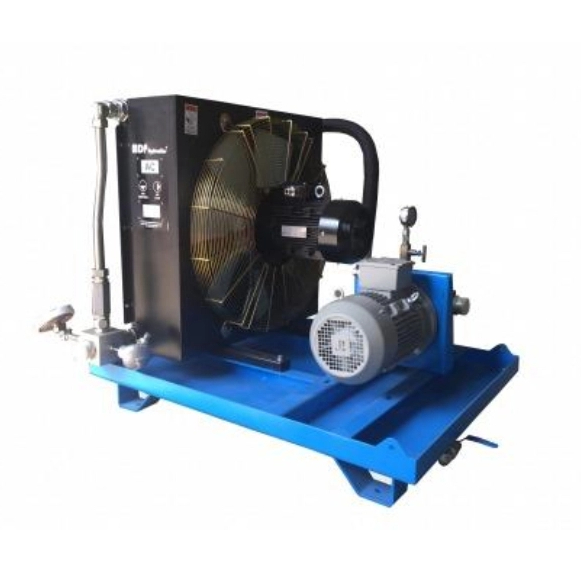
Friction generates heat, and combustion in internal combustion engines is an even greater source of heat. If this heat accumulates, the component temperatures will rise sharply. Lubricating oil acts as a circulating medium and plays the role of a "heat transporter". As it flows through high-temperature areas (such as bearings, cylinder walls), it absorbs heat and then is carried back to cooler areas - usually the oil tank (through large-area tank walls for heat dissipation) or a dedicated oil cooler (air-cooled or water-cooled). Here, the heat is dissipated into the surrounding environment or cooling water, and the cooled oil fluid then circulates again, forming a continuous heat exchange process.
Effective cooling can prevent metal components from softening, annealing, or even melting due to overheating, avoiding jamming or changes in clearance caused by thermal expansion. At the same time, high temperatures are the main reason for the oxidation and deterioration of lubricating oil, the formation of sludge and carbon deposits. Keeping the oil temperature within a reasonable range (for example, most industrial systems below 60-70°C) is the key to maintaining the chemical stability of the lubricating oil and extending its service life. A failed cooling function can quickly trigger a chain reaction, leading to lubrication failure and equipment damage.
During operation, the equipment inevitably generates pollutants: tiny particles from metal friction, dust inhaled, soot from combustion, sludge formed by the oxidation of lubricating oil, and water. The lubrication system acts as a "blood dialysis" role through continuous circulation. The lubricating oil flows through various components, washing, suspending and removing these pollutants, preventing them from depositing locally.
The key collaborative component is the filter. Polluted oil will pass through the filter before being returned to the oil tank or entering the precision components. The filter material (such as filter paper or metal mesh) traps particles and allows only clean oil to pass through. Filters equipped with a differential pressure indicator can give an alarm in case of blockage, indicating the need for replacement.
Clean oil is the prerequisite for all other functions to operate normally. Abrasive contaminants are the root cause of abrasive wear, which can accelerate component damage like sandpaper. Sludge and deposits can clog precision oil passages, cooler channels, and valves, resulting in insufficient lubrication or overheating. Therefore, the cleaning function directly protects the investment, reduces unplanned downtime, and ensures the reliability of the system.
When metals are exposed to air, moisture (especially condensation water) and certain process media, they will undergo oxidation (rusting) and chemical corrosion. Lubricating oil forms a firm, adhesive oil film on the metal surface, physically separating the metal from the corrosive medium and preventing direct contact.
Furthermore, modern lubricants all contain specific anti-rust and anti-corrosion agents. These polar additives can more effectively adhere to the metal surface, neutralizing the acidic substances that may be produced during operation, providing dual protection for the equipment during both operation and downtime.
Corrosion and rust can damage the smoothness of the metal surface, becoming stress concentration points and the starting point of wear. They seriously weaken the structural strength and fatigue life of the components. For hydraulic systems, rust particles can also contaminate the oil, causing valve core jamming and other faults. The anti-rust function of the lubrication system protects the original accuracy and mechanical integrity of the equipment, especially in humid environments or intermittent-operating equipment, where its value is immeasurable.
In certain key areas, lubricating oil assists in achieving the sealing function. The most typical example is between the piston ring and the cylinder wall of an internal combustion engine. The piston ring itself provides the main seal, but there are imperfections and gaps at the microscopic level. The lubricating oil fills these tiny gaps, forming an effective sealing oil film, which significantly enhances the sealing effect, preventing the high-temperature and high-pressure gas from flowing down to the crankcase, and also preventing the engine oil from flowing up to the combustion chamber.
In equipment such as rotary shaft seals and compressors, lubricating oil also helps to seal the working medium (such as refrigerants and air) and prevent leakage.
An effective seal can maintain the design efficiency and power output of the equipment. For engines, it means better compression ratio, lower oil consumption and emissions; for compressors or hydraulic pumps, it means higher volumetric efficiency and flow output. At the same time, it also prevents mutual contamination between different media, ensuring the purity of the system.
The rigid contact between metal components will cause impacts, vibrations and noises. The lubricating oil film, as a viscous fluid, has excellent damping properties. When gears mesh, bearings rotate or the load changes suddenly, the oil film can absorb and buffer the impact energy, making the force transmission more smooth and gentle.
The vibration damping function provides a smoother and quieter operation experience, enhancing the comfort of equipment operation. More importantly, it reduces the impact load and stress amplitude that components are subjected to at the mechanical level, effectively delaying the occurrence of metal fatigue, preventing cracks and fractures caused by fatigue, and further ensuring the long-term safe operation of equipment, especially high-speed and high-precision equipment.
The six core functions of the lubrication system (sliding friction reduction, cooling, cleaning, rust prevention, sealing, and vibration reduction) form a highly coordinated and integrated whole. They are interdependent on each other. For instance, cleaning ensures the effectiveness of friction reduction, and cooling maintains the reliability of sealing.
Ignoring any one of these functions will trigger a chain reaction, leading to the overall failure of the system and damage to the equipment. For instance, the failure of the cleaning function will immediately accelerate wear and generate more heat, thereby impacting the cooling and sealing functions.
Therefore, the foundation for ensuring that all functions operate properly lies in three core maintenance principles: regular inspections and oil analysis, using the specified correct oil for the equipment, and maintaining the system clean throughout the operation process. This is the key to transforming lubrication from a "cost item" into a "strategic investment" that guarantees the reliability and lifespan of the equipment.
Understanding synergy allows for diagnosing failure chains:
Phenomenon: The oil temperature remains consistently high.
Chain reaction: High temperature causes the viscosity of the engine oil to decrease → The oil film becomes thinner, resulting in increased wear (Function 1 impaired) → At the same time, the oxidation of the oil accelerates, causing the formation of sludge → Blockage of the filter element and oil passages (Function 3 impaired) → Insufficient oil supply, leading to local overheating and sintering.
Problem: The filter element has not been replaced for a long time or is damaged.
Chain reaction: A large number of particles circulate in the oil → become abrasive materials, rapidly accelerating wear (Function 1 failure) → The particles may scratch the sealing surface (Function 5 impairment) → The worn particles disrupt the continuity of the oil film in the load area, affecting vibration reduction (Function 6).
Knowledge must be translated into action. Here is an actionable framework for maintaining these six functions:
1. Develop and adhere to lubrication specifications: Based on the manufacturer's (OEM) manual, determine the correct oil type, dosage, replacement cycle, and oil change procedure.
2. Select oil scientifically: Based on the equipment's operating conditions (load, speed, temperature), choose lubricating oil with the appropriate base viscosity and necessary additive packages (anti-wear, anti-oxidation, anti-rust, etc.).
Use dedicated cleaning containers and tools for oiling.
Replace the air filter and the filter for engine oil/hydraulic oil regularly.
Monitor and control the moisture and particle contamination levels in the oil (through oil analysis).
Regular oil analysis: This is the core predictive maintenance tool, which can monitor viscosity, contamination level, metal wear content and additive status, and comprehensively assess the health of the six functions.
Daily inspection: Check the oil level, oil temperature, oil pressure, and look for any leaks or abnormal noises.
5. Comprehensive Record and Analysis: Establish an equipment lubrication file, record all oil changes, refills, filtration, and maintenance data, and conduct trend analysis based on the oil analysis report to proactively detect potential issues.
The six functions of the lubrication system - reducing friction, cooling, cleaning, rust prevention, sealing, and vibration reduction - collectively form the foundation for the reliable operation of mechanical equipment. They are interdependent and cannot be missing. Excellent lubrication management is not an expense but the most cost-effective preventive measure among all maintenance strategies. It directly safeguards your production continuity, asset value, and market competitiveness.
It's time to upgrade your lubrication management from "passive response" to "active strategy".
A1: The most direct indicator is to monitor the trend of oil temperature. Under the same environmental temperature and load conditions, if the oil temperature reading keeps rising abnormally, it may indicate: the efficiency of the cooler has decreased (due to blockage or failure), the oil has aged and its thermal oxidation stability has deteriorated, the system load has increased abnormally, or the oil has been contaminated (such as high moisture content). A judgment should be made in combination with the oil analysis.
A2: The cleanliness of the initial addition and the selection of the correct oil for the break-in period are crucial. There may be processing residues inside the new equipment, so it is necessary to ensure the oil is clean. During the break-in period, there may be a lot of wear particles, so special break-in oil should be used or the first oil change should be carried out as per the regulations. This lays the initial quality foundation for the reliability of the equipment throughout its entire lifespan.
A3: Yes, this is the general principle of the lubrication system. However, the emphasis varies depending on the equipment. For instance, high-speed precision spindle bearings have extremely high requirements for cleanliness and friction reduction; while internal combustion engines have extreme demands for cooling, sealing, and cleaning (to deal with soot). Understanding the main operational challenges of your equipment can help with more targeted lubrication maintenance.
A4: All functions are equally crucial and interdependent. If one must be singled out as the primary one, reducing friction and wear is usually regarded as the top priority, as it directly prevents mechanical failure. However, the failure of the cooling or cleaning functions can quickly lead to increased friction, so in actual maintenance, comprehensive attention must be given to all aspects.
A5: It cannot work reliably in the long term. The strong coupling between the functions means that a single point failure can trigger a chain reaction. For instance, cooling failure (function 2) causes the oil temperature to soar, which accelerates oil oxidation (affecting functions 3 and 4) and reduces viscosity (seriously affecting functions 1 and 5), ultimately leading to a comprehensive system failure.
A6: Follow a set of scientific lubrication management strategies:
1. Adhere to standards: Select the specified type of lubricating oil strictly according to the manufacturer's (OEM) manual and adhere to the oil change cycle.
2. Intensive monitoring: Conduct regular oil analysis to monitor the viscosity, contamination level, moisture content, and wear metal particles of the oil. This is a "window" to understand the internal health status of the system.
3. Frequent maintenance: Replace the air filter and oil filter in a timely manner, keep the oil tank breather unobstructed, and clean the cooler regularly.
4. Control contamination: During refueling and maintenance, strictly follow the cleaning procedures to prevent external contaminants from entering the system.
Viscosity: The internal frictional force that a fluid resists when flowing. It is the primary criterion for selecting lubricating oil and directly affects the strength of the oil film.
Additives: Chemical substances added to the base oil to impart or enhance its specific properties (such as anti-wear, anti-oxidation, and anti-rust).
Oil film strength: The ability of lubricating oil to maintain integrity and separate metal surfaces under pressure.
Oxidation: The process where lubricating oil reacts with oxygen, leading to aging. This results in acidic substances and sludge, which is one of the main causes of lubrication failure.
Pollutant level: The concentration of solid particles in the oil, usually expressed using ISO cleanliness codes.
Predictive maintenance: A strategy that predicts equipment failures based on monitoring data (such as oil analysis) and schedules maintenance in advance, distinct from regular preventive maintenance and post-failure repairs.
You have already gained a deep understanding of the six core functions of the lubrication system and their significance. It's time to apply these principles to your specific equipment.
We offer professional lubrication audits and customized solution services. Whether you need to assess the existing system, select the right solution for a new project, or solve difficult lubrication failure problems, our expert team can provide you with professional advice based on engineering data.
[Contact our experts immediately to receive a free initial consultation](Your Appointment Link)
Or you can get in touch with us in the following ways:
• Phone: [Your phone number]
• Email: [Your business email]
• Online form: [Link to fill out the requirements form]