loading
| Availability: | |
|---|---|
| Quantity: | |
Customized
MDP Hydraulics
In coal mining operations, lubrication is a core maintenance function directly linked to equipment reliability and production continuity. Conveyors, crushers, feeders, mills, and transmission assemblies often work under constant shock load, contamination, and extended duty cycles. Under these conditions, manual lubrication can be inconsistent, labor-intensive, and difficult to manage across distributed lubrication points.
This centralized lubrication system is developed to solve that problem with a structured and controllable lubrication process. The station stores lubricant in a central reservoir, pressurizes it through the pump unit, and distributes it through metering components and pipeline networks to each designated friction point. The lubrication cycle can be controlled automatically according to time, operating conditions, or system logic.
The result is a cleaner and more stable lubrication process. Critical parts receive lubricant in measured quantities rather than irregular manual application. This reduces the risk of dry friction, excessive wear, overheating, and premature component failure. It also helps reduce lubricant waste and supports more standardized maintenance procedures across industrial sites.
For coal mining machinery, this system is not only a lubrication device but also a practical support system for uptime, equipment protection, and maintenance control.
Suitable for dusty, vibration-intensive, and high-load mining conditions
Stable operation across a wide ambient temperature range
Optional high-protection cabinet design for demanding installations
Built for continuous-duty equipment lubrication requirements
Metered lubricant output to each lubrication point
Helps reduce over-lubrication and under-lubrication
Supports long-distance and multi-point lubrication networks
Injection deviation can be controlled to ≤ ±5% for single-point delivery
Can be configured according to lubrication point quantity, medium type, and pressure requirement
Available for oil systems, grease systems, and customized station structures
Reservoir capacity can be selected according to operating cycle and consumption demand
Supports different power supply standards for industrial projects
Microprocessor-based control with optional PLC and HMI expansion
Supports digital I/O and industrial communication protocols
Optional pressure monitoring, level monitoring, and alarm functions
Suitable for integration into plant automation systems
Reduces frequency of manual lubrication tasks
Helps standardize preventive maintenance routines
Improves lubrication consistency on difficult-to-access equipment
Supports longer service life of bearings, gears, and moving parts
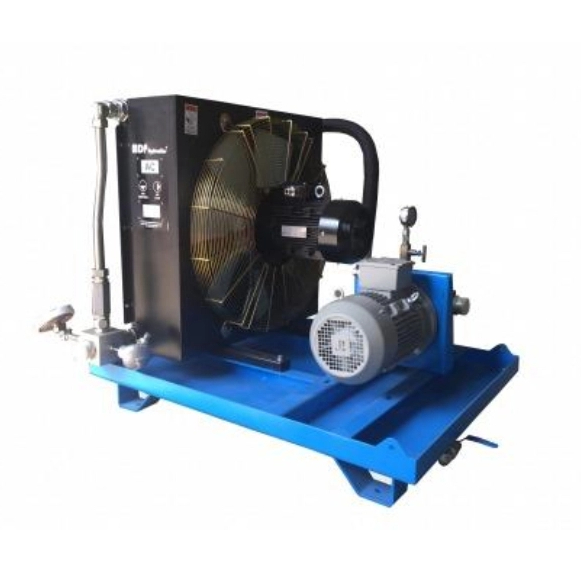
A typical centralized lubrication station for coal mining equipment may include the following modules:
Module | Description |
|---|---|
Pump Unit | Generates required pressure for lubricant delivery |
Reservoir Tank | Stores oil or grease for centralized supply |
Control Unit | Manages lubrication timing, cycle logic, and alarms |
Metering / Distribution Unit | Allocates lubricant to each lubrication point |
Pipeline System | Transfers lubricant through the machine or equipment line |
Sensor Package | Optional level, pressure, cycle, or fault monitoring |
Filter Unit | Helps maintain lubricant cleanliness in the system |
Electrical Cabinet | Protects control components and supports field installation |
This modular configuration makes the system suitable for both compact equipment layouts and larger industrial lubrication networks.
This product is suitable for lubrication systems in:
Coal mining conveyors
Crushers and screening equipment
Feeders and transfer systems
Ball mills and grinding mills
Gear transmission assemblies
Bearings, chains, guide rails, and rotating mechanisms
Fixed and semi-mobile mining equipment
Other heavy-duty industrial machinery requiring centralized lubrication
In these applications, the system helps deliver lubricant more consistently to critical wear points, especially where manual lubrication is difficult, unsafe, or inefficient.
Parameter | Specification |
|---|---|
Product Name | Centralized Lubrication System for Coal Mining Equipment |
Model | Customized |
Brand | MDP Hydraulics |
Output Pressure | 4 MPa to 40 MPa |
Nominal Flow | 0.1 cm³/cycle to 5000 cm³/min |
Applicable Media | NLGI 000#–2# grease / ISO VG 32–460 lubricating oil |
Lubrication Points | 1 to 200+ points |
Power Supply | 24 VDC / 110-220 VAC / 380-415 VAC / 50/60 Hz |
Control Core | Microprocessor controller, PLC/HMI/IoT expandable |
Communication | Digital I/O, Modbus RTU/TCP, PROFINET, EtherNet/IP |
Tank Capacity | 3–200 L for grease / 20–1000 L for oil |
Ambient Temperature | -30°C to +70°C |
Protection Level | IP55 standard, up to IP67 cabinet |
Metering Accuracy | Single-point injection deviation ≤ ±5% |
Delivery Time | 6–10 weeks depending on complexity |
Focused on severe-duty lubrication scenarios
Suitable for continuous operation and complex machine layouts
Designed around real pressure, flow, and environmental requirements
Custom tank capacity, pressure range, and point quantity
Custom voltage, control method, and communication protocol
Custom station layout based on project installation conditions
Supports standalone operation or plant control integration
Easy to match with industrial automation systems
Adaptable to different lubrication strategies and equipment categories
Reduces manual service workload
Improves lubrication consistency
Helps protect key components and reduce unexpected downtime
It is primarily designed for coal mining equipment, but it can also be used in other heavy industrial sectors that require centralized oil or grease lubrication.
Yes. The system can be customized according to lubrication point quantity, required pressure, flow rate, lubricant type, tank capacity, voltage, and control method.
Yes. It is compatible with ISO VG 32–460 lubricating oil and NLGI 000#–2# grease, depending on the selected configuration.
Yes. The system supports PLC, HMI, and industrial communication options such as Modbus RTU/TCP, PROFINET, and EtherNet/IP.
It improves lubrication consistency, reduces manual intervention, helps protect critical components, and supports more reliable equipment operation in demanding industrial environments.