loading
| Availability: | |
|---|---|
| Quantity: | |
Customized
MDP Hydraulics
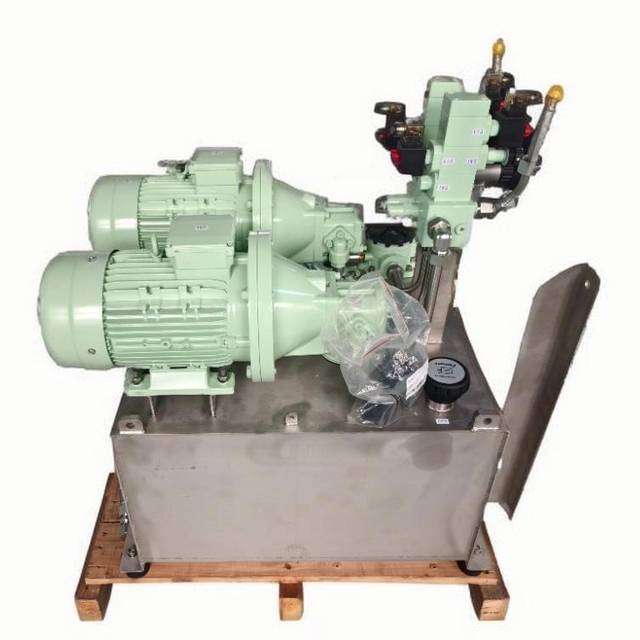
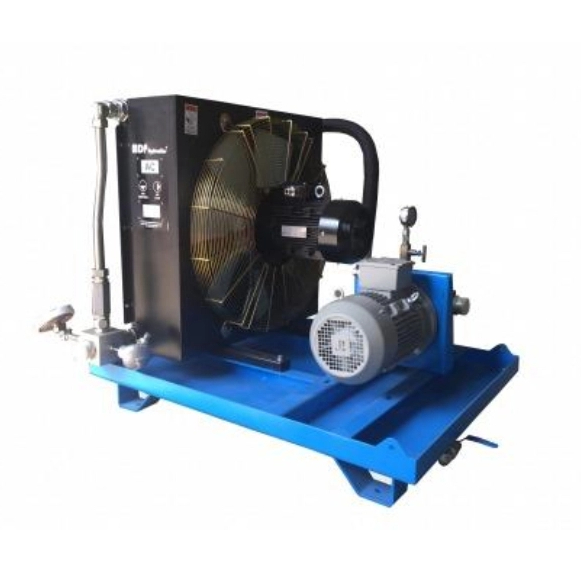
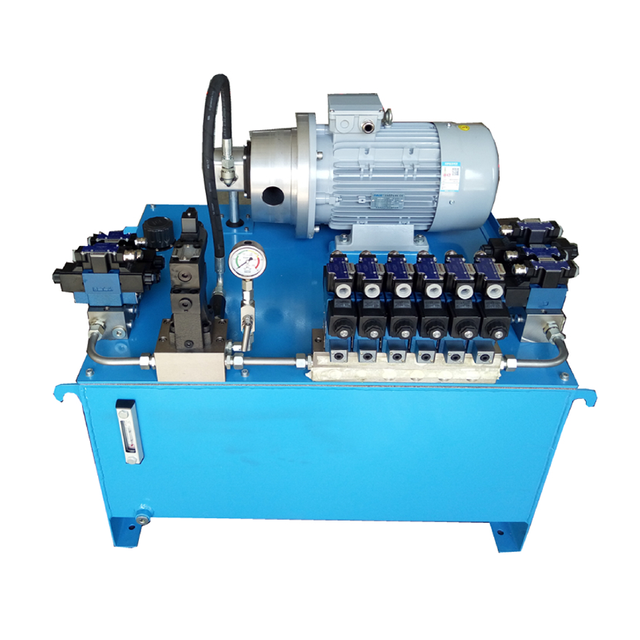
The special non-standard lubrication station for dynamometers is a customized lubrication guarantee system developed for high-precision power test benches. It adopts a compact industrial design, with a sturdy main structure and flexible layout. Its core functions include: wide-range adjustable pressure and flow output, compatible with dynamic test loads; high-precision temperature control system (with an accuracy of ±1℃ to ±2℃), maintaining the oil at a constant temperature; multi-level high-precision filtration to ensure the cleanliness of the oil; and an intelligent control system based on PLC, enabling fully automatic operation, real-time monitoring, and safe interlock with the dynamometer main control. All functions can be deeply customized according to actual testing requirements (such as the object, working conditions, and space), aiming to provide stable and reliable lubrication for the dynamometer, ensuring accurate test data, extending equipment lifespan, and eliminating lubrication-related faults. It is a key supporting equipment in the field of high-end research and testing.
The product is not a standard item. Instead, it is tailored and manufactured according to your specific dynamometer model, test bench layout, space limitations, and pipeline interfaces. Adopting a modular compact design, it enables flexible integration in either an integrated or split form.
Seamless connection, cost savings: Avoiding on-site modifications and adaptations due to equipment mismatch saves a significant amount of installation, modification costs, and time.
Optimize space utilization: The compact design minimizes the use of valuable laboratory space, making the overall layout neater and more rational.
Obtain a customized solution: What you receive is a lubrication system specifically tailored to your unique requirements, rather than a compromise-based general product.
The system has a wide range of pressure (such as 0 - 35 MPa) and flow (such as 0 - 2000 L/min) adjustment capabilities, and can achieve precise, stable output and real-time adjustment of parameters through proportional valves and intelligent controllers.
Perfectly matches complex test conditions: Capable of precisely simulating and meeting the various stringent requirements for lubrication in different testing procedures ranging from low-speed high-torque to high-speed low-load, ensuring the accuracy of the test boundary conditions.
Enhance test coverage and data validity: Enable your dynamometer to conduct more comprehensive and extreme operating condition tests safely and reliably, expand the equipment's capabilities, and obtain more valuable research and development data.
Integrating an efficient heating and cooling unit, combined with highly sensitive sensors and PID control algorithms, it enables rapid temperature adjustment and precise temperature control of the lubricating oil, with typical accuracy reaching ±1℃ to ±2℃.
Ensure the consistency and repeatability of the test: A constant oil temperature serves as the fundamental basis for enabling the comparability and reproducibility of data from multiple tests, thereby significantly enhancing the authority and credibility of the research and development data.
Active thermal management, protecting the equipment: Effectively controlling the operating temperature of the bearings and preventing the deterioration of material properties or premature failure due to overheating is the key to the long-term stable operation of the equipment.
Equipped with multi-level filtration including "oil absorption, pressure, and oil return", the core filter can be optionally equipped with extremely precise filter elements (such as 3μm). This ensures that the system's oil can maintain an extremely high cleanliness level (such as above NAS 7) for a long time.
Maximize the lifespan of core components: Provide an almost pollution-free lubrication environment for the expensive main shaft bearings of the dynamometer, significantly reducing abrasive wear, extending the major overhaul cycle by several times, and thereby greatly reducing the maintenance costs throughout the equipment's entire life cycle.
Reduce system failures: Clean oil can ensure the reliable operation of all hydraulic valves and pumps, reducing malfunctions such as sticking and internal leakage caused by contamination, and enhancing the overall reliability of the system.
Based on industrial PLC as the core, it features fully automatic operation, real-time monitoring and recording of key parameters. It incorporates multiple safety logic and can achieve a "lubrication not ready, main unit does not start" hard interlock with the main control system of the dynamometer.
Eliminate major safety risks: fundamentally eliminates the "dry friction" start of the dynamometer due to human negligence or lubrication failure, effectively avoiding catastrophic accidents such as bearing burnout and main shaft jamming, and protecting the safety of millions of assets.
Achieve unmanned operation and predictive maintenance: Automatic operation and remote monitoring reduce personnel burden; trend recording and alarm functions help detect potential problems in advance, transforming "repair after failure" into "predictive maintenance".
The core pumps, valves, sensors, controllers, etc. all adopt internationally renowned brands or high-quality components verified by the industry. The entire system undergoes strict integration testing and long-term operation assessment before leaving the factory.
Achieve outstanding reliability: This ensures that the lubrication station itself has a low failure rate and long service life from the very beginning, guaranteeing that it can support the dynamometer operation for a long time and with stability as a crucial auxiliary system.
Reduce overall operating costs: High-quality components minimize their own failure downtime, ensuring the availability of the main testing equipment and the smooth progress of the research and production plans.
Power and Pumping Unit | Main Hydraulic Pump Set: Typically, variable piston pumps or internal mesh gear pumps are selected to ensure wide range of flow and pressure regulation (such as flow 0 - 2000 L/min, pressure 0 - 35 MPa) |
|---|---|
Drive Motor: Explosion-proof/high-efficiency three-phase asynchronous motors or servo motors, with power matched to the pump, and optional variable frequency control for energy saving and soft start | |
Auxiliary Pumps (Replenishing Oil Pumps/Circulation Pumps): Used for replenishing oil to the main system, cleaning the housing, or independent circulation filtration/cooling | |
Filtration and Pollution Control Unit | Oil Filter: Installed between the oil tank and the main pump, it performs coarse filtration (100-150μm) to protect the pump from large particle contamination |
High-pressure Pipeline Filter: Installed after the pump outlet, it offers high precision (3μm, 5μm, 10μm options available), with a pressure differential sensor, to protect critical components such as the dynamometer bearings | |
Return Oil Filter: Installed in the system's return oil path, it filters the wear particles in the returned oil to keep the oil tank clean | |
Independent Circulation Filtration System (Optional): Equipped with an independent small pump and filter, it can circulate filter the oil in the oil tank when the main unit is not in operation, maintaining cleanliness | |
Temperature Management Unit | Heater: Stainless steel electric heating rod / plate-type heater, with overheat protection, used for rapid temperature rise during cold start |
Cooler: Plate-type heat exchanger (water-cooled) or air-cooled oil cooler, selected based on heat dissipation | |
Temperature Sensor: PT100 platinum resistance, multi-point arrangement (oil tank, oil inlet, oil outlet) | |
Temperature Control Valve: Proportional regulating valve, precisely regulates cooling water/air volume according to PID control signal. | |
Fuel tank and fluid processing unit | Main fuel tank: Made of stainless steel or carbon steel, with a volume determined based on the system flow rate and heat dissipation. It is equipped with a defoaming partition and a magnetic return oil grille |
Air respirator: A precision air filter with desiccant to prevent contaminants from entering through the air | |
Level gauge: A visible glass tube with a thermometer or an electronic level sensor (with low and high level alarm contacts) | |
Sampling valve: Facilitates the extraction of oil samples for contamination analysis and physical-chemical tests | |
Control and Monitoring Unit | PLC Controller: The core of system control, responsible for automatic sequential control, PID regulation, and safety interlock logic |
Human-Machine Interface: Touchscreen, used for parameter setting, status display, alarm recording, and historical data query | |
Sensor Kit: Pressure transducer, temperature sensor, flow meter, level switch, differential pressure switch, etc. | |
Electrical Cabinet: Integrated with frequency converter, circuit breaker, contactor, relay, and other protection and control components | |
Safety and Protection Unit | Safety Valve/Overflow Valve: Limits the maximum pressure of the system, protecting the pipelines and components |
Interlock Protection: Dual interlock mechanism (such as stopping the pump when the liquid level is low, alarming and interlocking the shutdown when the temperature exceeds the limit, alarming when the filter is clogged) | |
Interlocked with the Test Engine Main Controller: Provides a "Lubrication System Ready" dry contact signal to achieve the hard safety logic of "Lubrication Not Ready, Test Engine Cannot Start" | |
Structure and Interface Units | Base Frame: Rigid structure, integrating all modules and equipped with shock-absorbing pads |
Pipeline System: Stainless steel hard pipes or high-pressure hoses, with socket-type/flange connections | |
Interface Panels: Standardized pressure, return oil, and leakage oil interfaces, clearly labeled | |
Protection and Identification: Guard covers for moving parts, safety warning signs, and system schematic labels |
We select the core components from industry-leading brands to ensure the reliability and high performance of the system over an extended period of operation.
Main Hydraulic Pump | Rexroth, Parker Variable Piston Pump (Optional brand selection) | Type: Axial Variable Piston Pump Pressure Rating: Up to 40 MPa Features: Low noise, high efficiency, long lifespan, and can achieve stepless flow regulation. |
|---|---|---|
Pressure Control Valve | Rexroth Proportional Relief Valve (Optional brand selection) | Control Method: Electro-hydraulic Proportional Control Response Time: Fast, capable of achieving real-time precise closed-loop control of pressure. Function: Sets and maintains system pressure, serving as the core guarantee for pressure accuracy |
Precision Filter | Pall, Hydac high-pressure pipeline filters (Optional brand selection) | Filtration accuracy: 3 μm, 5 μm optional Filter element material: glass fiber Alarm device: pressure differential alarm switch, indicating the need to replace the filter element to prevent bypass. |
Temperature Sensor | WIKA Omron PT100 (Optional brand selection) | Type: Platinum Resistance (PT100) Accuracy Class: Class A Installation: Directly immersed in oil, highly sensitive and accurate measurement. |
System Core | Siemens S7-1200/1500 series PLC (Optional brand selection) | Control: Achieve fully automatic logic control and PID regulation. Communication: Support PROFINET and Ethernet, facilitating integration with the host computer. |
Human-Machine Interface (HMI) | Siemens Smart Pane (Optional brand selection) | Screen: ≥ 10-inch touchscreen Functions: Parameter setting, status monitoring, curve display, alarm record and query. |
Our customized non-standard lubrication system capabilities have been widely applied in the following areas:
New energy motor testing bench: Provides reliable bearing lubrication and thermal management solutions for motors operating at extremely high speeds (>15,000 rpm).
Engine comprehensive test bench: Offers oil pressure and temperature cycling test conditions that comply with national standards or enterprise standards.
Transmission and oil pump test bench: Simulates the working state of the lubrication system under complex conditions, conducting performance and durability tests.
Aerospace component testing: Meets special lubrication testing requirements for extreme high and low temperatures (-50℃ ~ 130℃+), high pressure, and high cleanliness.
The system parameters we can provide cover: pressure ranging from 0 to 35 MPa, flow rate up to 2000 L/min, temperature control range can be customized as needed, filtration accuracy can reach 3 μm or higher, and support seamless connection with the upper computer data acquisition system.
Make every test start with perfect lubrication. If you are planning new testing capabilities or are concerned about the reliability of your existing lubrication system, please contact our expert team immediately. We will provide you with a tailor-made, cost-effective non-standard lubrication system solution based on your specific test object, operating conditions and space requirements, making it the most reliable part of your R&D and quality defense.
Based on our professional non-standard customization capabilities and profound understanding of testing requirements, choosing our lubricant station will provide you with value and security far exceeding those of standard products.
We do not produce "standard products". Instead, we conduct one-on-one engineering customization for your specific dynamometer model, test procedures, and laboratory space. From interface positions, fuel tank capacity to system layout, everything is perfectly matched, achieving seamless integration, and eliminating your additional costs and troubles related to adaptation and modification.
We have integrated a high-precision temperature control system (with an accuracy of ±1℃ to ±2℃) to ensure that the lubricating oil temperature remains highly stable throughout the testing process. This provides completely consistent initial conditions for each test, which is the fundamental prerequisite for ensuring the accuracy, reliability, and reproducibility of your research data, directly enhancing the value of the test results.
Our multi-level high-precision filtration solution (capable of supporting up to 3μm or higher) can consistently maintain the oil at an ultra-high cleanliness level of NAS 7 or above. This is equivalent to providing a "cleanroom"-like lubrication environment for the expensive main shaft bearings of the dynamometer, significantly reducing wear, and maximizing the equipment's overhaul cycle and service life, protecting your core asset investment.
The system is equipped with a hard safety interlock logic of "lubrication not completed, main unit does not start". This can completely prevent dry friction startup caused by human error or system failure, fundamentally avoiding major safety accidents such as bearing burnout and main shaft jamming that may cause the dynamometer to break down, and providing you with reliable operation assurance.
By adopting efficient designs such as variable pumps, the system output can be precisely and real-time matched according to the test load, avoiding unnecessary energy waste (overflow loss). This not only makes the operation more efficient and the oil temperature more stable, but also helps you reduce long-term operating energy consumption, achieving green and economical testing.
We offer a complete service ranging from demand analysis, customized design, manufacturing and testing to installation and commissioning, as well as training and support. Choosing us means that you not only purchase a set of equipment, but also acquire a long-term technical partner specializing in hydraulic lubrication, providing continuous support for the entire lifecycle of your equipment and ensuring the long-term effectiveness of your investment.
In summary, choosing us means choosing to elevate the "backstage factor" of lubrication to a "strategic advantage" that ensures the quality of your tests, the safety of your equipment, and the return on your investment.
An accurate list of requirements forms the basis for perfect customization. We suggest that you prepare the following:
Equipment parameters: the brand and model of the dynamometer, the number of main shaft/bearings that require lubrication, the type and size of the interface.
Operating conditions requirements: The typical rotational speed, load range, continuous operation time, as well as the required oil pressure, flow rate and oil temperature range for the test.
Space and Installation Conditions: Sketch of the equipment installation location, space limitations, power and cooling water interface positions.
Special Requirements: Any specific requirements regarding explosion-proof features, low noise, data interfaces (such as integration with the laboratory MES system), etc.
The delivery period depends on the complexity of the system. For typical non-standard customized projects, the period is usually 8-12 weeks. The specific process is as follows:
Scheme design and confirmation: 1-2 weeks.
Procurement and production manufacturing: 4-6 weeks.
Factory integration testing and debugging: 2-3 weeks.
Packaging and shipping: 1 week.
For customers with urgent needs, we can offer an expedited service. The specific duration will be determined based on the project situation.
Absolutely. The core advantage of "customized non-standard" lies in solving the compatibility issue. Whether it's upgrading the lubrication system of old equipment or providing matching for different brands of dynamometers, we can ensure compatibility through the following methods:
Design specifically based on the interfaces of your existing equipment (flanges, thread specifications, etc.).
Adjust the communication protocol of the control system to match your main control system (supporting mainstream protocols such as Profinet, EtherNet/IP, Modbus TCP, etc.).
Our system design aims for high reliability and low maintenance requirements. The main maintenance points include:
Daily inspection: Check the system status (pressure, temperature, level, filter element pressure difference) through the touch screen to ensure it is normal.
Regular replacement: Replace the filter element of the high-pressure pipeline filter at regular intervals, based on system alerts or recommended cycles (typically 2,000 - 4,000 operating hours).
Oil management: Regularly (suggested every six months or every 1,000 hours) extract oil samples from the sampling valve on the oil tank for testing to monitor the cleanliness and physical and chemical indicators of the oil.
Annual maintenance: Check the tightness of electrical connections and clean the fins of the cooler.
Our intelligent control system has comprehensive self-diagnosis and guidance functions:
Step 1: Check the alarm information on the HMI touch screen. The system will clearly indicate specific fault points such as "low oil supply pressure", "filter blockage", and "excessive oil temperature".
Step 2: Refer to the detailed troubleshooting manual we provide based on the alarm code. The manual will list possible causes (such as "low pressure" could indicate a pump unit failure, incorrect safety valve setting, or leakage) and step-by-step inspection procedures.
Step 3: We offer remote technical support. You can authorize us so that our engineers can remotely log into the system to view the data, conduct online diagnosis and provide guidance. For complex issues, we can dispatch engineers for on-site service.
Reliability stems from rigorous design and verification processes:
Simulation and calculation: During the design phase, hydraulic and thermodynamic simulations are conducted to ensure system compatibility.
Selection of key components: The core components such as pumps, valves, and sensors are all made with internationally leading or top-of-the-line brands in the industry.
Factory testing: Each system undergoes a continuous load test lasting for at least 72 hours under simulated actual working conditions within the factory, and a complete test report is provided.
Energy efficiency is ensured through technologies such as variable pump, load-sensing control, and efficient heat exchangers. Our solution typically can achieve energy savings of 20% to 40% compared to traditional fixed-pump systems.
Yes, we offer a complete service support package.
Installation guidance: Detailed installation diagrams, piping connection diagrams and electrical wiring diagrams are provided with the product. For complex systems, remote installation guidance or on-site support by engineers can be provided.
Operational Training: Upon the delivery of the equipment, our engineers will conduct systematic training for your equipment administrators and maintenance personnel. The training covers the system principles, daily operations, parameter settings, maintenance and servicing, as well as emergency handling of faults, ensuring that you can operate the equipment independently and safely.