Views: 0 Author: Site Editor Publish Time: 2025-11-06 Origin: Site
When installing the suction pipe, the following points should be noted: DWhat are the precautions and maintenance procedures for installing pipelines in a custom hydraulic system?o not allow air leakage at the pump suction part's threads and flange surfaces. This is often caused by small cracks and leads to air infiltration. In addition, the suction side of the door (which does not need to be configured) will leak into the air. The resistance of the suction pipe should not be too high, otherwise phenomena such as oil suction and cavitation will occur. Regarding the suction height of the pump, there should be differences in the pump's visual requirements. Generally, it should not be greater than 500 millimeters.
Remove the unit pump products (in footnotes, in this book or in footnotes), usually an oil suction filter should be installed on the suction pipe. The mesh size is generally between 100 and 200 mesh. The area after it should be more than that of the oil pipe, and the research and disassembly are very simple (and often require cleaning).
When installing the return oil pipe, the following points should be noted: The hydraulic cylinder or overflow valve should be stretched towards the lower oil surface of the oil tank on the return oil pipe to prevent splashing and bubble formation. The overflow valve on the return oil pipe should not be directly connected to the pump inlet but should pass through the oil tank. Otherwise, the oil temperature will rise rapidly. The leakage of the electromagnetic valve and the return oil pipe is connected. There should be no back pressure, otherwise, it should be isolated in the oil tank.
All pipes should be installed twice the length. Once the pipes are installed, they are usually acid-washed with a 20% sulfuric acid or hydrochloric acid solution, then with 10% soda water, and finally rinsed with warm water. They are then dried, lubricated, and undergo a pressure test. After installation, it is prohibited to bring in contaminants such as sand, scale, iron, etc. into the pipes and valves.
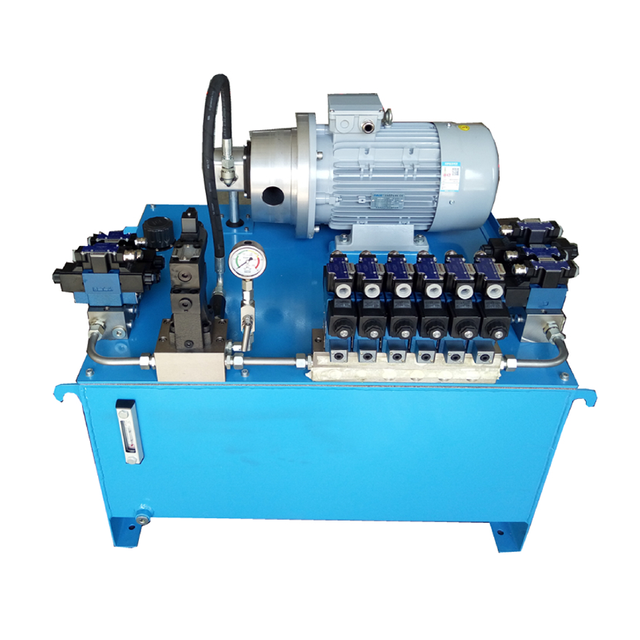
Customized hydraulic system
Install all the pipelines and carry out the cleaning of the oil and the oil tank. This can involve labor in a cycle. Clean the main system of the oil delivery pipelines. Remove the oil from the overflow valve, hydraulic valve, oil tank circuit, the feed ports of the valve blocks, and the general oil of the hydraulic cylinder blocks. Clean them in the washing equipment. The irreversible effect cleaning is carried out in the washing device. The oil and the complex absorption and distribution cleaning of each department.
A filter should be installed on the suction side of the pump to prevent debris from entering the pump. For 20 square meters per second of oil washing with a viscosity beneficial for the operation (at a temperature of 38°C) of turbine oil, install 80-80 connection filters at the oil ports in the oil tank. Use dissolved oil to test the strength of ordinary rubber. If heated to 50-80 degrees, rubber tubes, coal slag, etc.
20 minutes - The washing time is 3 hours or more each day. During the washing process, it should be shaken, agitated, the pipe should be accelerated repeatedly or the dirt should be broken up. After washing, the washing oil will be removed, but there will always be some residue left in the oil and it will return to be mixed with the hydraulic oil. Therefore, it cannot be used as a cleaning agent like water, steam, kerosene, alcohol, etc. In the cleaning tank, the final cleaning test will be conducted. Applicable to
At this point, the hydraulic cylinder, control valve, etc. are properly positioned within the system and gradually start operating under no-load conditions.