Views: 0 Author: Site Editor Publish Time: 2026-03-09 Origin: Site
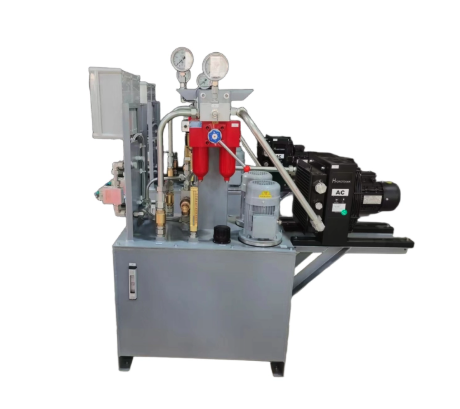
What Is a Hydraulic System? It’s a common question for anyone working with modern machinery or industrial equipment. A hydraulic system uses pressurized hydraulic fluids, a hyd pump, and components like a hydraulic piston to convert fluid power into mechanical motion. From construction equipment to manufacturing machines, these systems deliver strong and precise performance. In this guide, we’ll explore how hydraulic systems work, their key components, and why hydraulic technology remains essential across many industries.
Hydraulic systems move power using liquid under pressure, and they appear in many machines that lift, push, rotate, or clamp heavy loads. Instead of relying only on gears or electric motors, these systems transmit energy through pressurized hydraulic fluids moving inside a closed circuit.
Inside the system, fluid travels through hoses, pipes, and valves after a hyd pump creates flow. As pressure builds, it moves through the liquid and reaches an actuator, usually a hydraulic piston or hydraulic cylinder. The piston then converts fluid pressure into mechanical movement, allowing the machine to perform tasks such as lifting materials, pressing components, or moving heavy equipment.
A hydraulic system is a power transmission system that uses pressurized liquid to transfer energy from one point to another. Hydraulic fluids, usually oil-based, circulate through the system and carry pressure to different components. Because liquid does not compress easily, it transfers force efficiently and consistently. Pressure inside the fluid directly influences how much force the system can generate. When pressure increases, output force also increases. This relationship between force, pressure, and motion allows hydraulic equipment to perform powerful mechanical work.
The core components of a hydraulic system typically include:
Hydraulic pump – creates fluid flow and pressure in the circuit
Hydraulic fluid – transfers energy through the system
Hydraulic piston or cylinder – converts pressure into linear motion
Valves – regulate fluid direction, speed, and pressure
Reservoir and hoses – store and transport hydraulic fluid
Component | Function | Example Use |
|---|---|---|
Hydraulic Pump | Generates pressure and fluid flow | Starts system movement |
Hydraulic Fluid | Transfers power throughout the circuit | Carries energy to actuators |
Hydraulic Piston | Converts pressure into mechanical force | Lifting or pushing loads |
Valves | Control flow and direction | Adjust movement speed |
In practice, the system works as a controlled loop. Fluid pressure travels through the circuit, components respond, and motion occurs where the piston or actuator applies force.
Hydraulic power operates according to Pascal’s Law, a fundamental principle in fluid mechanics. The law states that pressure applied to a confined liquid spreads equally throughout the fluid. When force is applied at one point in a hydraulic system, the resulting pressure moves through the hydraulic fluid and reaches other components in the circuit. If the output piston has a larger surface area than the input piston, the system multiplies the applied force. This principle explains why hydraulic machines can lift extremely heavy loads even when the input force is relatively small.
A simplified hydraulic process often looks like this:
A hyd pump pushes hydraulic fluid into the system.
Pressure builds inside the fluid circuit.
Valves direct the pressurized fluid toward a cylinder.
The hydraulic piston receives the pressure.
The piston moves outward and performs mechanical work.
Input Side | Output Side |
|---|---|
Smaller piston area | Larger piston area |
Lower applied force | Higher output force |
Initial pressure source | Amplified mechanical power |
Because pressure distributes evenly inside the fluid, the system can multiply force while maintaining controlled motion.
Hydraulic systems are widely used in industry because they combine strong power output with precise control. Several characteristics make them suitable for heavy machinery and industrial equipment.
High force output is one of the most important advantages. Pressurized hydraulic fluids allow machines to generate large mechanical forces, making hydraulics ideal for construction equipment, presses, and lifting systems.
Precision control is another key benefit. Operators can adjust fluid flow using valves, which allows accurate control of movement speed, pressure, and direction. This level of control supports delicate operations in manufacturing equipment.
Hydraulic systems also produce smooth motion during operation. Because the power comes from fluid pressure rather than rigid mechanical contact, hydraulic pistons move steadily and with minimal vibration.
Another advantage is compact power transmission. Hydraulic power travels through flexible hoses instead of bulky mechanical shafts, allowing engineers to design compact machines even when high power is required.
Feature | Benefit |
|---|---|
High pressure capability | Enables heavy lifting and pressing |
Fluid-based power transmission | Smooth and stable motion |
Flexible hoses and piping | Compact machine design |
Valve-based control | Accurate movement and speed regulation |
Engineers usually divide a hydraulic system into two major categories. The difference comes from how hydraulic fluids move through the circuit. Some systems send fluid back to a reservoir after each cycle. Others keep fluid circulating directly between components such as the hyd pump and hydraulic piston.
System Type | Fluid Path | Typical Use |
|---|---|---|
Open-loop hydraulic system | Fluid returns to reservoir | Industrial machines |
Closed-loop hydraulic system | Fluid circulates in closed circuit | High-performance drives |
Understanding these two designs helps operators choose the right system for specific equipment.
An open-loop hydraulic system sends fluid back to the reservoir after each working cycle. The hyd pump draws hydraulic fluids from the tank. It pushes them through valves, pipes, and actuators such as a hydraulic piston. After work finishes, fluid flows back to the reservoir.
The reservoir stores fluid and helps cool it. It also allows air bubbles or contaminants to separate from the oil.
Common characteristics
Simple circuit structure
Lower design cost
Easy inspection and repair
Directional control valves manage fluid flow
Component | Role |
|---|---|
Hyd Pump | Pulls fluid from reservoir |
Control Valves | Direct flow to actuators |
Hydraulic Piston | Produces mechanical motion |
Reservoir | Stores and cools fluid |
A closed-loop hydraulic system works differently. Fluid circulates directly between the hyd pump and the actuator. It does not return to the reservoir during normal operation.In this design, pressurized hydraulic fluids move continuously between the pump and a hydraulic motor or hydraulic piston. A small auxiliary pump often supplies make-up fluid and cooling. This extra pump is usually called a charge pump or feed pump.
Typical characteristics
Higher energy efficiency
Faster response time
Compact circuit layout
Continuous fluid circulation
Component | Function |
|---|---|
Main Hyd Pump | Drives fluid through closed circuit |
Hydraulic Motor / Piston | Converts pressure into motion |
Charge Pump | Maintains pressure and cooling |
Control Valves | Adjust direction or speed |
A hydraulic system converts mechanical energy into controlled fluid power. It relies on hydraulic fluids moving through a sealed circuit under pressure. Once pressure builds, the system directs it toward components designed to create motion. Most machines follow a simple sequence. A hyd pump creates flow, valves guide the fluid, and a hydraulic piston or motor turns pressure into movement. Even large machines operate using this straightforward principle.
Pressure inside hydraulic fluids becomes useful once it reaches an actuator. The actuator converts fluid energy into motion. Two main motion types appear in hydraulic equipment.
Hydraulic cylinders generate straight-line movement. Inside the cylinder, a hydraulic piston sits within a sealed chamber. Pressurized fluid enters one side of the cylinder. The piston moves forward as pressure increases. It pushes the piston rod outward and produces force.
Examples include:
Excavator arms lifting soil
Hydraulic presses compressing metal
Industrial machines pushing heavy components
Hydraulic motors create rotary movement. Pressurized fluid spins internal gears or vanes. Instead of pushing a piston rod, the fluid rotates a shaft. That shaft can drive wheels, conveyors, or drilling equipment.
Common uses include:
Construction equipment drive systems
Agricultural machinery
Industrial rotating tools
Motion Type | Component Used | Example Application |
|---|---|---|
Linear Motion | Hydraulic Cylinder / Piston | Lifting heavy loads |
Rotational Motion | Hydraulic Motor | Rotating machinery |
Both motion types rely on pressure stored in hydraulic fluids.
A hydraulic system works through a circuit. The circuit connects pumps, valves, actuators, and fluid reservoirs. Think of it as a loop where hydraulic fluids circulate continuously. Each component controls a different part of the energy flow.
Key circuit elements include:
Hyd pump – produces fluid flow and pressure
Control valves – direct fluid to the correct actuator
Hydraulic piston or motor – converts pressure into motion
Reservoir – stores and cools hydraulic fluids
Lines and hoses – transport fluid between components
Pressure and flow interact throughout the circuit. Pressure represents the force potential inside the fluid. Flow rate determines how fast the actuator moves.
Parameter | What It Controls |
|---|---|
Pressure | Output force from the hydraulic piston |
Flow Rate | Speed of actuator movement |
Valve Position | Direction of fluid travel |
Pump Output | Overall system power |
Engineers design circuits so fluid always has a return path. It leaves the reservoir, travels through the system, performs work, then flows back again.
Hydraulic technology appears in many industries. Machines rely on it when strong force and controlled motion are required. A typical hydraulic system combines a hyd pump, valves, cylinders, and hydraulic fluids to move energy through the machine. Engineers choose hydraulics for tasks involving heavy loads or precise positioning. The system sends pressurized fluid through pipes. It reaches a hydraulic piston or motor. Movement follows quickly and smoothly.
Industry | Common Hydraulic Function | Example Equipment |
|---|---|---|
Construction | Lifting, digging, pushing | Excavators, cranes |
Manufacturing | Pressing, molding, cutting | Hydraulic presses |
Automotive | Steering and braking assistance | Power steering |
Aerospace | Controlled movement under high load | Landing gear |
Agriculture | Lifting and equipment control | Tractors |
Hydraulic technology continues to improve as industries demand higher efficiency and smarter control. A modern hydraulic system still relies on a hyd pump, valves, hydraulic fluids, and actuators such as a hydraulic piston. However, engineers now combine these traditional components with digital tools and advanced design methods. New systems focus on better monitoring, reduced energy use, and longer equipment life. Sensors, automation, and data analysis help machines operate more efficiently and reliably.
Trend | Purpose | Result |
|---|---|---|
Electro-hydraulics | Combine electronics and hydraulics | More precise control |
Smart monitoring | Track system performance | Faster troubleshooting |
AI maintenance | Analyze operating data | Prevent equipment failure |
Energy-efficient design | Reduce energy waste | Lower operating cost |
A: A hydraulic pump moves hydraulic fluids through the system and creates the pressure needed for operation. It converts mechanical energy from a motor or engine into hydraulic energy. This pressurized fluid then travels through valves and lines to power components like a hydraulic piston or motor.
A: A hydraulic piston moves when pressurized hydraulic fluid enters the cylinder. The fluid pushes against the piston surface, forcing it to slide inside the cylinder. This motion converts hydraulic pressure into linear mechanical movement used for lifting, pushing, or pressing.
A: Most industrial hydraulic systems use mineral-oil-based hydraulic fluids. They provide good lubrication, heat transfer, and corrosion protection. In some environments, fire-resistant or synthetic hydraulic fluids are used for higher safety or extreme operating conditions.
A: Hydraulic systems deliver high force output, precise motion control, and smooth operation. They also allow compact machine design because power moves through flexible hoses rather than large mechanical parts. This makes them ideal for heavy machinery and industrial equipment.
A: Hydraulic systems should be inspected regularly, often every few months depending on usage. Maintenance usually includes checking fluid levels, replacing filters, inspecting hoses, and monitoring pressure and temperature to ensure stable system performance.
Hydraulic systems remain one of the most reliable ways to generate powerful, controlled motion in modern machinery. By combining a hyd pump, durable components, and properly selected hydraulic fluids, these systems can deliver impressive force and precise operation across industries. Understanding how a hydraulic piston, valves, and fluid circuits interact helps operators maintain performance and extend equipment life.
If you are looking for reliable hydraulic solutions or components, Qingdao MDP Hydraulics Equipment Technology Co., Ltd. provides professional expertise and high-quality products designed for demanding industrial environments. Exploring the right hydraulic technologies today can help your machines operate more efficiently and perform at their best.