Views: 0 Author: Site Editor Publish Time: 2025-11-08 Origin: Site
The hydraulic system consists of two parts: the signal control part and the hydraulic power part. The signal control part is used to drive the actions of the control valves in the hydraulic power part.
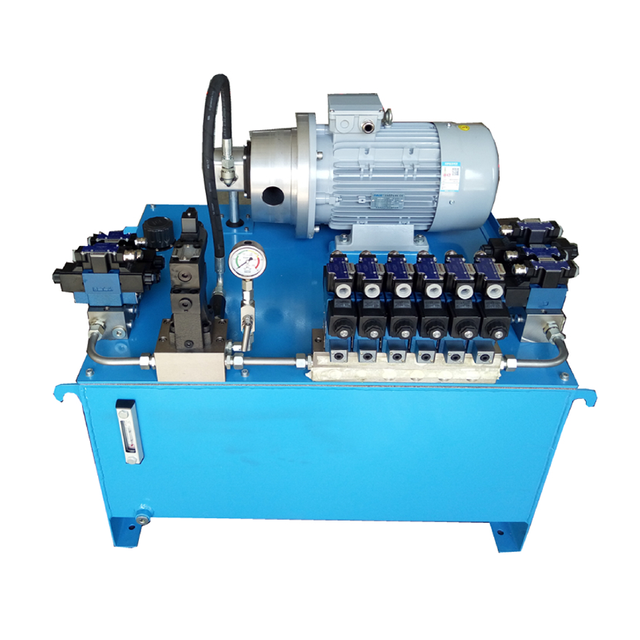
The hydraulic power section is represented by a circuit diagram to show the interrelationships among different functional components. The hydraulic source includes a hydraulic pump, an electric motor, and hydraulic auxiliary components; the hydraulic control section contains various control valves for controlling the flow, pressure, and direction of the working oil; the execution section contains hydraulic cylinders or hydraulic motors, which can be selected according to actual requirements.
When analyzing and designing actual tasks, a block diagram is generally used to show the actual operation status of the equipment. Hollow arrows represent the signal flow, while solid arrows represent the energy flow. The sequence of actions in the basic hydraulic circuit - the switching of the control element (two-position four-way directional valve), the spring reset, the extension and retraction of the actuating element (double-acting hydraulic cylinder), and the opening and closing of the relief valve. For the actuating elements and control elements, the presentation slides are based on the corresponding circuit diagram symbols, which also prepares for the introduction of the circuit diagram symbols.
According to the working principle of the system, you can sequentially number all the circuits. If an actuating element is numbered as 0, then the control element identifier associated with it will be 1. If the element identifier corresponding to the extension of the actuating element is an even number, then the element identifier corresponding to the retraction of the actuating element will be an odd number. Not only should the hydraulic circuits be numbered, but also the actual equipment should be numbered so as to detect system faults.
The DIN ISO1219-2 standard defines the composition of component numbers, which consists of the following four parts: equipment number, circuit number, component identifier, and component number. If the entire system has only one type of equipment, the equipment number can be omitted.
In practice, another way of numbering is to consecutively number all the components in the hydraulic system. At this time, the component numbers should be consistent with those in the component list. This method is particularly suitable for complex hydraulic control systems, where each control loop corresponds to its own system number.