Views: 0 Author: Site Editor Publish Time: 2025-11-06 Origin: Site
Whether the hydraulic oil is clean not only affects the working performance of the hydraulic system and the service life of the hydraulic components, but also directly relates to whether the hydraulic system can operate normally. Most of the faults in the hydraulic system are related to the contamination of the hydraulic oil. Therefore, controlling the contamination of the hydraulic oil is of great importance.
The main reasons for the contamination of hydraulic oil are as follows:
The sand, chips, abrasives, welding slag, rust flakes, dust and other impurities in the pipelines and hydraulic components of the hydraulic system were not thoroughly cleaned during the flushing process before the system was used. During the operation of the hydraulic system, these impurities would enter the hydraulic oil.
② Dust and sand particles from the outside, as well as oil leakage through the reciprocating piston rod during the operation of the hydraulic system, and other substances such as dirt and cotton fibers, can enter the hydraulic oil. Additionally, during maintenance, if care is not taken, dust, cotton fibers, etc. may also enter the hydraulic oil.
③ The hydraulic system itself also continuously generates dirt that directly enters the hydraulic oil, such as wear particles from metals and sealing materials, particles or fibers that fall off from the filter materials, and gummy substances formed in the oil due to oxidation and deterioration caused by the increase in oil temperature.
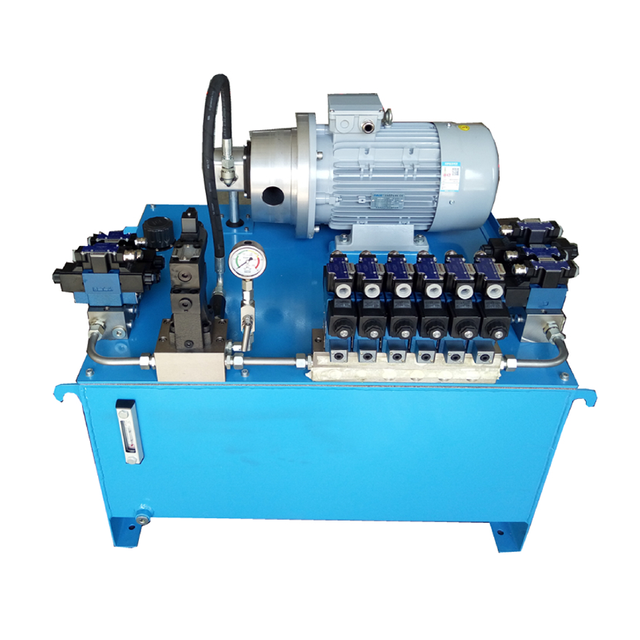
Customized hydraulic system
2. Hazards of Oil Contamination When the oil is severely contaminated, it directly affects the working performance of the hydraulic system, causing frequent malfunctions in the system and shortening the lifespan of the hydraulic components. The main cause of these hazards is the particles in the dirt.
For hydraulic components, since these solid particles enter the components, they will accelerate the wear of the sliding parts of the components and may clog the throttle holes, damping holes in the hydraulic components, or cause the valve core to get stuck, thereby causing faults in the hydraulic system.
The admixture of water and air reduces the lubricating capacity of the hydraulic oil and accelerates its oxidation and deterioration, causing cavitation and accelerating the corrosion of hydraulic components, resulting in vibrations, crawling and other problems in the hydraulic system.
3. The causes of hydraulic oil contamination due to pollution prevention measures are numerous and complex. Moreover, the hydraulic oil itself is constantly generating impurities. Therefore, it is extremely difficult to solve the problem of hydraulic oil contamination.
In order to extend the service life of hydraulic components and ensure the reliable operation of the hydraulic system, it is a practical and feasible approach to control the contamination level of the hydraulic oil within a certain limit.
The pollution control of hydraulic oil mainly focuses on two aspects: one is to prevent contaminants from entering the hydraulic system; the other is to remove the contaminants that have already entered the system.